Ayodhya and Varanasi1 Day4.9(1k+)
1 Day Ayodhya Ram Mandir Darshan
AC Cab IncludedExpert Local GuideTemple Darshan HelpPickup & Drop
The complete 2026 temple list with darshan timings, entry rules and how to reach — Ram Mandir Sugam Darshan, Hanuman Garhi, Kanak Bhawan, Kashi Vishwanath Jyotirlinga, Kaal Bhairav, Sankat Mochan, the Ganga & Saryu aartis and the Triveni Sangam. Every temple has its own detailed guide, written and verified by our government-certified Ayodhya, Varanasi and Prayagraj guides.
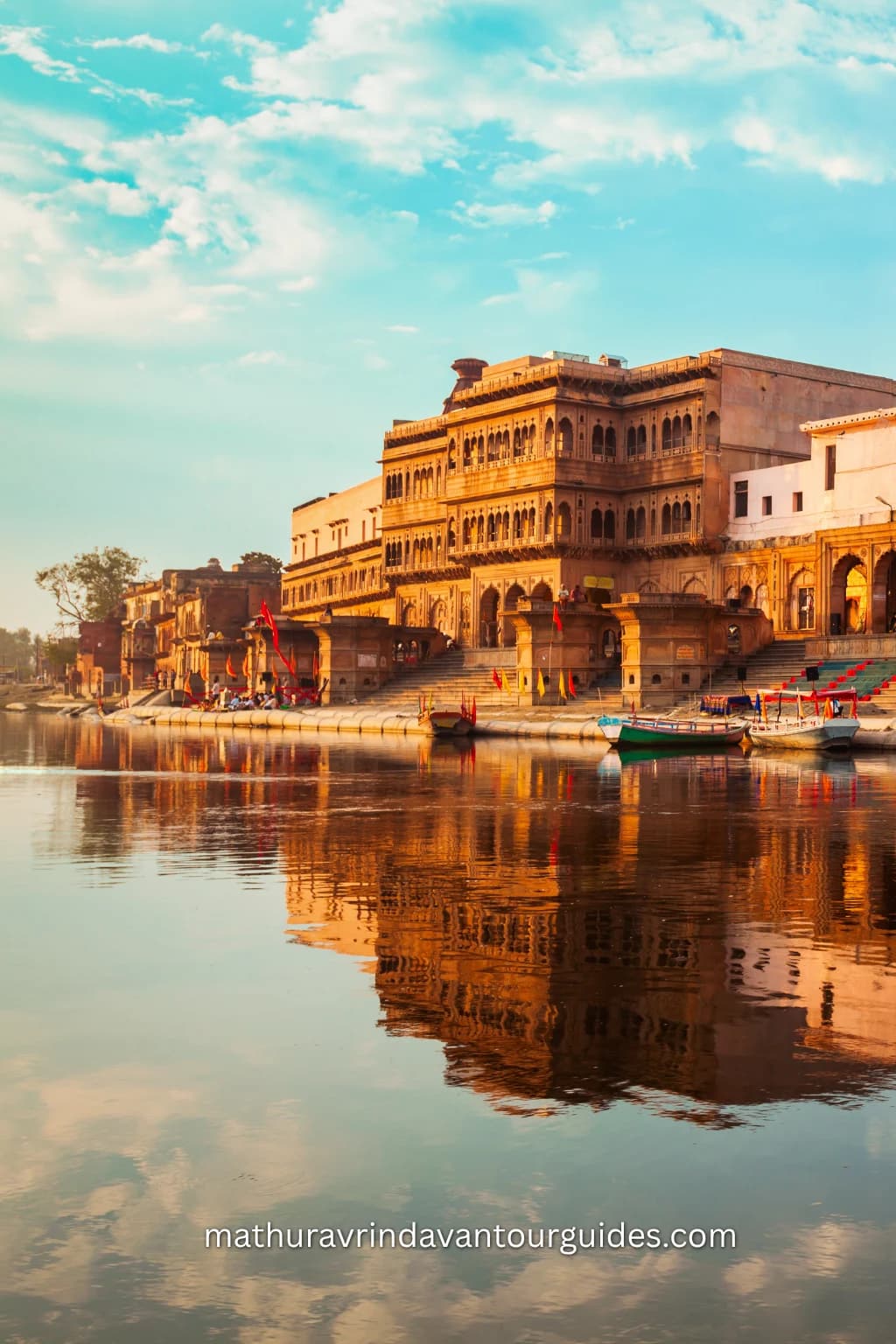
55 Famous Temples of Ayodhya, Varanasi & Prayagraj
Darshan Timings · VIP Access · Expert Guide
4.9 / 5 Rating
5,000+ Devotees Guided
55
Temples
From the grand Ram Mandir in Ayodhya to the eternal Kashi Vishwanath in Varanasi and the Triveni Sangam at Prayagraj — every temple below has its own detailed 2026 guide with darshan timings, entry rules, how to reach and local tips. Tap any temple to read the full guide.
Ready to Walk the Sacred Cities of Uttar Pradesh?
Personalised darshan itinerary — Ayodhya, Prayagraj, Varanasi & beyond. Free, within 2 hours.
Every temple below has a dedicated 2026 guide covering darshan timings, entry rules, the history and legend behind it, how to reach and what to know before you go — written and checked by our government-certified local guides.
Ayodhya is the birthplace of Lord Ram and the capital of the Suryavanshi kings. Beyond the Ram Janmabhoomi, the city holds the Ramkot temple cluster, the Saryu ghats, three ancient sacred mounds and shrines tied to almost every character of the Ramayana.
Varanasi — Kashi — is the oldest living city in the world and the seat of the Kashi Vishwanath Jyotirlinga. Its temples range from the Shakti Peethas of the old-city lanes to the Bhairav shrines that guard the city, the leaning temple on the Ganga and the great marble temples of the south.
Prayagraj is Tirtharaj — the king of pilgrimage places — where the Ganga, Yamuna and the invisible Saraswati meet. Around the Sangam lie three Shakti Peethas, the twelve Dwadash Madhav temples, the immortal banyan and the sites of Lord Ram's journey into exile.
In short: Ayodhya, Varanasi and Prayagraj form the classic Uttar Pradesh pilgrimage circuit, and the three cities together hold 55 major temples and sacred sites. A comfortable yatra covering all three takes 4 to 6 days. The best season is October to March, and the best hour for darshan at almost every temple is early morning, between 5 and 8 AM. General darshan is free everywhere; only Kashi Vishwanath Sugam Darshan carries a small ticket.
This page documents 55 temples and sacred sites — 19 in Ayodhya, 19 in Varanasi and 17 in Prayagraj. The real number of shrines is far higher — Varanasi alone is said to have thousands — but these are the ones a visitor can realistically reach, and each has its own guide covering darshan timings, entry rules, history, how to reach and what to know before you go.
Four to six days is the honest answer for all three cities. One day gives you a single city’s headline darshan — Ram Mandir, or Kashi Vishwanath with the Ganga Aarti. Two days lets you add the surrounding temple cluster. Three days covers two cities properly. A 5-day Ayodhya Varanasi Prayagraj tour is the sweet spot for most families and senior pilgrims, because it leaves room for the temples that need a vehicle — Bharat Kund at Nandigram, Shringverpur, Markandey Mahadev at Kaithi.
October to March is the ideal window — cool, dry weather for walking the ghats and the old-city lanes. April to June is genuinely punishing, and marble courtyards get hot underfoot. The monsoon brings its own consideration: the leaning Ratneshwar Mahadev disappears under the Ganga, and the reclining idol at Bade Hanuman in Prayagraj is submerged and closed for weeks. Festival dates — Ram Navami, Mahashivratri, the Sawan Mondays, Dev Deepawali, Navratri and the Magh Mela — bring extraordinary atmosphere and equally extraordinary queues.
Not sure how many days you need?
Send us your dates and who is travelling. We will send back a realistic day-by-day plan — free, within 2 hours, with no advance payment.
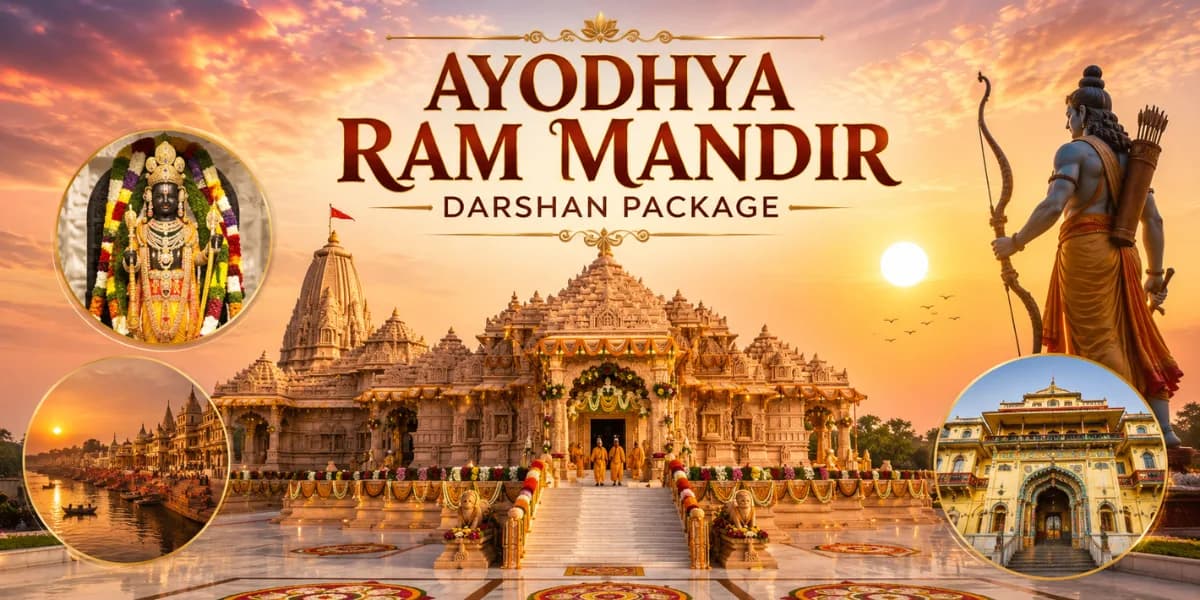
Ayodhya darshan traditionally begins at Hanuman Garhi — the guardian of the city is honoured before Ram Lalla — and then moves to the Ram Mandir at Ram Janmabhoomi. Around it lies the Ramkot cluster: Kanak Bhawan, the golden palace of Sita-Ram, and Sita Ki Rasoi. Beyond the obvious, the city rewards curiosity — Nageshwarnath, said to be built by Kush; Mani Parvat, a fragment of Hanuman’s Sanjeevani mountain; and Guptar Ghat, where Lord Ram is believed to have taken Jal Samadhi. Evenings belong to the Saryu Aarti at Ram Ki Paidi.
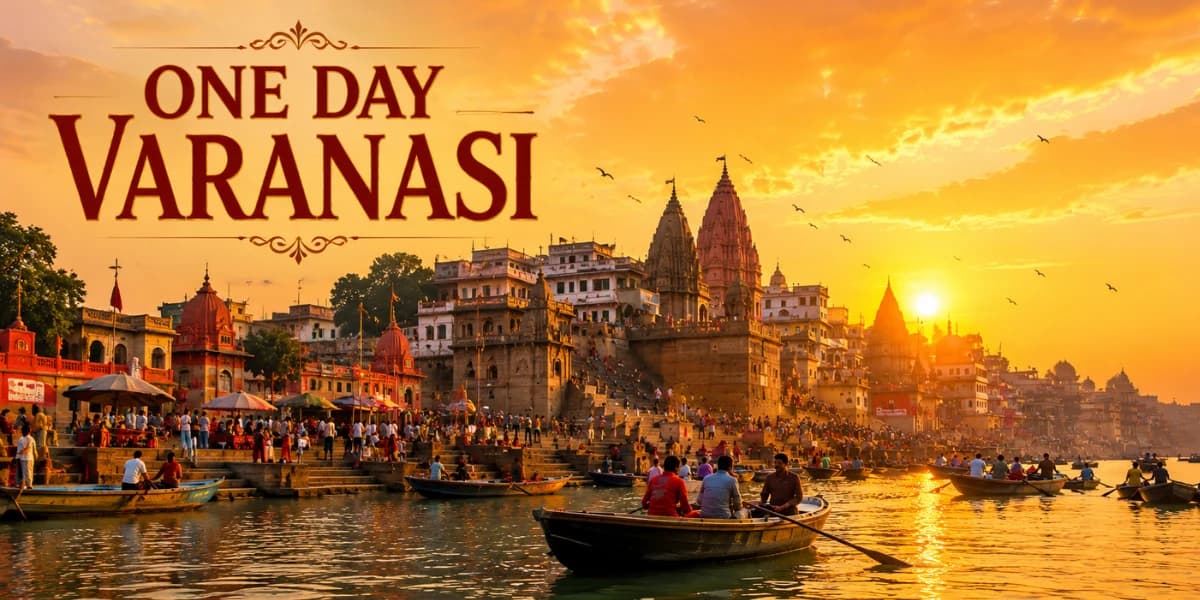
Kashi Vishwanath, the twelfth Jyotirlinga, is the heart of the city — but Kashi’s own tradition says the darshan is incomplete on its own. You seek the permission of Kaal Bhairav, the Kotwal of Kashi, and complete the darshan at Vishalakshi, the Shakti Peetha at Mir Ghat. Add Annapurna beside the Dham, Sankat Mochan founded by Tulsidas, Durga Kund and the evening Ganga Aarti at Dashashwamedh Ghat.
Everything at Prayagraj begins with the Triveni Sangam — the snan at the confluence of the Ganga, Yamuna and the invisible Saraswati. Tradition then asks for Veni Madhav darshan to complete the yatra, a step almost no visitor is told about. Nearby are Akshayavat, the immortal banyan inside Prayagraj Fort, the world’s only reclining Hanuman, and the three Shakti Peethas — Alopi Devi, Lalita Devi and Kalyani Devi.
Want a guide who knows the order these temples should be done in?
Our government-certified local guides sequence darshan the way each city's tradition asks — Bhairav before Vishwanath, snan before Madhav, Hanuman Garhi before Ram Lalla.
Ram Mandir darshan runs in two sessions — roughly 7:00–11:30 AM and 2:00–7:00 PM — with a midday closure, plus three aartis (Mangala ~4:00–4:30 AM, Shringar ~6:00–6:30 AM, Sandhya ~7:00 PM). Kashi Vishwanath opens far earlier, at about 3:00 AM for the Mangala Aarti, and closes near 11:00 PM after the Shayan Aarti. Most other temples in these cities follow a two-session pattern — roughly 5 AM to noon and 4 PM to 9 PM — with a long midday break that catches out more visitors than anything else.
Ram Mandir Sugam (VIP) Darshan is free and booked on the official srjbtkshetra.org portal. Kashi Vishwanath Sugam Darshan is a modestly priced ticket on shrikashivishwanath.gov.in. Both fill quickly on weekends and festival dates. We handle these bookings for our guests as part of any VIP darshan assistance — passes confirmed in writing before you travel.
Often not, and this is the practical detail that ruins the most visits. Phones and bags are strictly not permitted inside Sankat Mochan, and there is little provision for storing them — come by vehicle and leave your phone in it. Akshayavat sits inside an Army-held fort and requires government photo ID for every adult. Photography inside the sanctum is restricted at Kashi Vishwanath, Kaal Bhairav and the Nepali Temple.
There is no strict enforced dress code at most temples, but modest clothing covering the shoulders and knees is expected, and footwear is removed at every entrance. Traditional dress is appreciated at the Ram Mandir and Kashi Vishwanath. At the Jain temple in Ayodhya, leather belts, wallets and bags should be left behind entirely. Carry socks in winter — marble and stone floors are genuinely cold before dawn.
Two, and both are worth planning around. Treta Ke Thakur in Ayodhya opens to the public on a single day each year, on Kartik Shukla Ekadashi, revealing six deities carved from one block of black sandstone. And the golden idol of Annapurna in Varanasi is unveiled only at Annakoot, the day after Diwali. Both dates shift each year with the lunar calendar — confirm before booking travel.
Travelling with elderly parents or small children?
We plan queue-free alternatives, arrange wheelchair-friendly routes and time darshan to avoid the worst crowds. Tell us who is travelling and we will build around them.
Ayodhya now has its own Maharishi Valmiki International Airport, with Lucknow (~135 km) as the larger alternative. Varanasi has Lal Bahadur Shastri International Airport, about 25 km from the ghats. Prayagraj Airport is smaller, and most visitors arrive by train at Prayagraj Junction. By road, Ayodhya to Prayagraj is roughly 165 km, Prayagraj to Varanasi about 120 km, and Ayodhya to Varanasi around 200 km — which is why the circuit is usually driven in that order. A private AC cab with a driver who knows the temple timings is far more comfortable than trains for a family.
Darshan itself is almost entirely free — the cost of a yatra is transport, stay, a guide and the few paid extras like a Sangam boat ride or Kashi Vishwanath Sugam Darshan. Our tour packages run from a 1-day Ayodhya tour through to a 5-day three-city circuit, and every quote is confirmed in writing before you travel, with no advance payment and no hidden charges.
Ready to plan your Ayodhya, Varanasi & Prayagraj temple tour?
Government-certified local guides, private AC transport, Sugam and VIP darshan assistance, and a day-by-day plan built around your dates and your pace. Free itinerary within 2 hours — no advance payment.
Real answers about darshan timings, entry fees, Sugam and VIP darshan booking, routes and what makes each temple special — from guides who live here.
Shri Ram Janmabhoomi Mandir (Ram Mandir) is the most important and most visited temple in Ayodhya, built at the birthplace of Lord Ram and consecrated in January 2024. Other major temples include Hanuman Garhi, Kanak Bhawan and Nageshwarnath. Free Sugam (VIP) Darshan can be booked on srjbtkshetra.org.
Still have questions?
Our local Ayodhya–Varanasi team is available 7 days a week.

200+
Max Group
Free
Quote
From 10-person family groups to 200+ bhajan mandalis and temple trusts — we specialise in large-group coordination across Ayodhya, Varanasi and the complete pilgrimage circuit. Dedicated darshan slots, AC coaches, senior-friendly pacing and door-to-door service.
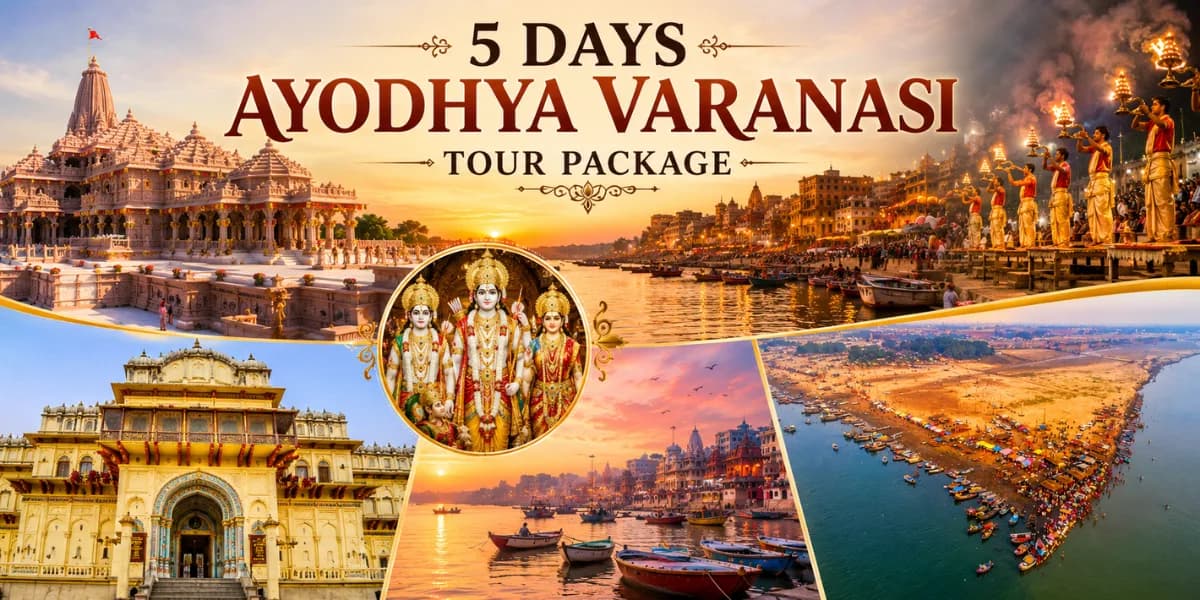
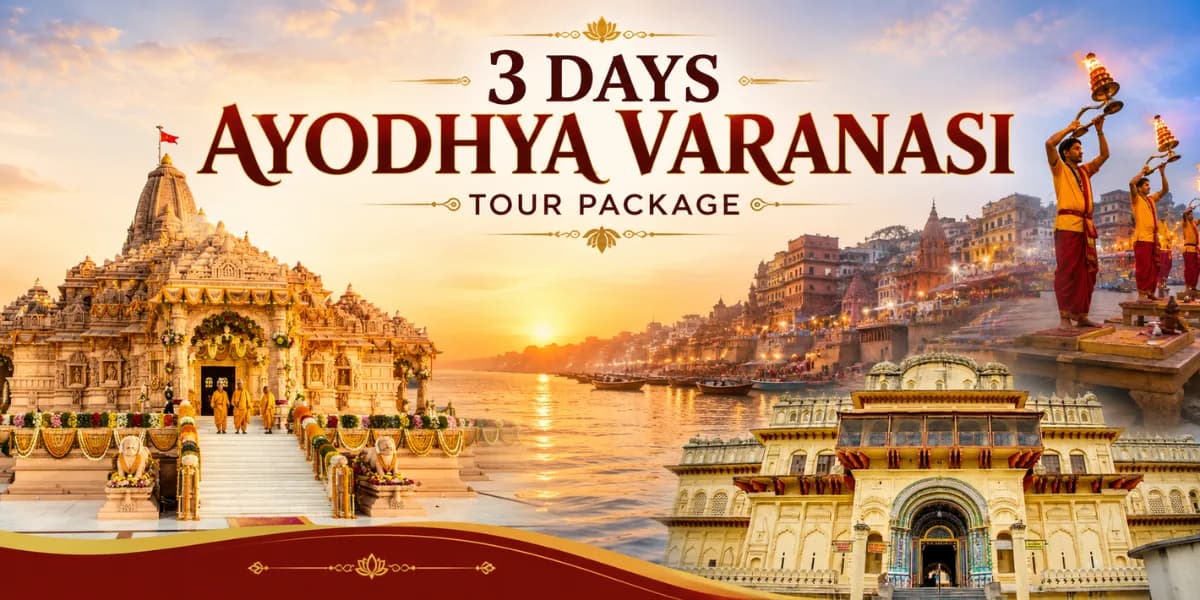
Our popular Ayodhya and Varanasi tour packages are built for pilgrims, families and first-time visitors who want both cities done properly rather than rushed. Every itinerary covers the fixed points — Ram Lalla darshan at the Ram Mandir, Hanuman Garhi, Kanak Bhawan and the evening Saryu Aarti at Ram Ki Paidi in Ayodhya; Kashi Vishwanath Jyotirlinga darshan, Kaal Bhairav, Sankat Mochan and the Ganga Aarti at Dashashwamedh Ghat in Varanasi. What separates a good pilgrimage package from a bad one on this route is timing, not sightseeing. Both cities close their temples for roughly two and a half hours in the middle of the day, the shortest darshan queues are between 5 and 8 in the morning, and the aartis only happen after sunset. Plan against that shape and you lose half a day standing in the heat. Every plan below is built around it by guides who live here. Each Ayodhya Varanasi tour package includes private AC transport, hotel or dharamshala stay chosen for walking distance to the temples, a government-certified local guide, and full darshan assistance — including the free Ram Mandir Sugam Darshan e-pass, which releases at midnight exactly fifteen days ahead and fills within minutes on peak dates. Airport and railway transfers from Ayodhya Dham Junction, Varanasi Cantt, Prayagraj Junction and Lucknow are included. Durations run from a one-day Ayodhya or Varanasi darshan tour through two and three-day combined itineraries, up to the five-day Ayodhya Prayagraj Varanasi circuit that most families end up choosing. Longer yatras extend into Chitrakoot for Lord Ram's exile years, Vindhyachal for the Shakti Peetha of Vindhyavasini Devi, Naimisharanya for the Chakra Tirth, or Gaya and Bodhgaya east of Varanasi. We also plan around who is travelling. Senior citizens get wheelchair assistance at the Ram Mandir steps, shorter walking distances and the quieter afternoon darshan session; families with children get shorter driving legs and a real midday break; groups of twenty or more get a Tempo Traveller or coach with a dedicated coordinator. Pricing is confirmed in writing before you travel, with no advance payment on most bookings and no commission-driven detours to shops.
Share your details — our Ayodhya–Varanasi team will call you within 2 hours with a custom darshan itinerary, honest pricing and zero commissions.
Beware of fake agents. We don't operate through third-party agents. Verify on +91 90584 30503 before any payment.
Trusted by 38,000+ Pilgrims
Why Pilgrims Choose Us
We Cover