
Batuk Bhairav Temple, Varanasi — Akhand Deepak, Timings & Darshan Guide
Batuk Bhairav Temple at Kamachha, Varanasi is dedicated to Batuk Bhairav — Bhairav in his gentle child form, a manifestation of Lord Shiva. Its fame rests on the Akhand Deepak, an eternal lamp said to have burned here for centuries without ever going out. Devotees receive oil from that lamp as prasad, believing it heals wounds and skin ailments and clears negative energy. The temple is deeply revered in Tantric traditions and by Aghori practitioners. Darshan is free, with morning and evening sessions, and it sits about 3 km from the Kashi Vishwanath temple.
- Timings
- ~5 AM–12 PM & 4 PM–10 PM
- Famous For
- Akhand Deepak — the eternal lamp
- Deity
- Batuk Bhairav (child form of Shiva)
- Entry
- Free · no ticket
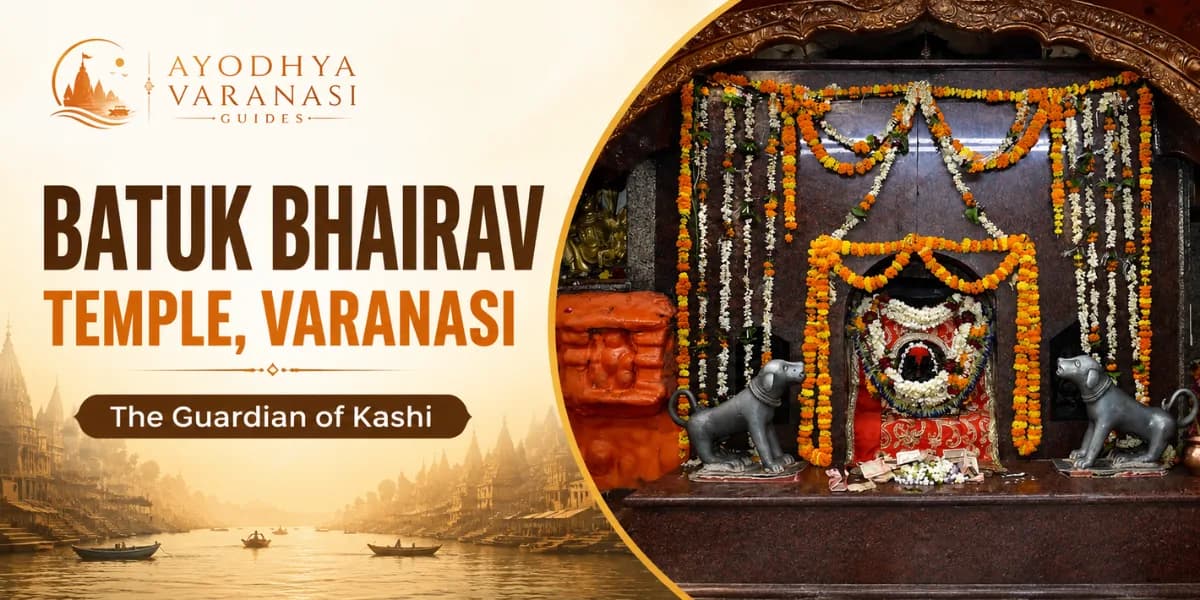
Batuk Bhairav Temple
Kamachha, Varanasi · The Eternal Lamp
4.9 / 5 · Kashi Darshan Help
Bhairav · Vishwanath · Ghats
- Timings
- ~5:00 AM–12:00 PM & 4:00 PM–10:00 PM
- Deity
- Batuk Bhairav — Bhairav as a child
- Famous For
- Akhand Deepak & its oil prasad
- Tradition
- Shaiva & Tantric; revered by Aghoris
- Entry
- Free · no ticket required
- Location
- Kamachha, Bhelupur, Varanasi
What Are the Batuk Bhairav Temple Timings?
Batuk Bhairav opens in two sessions — early morning and evening — and, unusually for Varanasi, it stays open late into the night, which suits the Tantric traditions associated with Bhairav worship. Darshan is free. The oil of the Akhand Deepak is distributed to devotees during darshan hours. Timings extend on Bhairav Ashtami and through Navratri.
Morning Session
Opens with the morning aarti
Midday Break
Temple usually closed
Evening Session
Often open later on special nights
Morning Aarti
The quietest, most powerful darshan
Evening Aarti
The busiest and most atmospheric
Akhand Deepak Oil
Given to devotees as prasad
Sundays & Tuesdays
Traditionally the days for Bhairav
Tip: come on a Sunday or Tuesday, the traditional days for Bhairav worship, or on Bhairav Ashtami when the temple stays open through the night. WhatsApp us and we will confirm the aarti timing for your date and fit it into your Kashi circuit.
When Is the Best Month to Visit Batuk Bhairav Temple? (2026)
Varanasi’s weather runs to extremes, and the temple calendar shapes the atmosphere here. October to March is the comfortable window, while Navratri and Bhairav Ashtami are the most charged times of the year at a Bhairav shrine.
Bhairav Ashtami, Navratri and Sawan are the peak devotional periods. Ordinary weekday mornings are quiet and unhurried.
Who Is Batuk Bhairav — and Why Is This Temple So Revered?
Who Is Batuk Bhairav?
Bhairav is the fierce, protective manifestation of Lord Shiva, and Kashi is his city. Batuk Bhairav is his gentlest form — batuk means a young boy, and here Bhairav is worshipped as a child. The result is a shrine with an unusual double character: the guardian power of Bhairav, approached with the tenderness owed to a child.
What Is the Akhand Deepak?
This is the reason the temple is famous. The Akhand Deepak is an eternal lamp that devotees say has burned here continuously for centuries, never once extinguished. It is tended without a break, and the flame is treated not as a symbol of the deity’s presence but as that presence itself.
Why Do Devotees Take the Lamp Oil as Prasad?
Oil from the Akhand Deepak is given to devotees as prasad, and people carry it home across India. It is believed to heal wounds and skin ailments, to ease long-standing physical trouble, and to clear negative energy, nazar and afflictions that no other remedy has touched. You will see visitors applying a little to the forehead or an injury before they leave. Whatever you make of it, this is the living heart of the temple.
Why Is the Temple Important in Tantric Traditions?
Bhairav worship sits close to the Tantric current that has always run through Kashi, and Batuk Bhairav is held in particular reverence by Tantric practitioners and by Aghoris. The eternal flame and the late opening hours both belong to that world. Visitors are entirely welcome — but it is worth knowing that for some of the people beside you, this is serious practice rather than sightseeing.
Where Does Batuk Bhairav Fit Among Kashi’s Bhairavs?
Kashi is guarded by Bhairav in several forms. Kal Bhairav is the Kotwal, the police chief of the city, whose permission tradition says a pilgrim needs before Kashi darshan is complete. Batuk Bhairav stands alongside him as the child form — approached for protection, for healing and for the removal of obstacles that will not otherwise shift.
Why Do People Come Here Specifically?
Almost nobody arrives at Batuk Bhairav casually. Devotees come for the lamp oil, for relief from illness, for protection, or after being told by family that this is the place to go. That gives the shrine a very different atmosphere from the great tourist temples of Varanasi — smaller, more intense and unmistakably purposeful.
Did you know? Tradition holds that a pilgrimage to Kashi is incomplete without Bhairav darshan — the Kotwal of the city. Many pilgrims visit Kal Bhairav and Batuk Bhairav on the same day, either side of their Kashi Vishwanath darshan.
How Does a Batuk Bhairav Darshan Work?
The temple is small and the darshan is quick, but there is a sequence to it that first-time visitors usually miss.
- 1
Reach Kamachha
The temple is in the Kamachha area of Bhelupur, about 3 km from Kashi Vishwanath. Autos and e-rickshaws know it — ask for Batuk Bhairav Mandir, Kamachha.
- 2
Leave Footwear at the Entrance
Footwear stands are available outside. The lanes here are narrow, so it is easier to arrive on foot for the last stretch.
- 3
Join the Darshan Line
Queues are short outside festival days. On Sundays, Tuesdays and during Navratri, expect to wait.
- 4
Have Darshan of Batuk Bhairav
Stand before Bhairav in his child form. Devotees offer flowers, sindoor and a black thread as a mark of protection.
- 5
See the Akhand Deepak
Look for the eternal lamp — the flame said to have burned here for centuries without being extinguished. This is the centre of the temple.
- 6
Receive the Lamp Oil as Prasad
Ask the priest for oil from the Akhand Deepak. Devotees apply a little and carry the rest home in a small container.
- 7
Carry a Small Bottle for the Oil
Many people bring a clean container. Small bottles are also sold nearby if you have not brought one.
- 8
Continue Your Kashi Circuit
Durga Kund, Sankat Mochan and Tulsi Manas Mandir are close by, and Kashi Vishwanath is a short ride away.
When Should You Visit Batuk Bhairav Temple?
The shrine is open every day, but the day of the week matters here more than at most temples — Bhairav has his own calendar.
Best Season — October to March
Varanasi's winter is right for the whole Kashi temple circuit. November and February are ideal. May and June are brutal in the lanes, so restrict those months to early morning or after dark.
Best Time of Day — Early Morning or Evening Aarti
The 5:30 AM aarti is the quietest and, many say, the most powerful. The evening aarti around 7:30 PM is busier and far more atmospheric — take your pick.
Most Special — Bhairav Ashtami & Navratri
Bhairav Ashtami (November/December) is the temple's greatest day, when it stays open through the night. Navratri, Sawan and Sundays and Tuesdays are the other high points of the Bhairav calendar.
What Can You See at Batuk Bhairav Temple?
It is a compact shrine, and the darshan moves fast. These are the things worth noticing before you go.
The Akhand Deepak
Top PickThe Eternal Lamp
The flame said to have burned without interruption for centuries — the single reason most devotees make the journey to Kamachha.
The Batuk Bhairav Sanctum
Top PickThe Main Darshan
Bhairav in his child form, adorned with sindoor and flowers — protective and approachable at the same time.
The Oil Prasad
What You Take Home
Oil from the eternal lamp, given to devotees and carried across India for healing and protection.
The Black Threads
A Mark of Protection
Devotees tie a black thread here as a token of Bhairav's protection — you will see them on wrists all over Varanasi.
The Kamachha Lanes
Old Varanasi
The temple sits in a working residential quarter rather than a tourist zone, which is part of why it feels the way it does.
Why Do Devotees Travel Across India for This Temple?
Batuk Bhairav is not on most Varanasi sightseeing lists, yet people come here with real intent. Here is why.
The Lamp That Never Goes Out
A flame tended without a break for centuries. Standing in front of it is a different experience from reading about it.
The Healing Oil
Devotees come specifically for the Akhand Deepak oil, believed to heal wounds and skin ailments and to lift afflictions.
Protection From Bhairav
Bhairav is the guardian of Kashi. People come here for protection — for themselves, for children, for a home or a business.
The Tantric Kashi
This shrine opens a side of Varanasi that ghat tourism never reaches, revered by Tantric practitioners and Aghoris alike.
Is There an Entry Fee at Batuk Bhairav Temple? (2026)
Darshan at Batuk Bhairav is completely free, and so is the oil of the Akhand Deepak — it is prasad, not a purchase. Your only costs are optional offerings and the ride there.
Everything essential here is free. What we add is a Kashi darshan circuit that includes the temples most itineraries skip — Batuk Bhairav, Kal Bhairav, Durga Kund and Sankat Mochan alongside Kashi Vishwanath (with VIP darshan assistance) and the evening Ganga Aarti. Pricing confirmed in writing.
Auto fares are indicative and vary with traffic, season and time of day. Agree the fare before you set off.
What Do Devotees Say About Batuk Bhairav Temple?
1,163 verified reviews
My mother has used the oil from this temple for years and asked me to bring some back. I went expecting a formality and left genuinely moved. Carry a small bottle — I had to buy one outside.
Ashok Trivedi
Jabalpur
Our guide took us here after Kashi Vishwanath and it was completely different in feeling — smaller, quieter, and everyone there for a reason. The Akhand Deepak is something you do not forget.
Nandini Ghosh
Kolkata
I have been coming since childhood, every Tuesday. Most tourists never hear of Batuk Bhairav. Good to see a proper guide explaining the tradition instead of just listing timings.
Ravi Shankar Dubey
Varanasi
Visited on Bhairav Ashtami. The temple was open all night and the atmosphere was extraordinary. Very crowded, so go with someone who knows the lanes — we would have been lost alone.
Priya Ramesh
Coimbatore
Small temple in a residential area, not a tourist spot at all, which I liked. Do check timings — it shuts in the afternoon. The evening aarti was worth planning around.
Imtiaz Khan
Lucknow
How Do You Fit Batuk Bhairav Into a Kashi Darshan Day?
Batuk Bhairav sits close to the Durga Kund and Sankat Mochan cluster, so it belongs in that half of the day. Here is the plan our guests enjoy most.
Subah-e-Banaras & boat ride. Begin on the Ganga with sunrise from a boat — the classic first hour in Varanasi.
Kashi Vishwanath darshan. Darshan of the Jyotirlinga at Shri Kashi Vishwanath Dham. We assist with VIP darshan to save you the queue.
Kal Bhairav Temple. The Kotwal of Kashi — traditionally, a Kashi yatra is incomplete without Bhairav darshan.
Batuk Bhairav Temple, Kamachha. Darshan of Bhairav in his child form and the Akhand Deepak. Ask for the lamp oil as prasad.
Durga Kund & Sankat Mochan. Two of Varanasi's most loved temples, minutes away in the same quarter.
Sarnath (optional). Where the Buddha gave his first sermon, ~10 km away — an easy afternoon addition.
Ganga Aarti at Dashashwamedh Ghat. Close the day with the great evening aarti on the riverfront.
Which Tour Package Covers Batuk Bhairav Temple?
Batuk Bhairav Temple is best seen as part of a planned Kashi darshan rather than a single stop — the old-city temples keep different hours and the ghats reward proper sequencing. These are the itineraries our guests book most, each with Kashi Vishwanath VIP darshan assistance, a certified local guide and transport, priced in writing before you travel.
- 1 Day1 Day Varanasi Tour PackageKashi Vishwanath darshan, a sunrise boat ride and the evening Ganga Aarti.
- 2 Days2 Days Varanasi Tour PackageKashi Vishwanath, the ghats, Sarnath and the old-city temple circuit.
- 3 Days3 Days Varanasi Tour PackageKashi at a proper pace — the Dham, the Bhairavs, the Durgakund cluster and the aarti.
- 4 Days4 Days Varanasi Tour PackageEverything in Kashi plus Sarnath, with time for the temples most itineraries skip.
- 2 Days2 Days Ayodhya Varanasi Tour PackageRam Mandir and Kashi Vishwanath across two cities, with the Ganga Aarti.
- 3 Days3 Days Ayodhya Varanasi Tour PackageThe classic pairing — Ram Mandir, Kashi Vishwanath and the ghats.
- 3 Days3 Days Varanasi Prayagraj Tour PackageKashi and the confluence, with time for the ghats and the Sangam boat ride.
- 4 Days4 Days Ayodhya Varanasi Prayagraj Tour PackageAll three cities — Ram Mandir, Kashi Vishwanath and the Triveni Sangam.
- 5 Days5 Days Ayodhya Varanasi Prayagraj Tour PackageThe complete sacred circuit at a comfortable, senior-friendly pace.
Want Batuk Bhairav Temple built into a custom itinerary? We plan around your dates, your pace and what you actually want to see.
See all Varanasi & Ayodhya tour packagesHow Do You Reach Batuk Bhairav Temple in Varanasi?
The temple is at Kamachha, in the Bhelupur area, about 3 km from Kashi Vishwanath and close to Durga Kund. It is easy to reach, though the final lanes are narrow.
By Air
Lal Bahadur Shastri International Airport, Babatpur is about 27 km away, with taxis at the terminal. Allow an hour in traffic.
By Train
Varanasi Junction (Cantt) is roughly 5 km away and Banaras station about 6 km. Both are well connected to Delhi, Lucknow, Prayagraj and Ayodhya.
By Road / Taxi
Varanasi sits on NH-19 and NH-31 — about 120 km from Prayagraj, 200 km from Ayodhya and 320 km from Lucknow.
The Last Mile
Autos and e-rickshaws reach Kamachha easily. The temple is in a residential quarter, so expect to walk the last short stretch on foot.
Where Is Batuk Bhairav Temple Located in Varanasi?
Batuk Bhairav Temple stands in Kamachha, in the Bhelupur area of Varanasi, on the Rath Yatra–Kamachha road, close to Durga Kund. Use the map below to navigate.
Varanasi
- Area: Kamachha, Bhelupur, Varanasi
- PIN: Varanasi 221010
- From Kashi Vishwanath: ~3 km
- From Durga Kund: ~2 km
- Known for: The Akhand Deepak and its oil prasad
Where Should You Stay Near Batuk Bhairav Temple?
Varanasi is compact and every area has its trade-off. These are the three we recommend most often, depending on what matters to you.
Bhelupur & Kamachha
Quiet residential streets with guesthouses and mid-range hotels, walking distance from Batuk Bhairav, Durga Kund and Sankat Mochan.
Assi Ghat & Ravidas Gate
The calmer end of the ghats, popular with long-stay visitors, with cafés and easy boat access. About 15 minutes from the temple.
Cantt & Sigra
Branded and business hotels near the railway station, with parking and dining — the easiest base if you are arriving or leaving by train.
What Else Is Worth Visiting Near Batuk Bhairav Temple?
The temple sits in one of Varanasi's richest temple quarters. Here is what to combine with it.
Kashi Vishwanath Temple
The Jyotirlinga of Kashi, ~3 km away. We assist with VIP darshan to skip the main queue.
Kashi Vishwanath VIP Darshan
Skip-the-queue Sugam darshan assistance at Shri Kashi Vishwanath Dham, arranged in advance.
Ganga Aarti, Dashashwamedh Ghat
The world-famous evening aarti on the riverfront — the unmissable Varanasi experience.
ISKCON Temple, Varanasi
The Sri Sri Radha Gopal Bihari temple near Durgakund, a short ride away in the same quarter.
Kaal Bhairav Temple
The Kotwal of Kashi — the fierce guardian whose permission tradition says you need to be in the city.
Markandey Mahadev Temple
The Shiva temple at the Ganga–Gomti confluence, ~30 km away, where Markandeya conquered death.
How to Commute in Varanasi
Autos, e-rickshaws, boats and taxis — how to actually get around the old city without stress.
Bhairav Ashtami & Navratri at Batuk Bhairav
Bhairav Ashtami — the appearance day of Lord Bhairav, falling in the month of Margashirsha (November/December) — is the greatest day of the year here. The temple stays open through the night, the lanes of Kamachha fill with devotees, and the darshan queue runs for hours.
Both Navratris are powerful at a Bhairav shrine, and Sawan brings devotion to every Shiva temple in Kashi. Sundays and Tuesdays are the traditional weekly days for Bhairav worship. Plan ahead for these dates — Varanasi fills up fast and the lanes here are narrow.
What Should You Know Before Visiting Batuk Bhairav Temple?
A few practical things our guides tell every guest before we head into Kamachha.
Carry a small clean bottle
For the Akhand Deepak oil. Most first-time visitors do not know to bring one and end up buying a container outside.
Mind the midday break
The temple closes roughly between 12 and 4 PM. Arriving at 2 PM means a locked door and a wasted trip across the city.
Sundays and Tuesdays are Bhairav days
These are the traditional days for Bhairav worship — more devotional, more crowded, and worth planning around if you can.
It is a working shrine, not a monument
Many people here are seeking help with genuine illness or difficulty. Keep photography discreet and follow the priests' guidance.
The lanes are narrow
Kamachha is a residential quarter. Your vehicle will not reach the door — expect a short walk on the last stretch.
The temple stays open late
Unlike most Varanasi temples, evening darshan runs well into the night, which suits the Tantric traditions around Bhairav.
Combine it with Kal Bhairav
Tradition holds that Kashi darshan is incomplete without Bhairav. Many pilgrims visit Kal Bhairav and Batuk Bhairav on the same day.
Dress modestly
Standard temple etiquette applies — modest clothing and footwear removed at the entrance.
Expect an intense atmosphere on festival days
On Bhairav Ashtami and during Navratri the shrine is crowded and charged. Go with a guide who knows the route in and out.
Ask the priest for the oil
It is prasad and it is free. Do not feel you have to buy anything to receive it.
Batuk Bhairav Temple Varanasi — Frequently Asked Questions
The questions devotees ask us most about Batuk Bhairav — the eternal lamp, the oil prasad, timings, location and how to fit it into a Kashi darshan.
Batuk Bhairav Temple at Kamachha, Varanasi, is dedicated to Batuk Bhairav — Bhairav, the fierce protective form of Lord Shiva, worshipped here in his gentle child form. It is best known for the Akhand Deepak, an eternal lamp said to have burned for centuries.
Still have a question?
Our local team replies within 30 minutes.
Written & verified by the local Varanasi guide team at Ayodhya Varanasi Guides
Our government-certified Kashi guides take devotees to Batuk Bhairav through the year, including on Bhairav Ashtami when the temple stays open all night. This guide is written from that first-hand experience. Last updated: July 2026. Darshan hours change on festival days — message us for the timing on your travel date.
Receive the Blessing of the Eternal Lamp at Batuk Bhairav
Let Ayodhya Varanasi Guides plan a complete Kashi darshan — Batuk Bhairav and Kal Bhairav, Kashi Vishwanath with VIP darshan assistance, Durga Kund and Sankat Mochan, and the evening Ganga Aarti — with a certified local guide who knows the lanes and the traditions. Confirmed in writing.