Prayagraj tour packages start at about ₹2,499 for a one-day Sangam darshan and extend into multi-city circuits with Ayodhya and Varanasi. Every package covers the holy dip at the Triveni Sangam by motorboat, Bade Hanuman and Akshayavat inside the fort. Crucially, we also take you to Veni Madhav — tradition holds the Sangam yatra is incomplete without it, and almost no visitor is told.

1 Day
Sangam snan + Bade Hanuman
1 package
2 Days
Adds Akshayavat & the Shakti Peethas
3 packages
3 Days
Includes Shringverpur & Bharadwaj
5 packages
4 Days
Prayagraj + Ayodhya or Varanasi
5 packages
5 Days
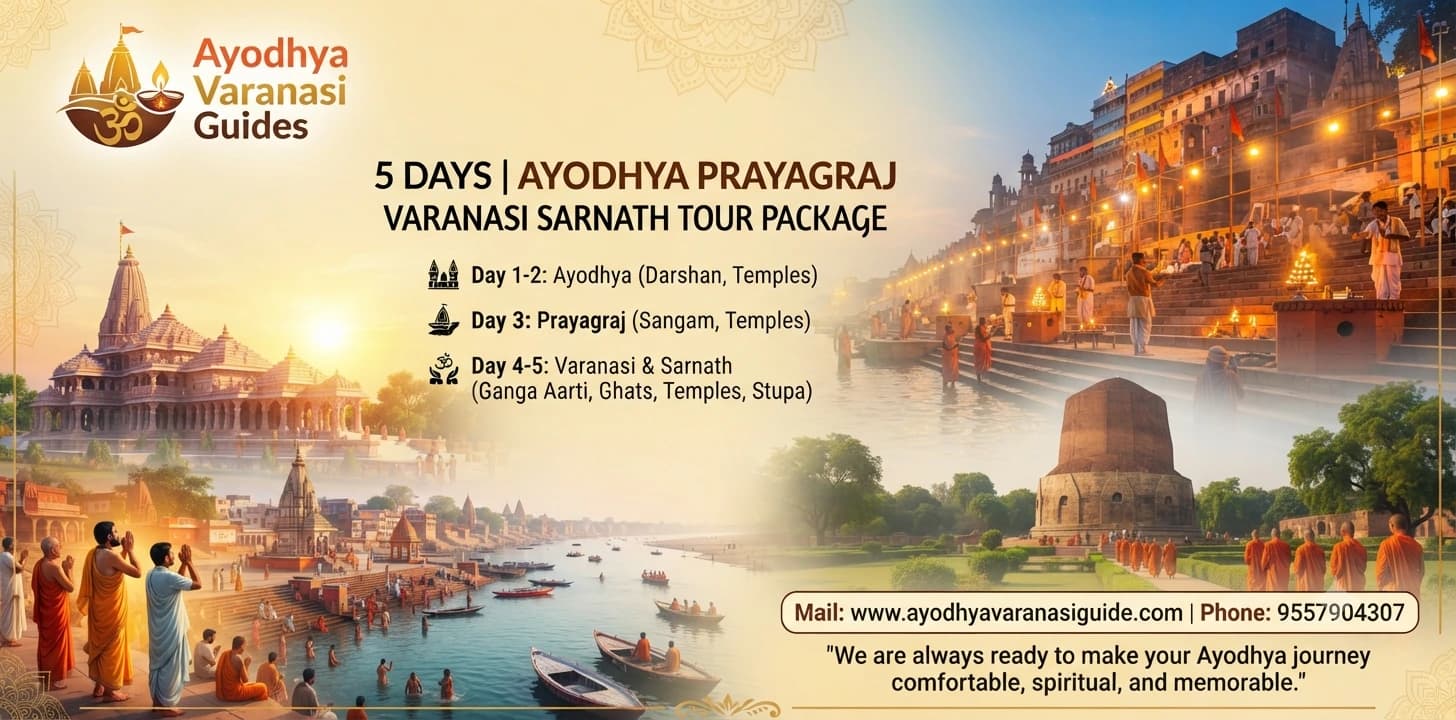
Ayodhya–Prayagraj–Varanasi
7 packages
6+ Days
Adds Chitrakoot or Vindhyachal
25 packages
Sorted shortest first. Every price is per person and confirmed in writing before you travel.
 1D4.9
1D4.9From
₹2,499
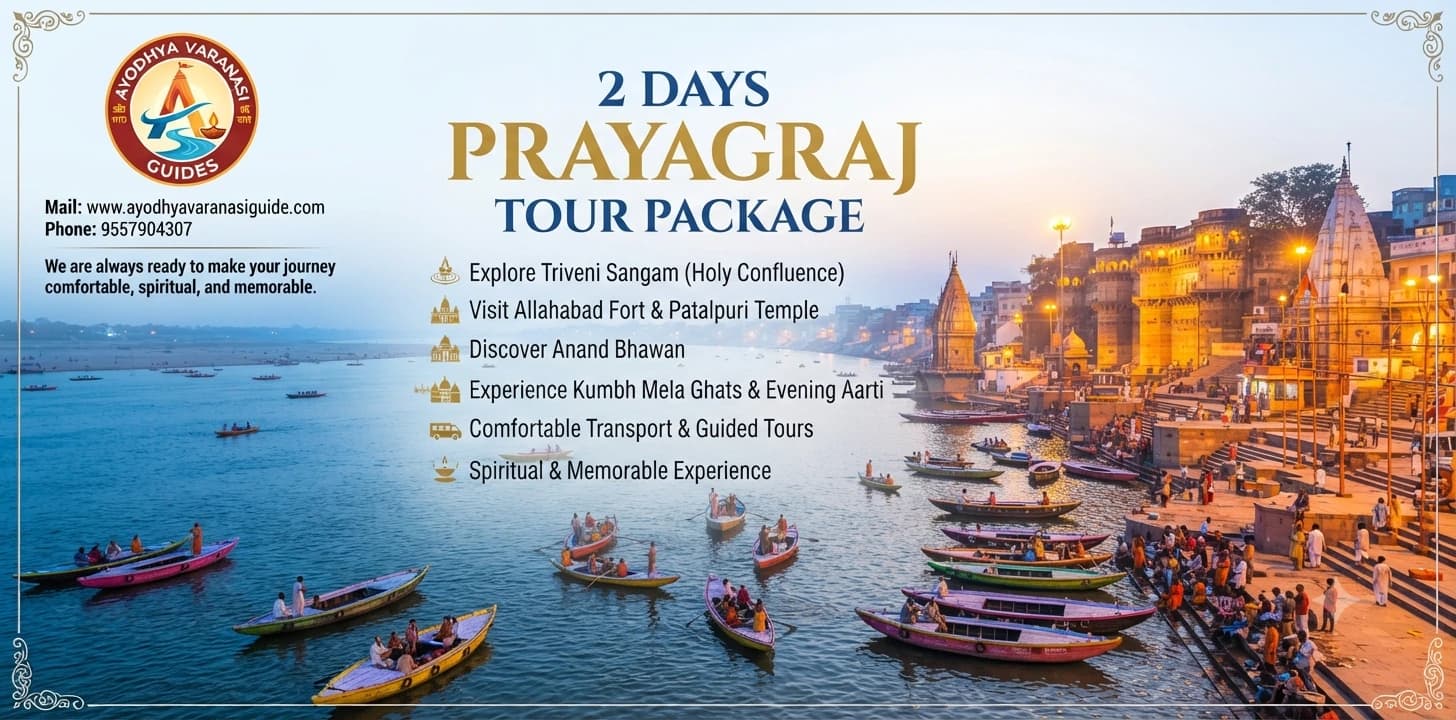 2D / 1N4.9
From
₹6,499
 2D / 1N4.9
From
₹6,999
 2D / 1N4.9
From
₹6,999
 3D / 2N4.9
From
₹7,999
 3D / 2N4.9
From
₹9,999
 3D / 2N4.9
From
₹12,999
 3D / 2N4.9
From
₹14,999
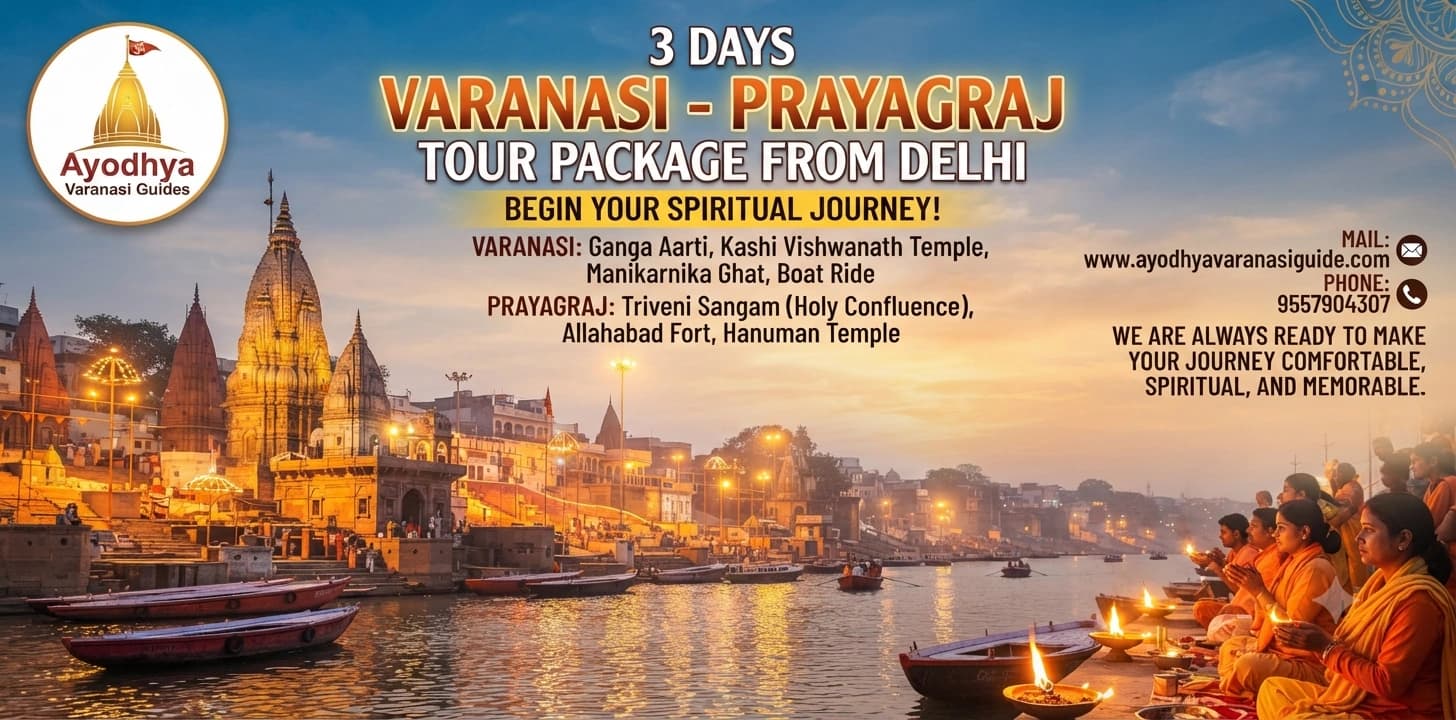 3D / 2N4.9
From
₹15,999
 4D / 3N4.9
From
₹5,999
 4D / 3N4.9
From
₹11,999
 4D / 3N4.9
From
₹13,999
 4D / 3N4.9
From
₹14,999
 4D / 3N4.9
From
₹14,999
 5D / 4N4.9
From
₹14,999
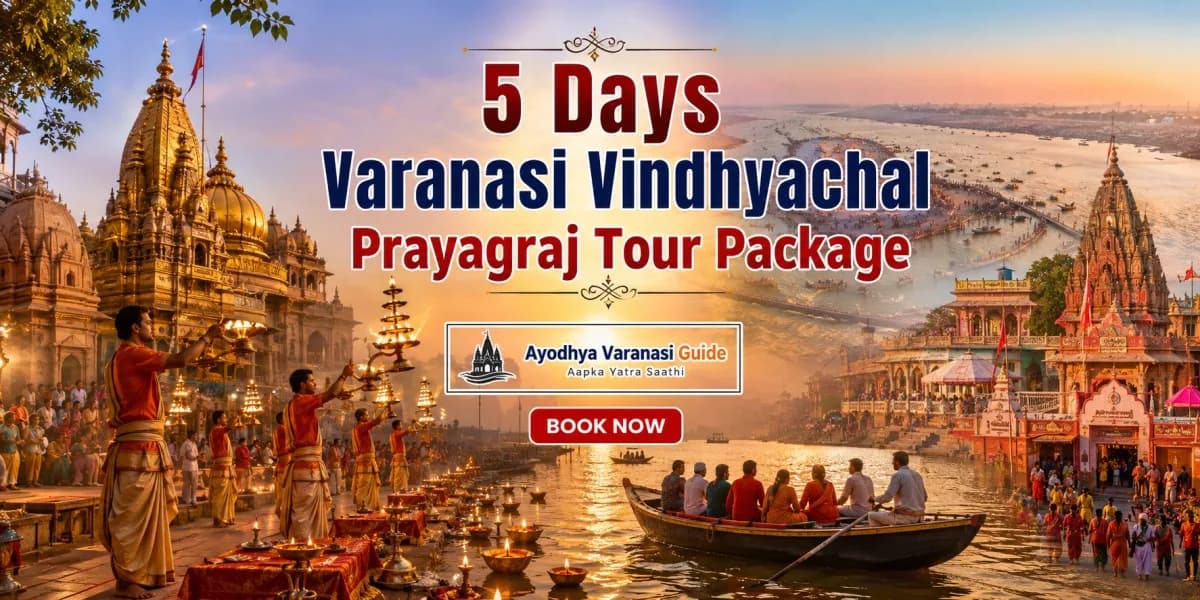 5D / 4N4.9
From
₹15,999
.webp&w=3840&q=75) 5D / 4N4.9
5D / 4N4.9From
₹17,999
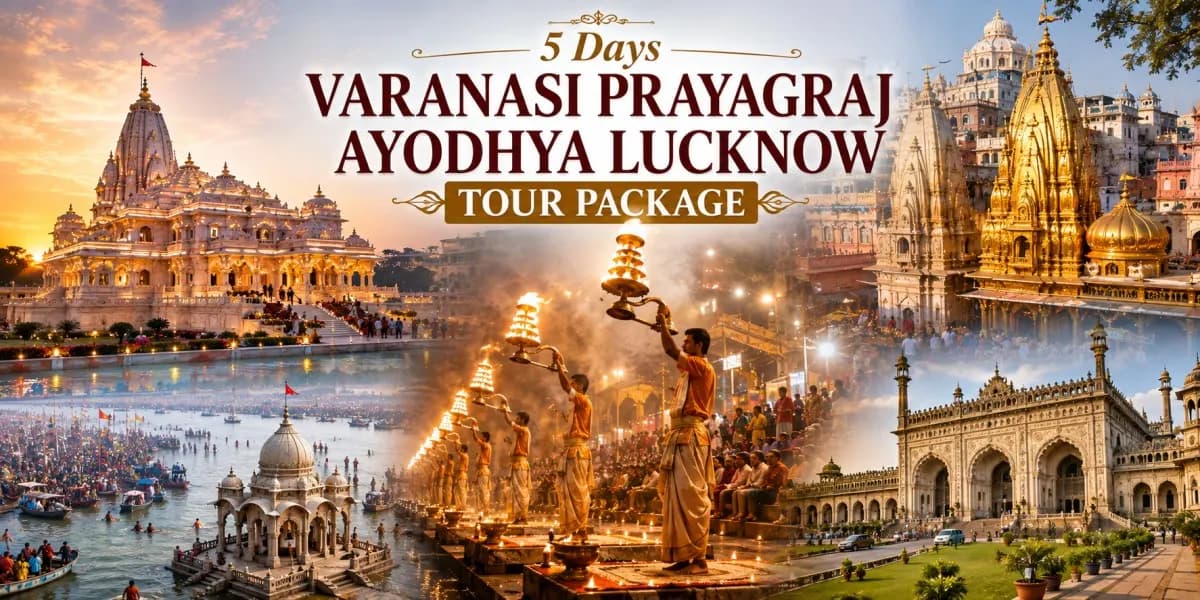 5D / 4N4.9
From
₹18,999
 5D / 4N4.9
From
₹18,999
 5D / 4N4.9
From
₹19,999
 5D / 4N4.9
From
₹25,999
 6D / 5N4.8
From
₹7,999
 6D / 5N4.5
From
₹7,999
 6D / 5N4.9
From
₹8,999
 6D / 5N4.9
From
₹20,000
 6D / 5N4.9
From
₹22,999
 6D / 5N4.9
From
₹22,999
 6D / 5N4.9
From
₹28,999
 6D / 5N4.9
From
₹29,999
 6D / 5N4.9
From
₹36,999
 6D / 5N4.8
From
₹39,999
 6D / 5N4.5
From
₹69,999
 7D / 6N4.9
From
₹29,999
 7D / 6N4.9
From
₹34,999
 7D / 6N4.8
From
₹39,999
 7D / 6N4.6
From
₹39,999
 7D / 6N4.6
From
₹79,999
 8D / 7N4.9
From
₹24,999
 8D / 7N4.9
From
₹29,999
 8D / 7N4.9
From
₹79,999
 9D / 9N4.9
From
₹44,999
 9D / 8N4.8
From
₹69,999
 9D / 8N4.5
From
₹79,999
 10D / 9N4.9
From
₹31,999
 10D / 9N4.6
From
₹89,999
 12D / 11N4.5
From
₹89,999
Prayagraj is usually treated as a stop between Ayodhya and Varanasi, and given half a day. That is enough for the Sangam and nothing else — which means missing the temples that give the snan its meaning.
Tradition is explicit: after bathing at the confluence, the yatra is completed with darshan at Veni Madhav, one of the Dwadash Madhav temples said to have been established by Lord Vishnu to guard the Sangam. Skipping it is like taking the Vishwanath darshan in Kashi without Kaal Bhairav. It takes twenty minutes, and it is the single most common omission in a Prayagraj itinerary.
Akshayavat, the immortal banyan tree, and the underground Patalpuri temple sit inside Prayagraj Fort, which is held by the Indian Army. Entry requires a valid government photo ID for every adult in your group, and the fort has its own opening days and hours. Guests turn up without ID and are refused at the gate — we check this before you leave the hotel.
The confluence is a genuine distance offshore; you cannot reach it from the bank. Motorboats run from the ghat, and the fare quoted to a visitor at the water's edge bears little relation to the real one. We book the boat in advance at a fixed rate, with a timing set for sunrise, when the light on the water is at its best and the crowds have not yet built.
Prayagraj is a city defined by its rivers, and they move. In monsoon the reclining idol at Bade Hanuman is submerged and the temple closes for weeks — an event pilgrims travel to witness. High water also shifts the Sangam bathing point and can suspend boats altogether. Any honest Prayagraj itinerary is planned against the river, not a calendar.
Prayagraj holds three Shakti Peethas, the world's only reclining Hanuman and an ashram from the Ramayana. Here is what the itineraries include as they lengthen.
The Triveni Sangam is the confluence of the Ganga, the Yamuna and the invisible Saraswati, and the holiest bathing point in Hinduism. On the bank stands Bade Hanuman, the only temple in the world where Hanuman is worshipped in a reclining form, the idol lying below ground level. Akshayavat and Patalpuri sit within the fort alongside.
Alopi Devi is unique in having no idol at all — a wooden palanquin is worshipped in the sanctum, marking where the last fragment of Sati's body is said to have disappeared. Lalita Devi at Meerapur and Kalyani Devi complete the trio, and together they form a Shakti circuit that most visitors never realise exists.
Bharadwaj Ashram is where Ram, Sita and Lakshman stayed with the sage Bharadwaj during their exile — now within the city. Thirty-five kilometres out is Shringverpur, the kingdom of Nishadraj Guha, the boatman-king who ferried Ram across the Ganga; the site has a striking memorial and is almost always empty. Neither is reachable without a vehicle.
Mankameshwar on the Yamuna bank near the fort is the city's most visited Shiva temple, busiest on Sawan Mondays and Mahashivratri. Someshwar Mahadev, Koteshwar Mahadev at Shivkuti and Padila Mahadev round out the circuit. Browse every temple with timings before you plan.
Not sure which Prayagraj package fits?
Send your dates and group size — we will send back a plan and an itemised quote within 2 hours.
Unlike Ayodhya or Varanasi, Prayagraj's sites are spread across a wide city and out into the district. Days here are decided by driving distance more than by darshan queues.
The essentials, and it works well. A 1-day Prayagraj tour package from ₹2,499 covers the sunrise Sangam snan by boat, Bade Hanuman, Akshayavat and Veni Madhav — the complete traditional sequence. It fits neatly as a break in the drive between Ayodhya and Varanasi, which is how most guests use it.
For the Shakti Peethas and the city itself. The 2-day Prayagraj tour from ₹6,499 adds Alopi Devi, Lalita Devi and Kalyani Devi, Mankameshwar on the Yamuna bank and Bharadwaj Ashram, with time for Anand Bhavan and the colonial quarter if that interests you.
Anyone who wants Shringverpur. At 35 km out it needs the better part of a morning, and it is the most rewarding thing in the district for anyone following the Ramayana closely. Three days also comfortably covers the outlying Shiva temples and leaves room for a second Sangam visit at a different hour.
Almost certainly — Prayagraj sits exactly between them. Ayodhya is 165 km north and Varanasi 120 km east, which makes the 5-day Ayodhya Prayagraj Varanasi circuit the most efficient pilgrimage route in Uttar Pradesh. Shorter pairings work too, like the 3-day Ayodhya Prayagraj tour.
A motorboat to the confluence and back, timed for sunrise, at a price agreed before you reach the water. Shared and private boats are both available. During Magh Mela and Kumbh the ghats and boat points move, and knowing which one is operating on a given day is most of the value.
Civil Lines is the comfortable choice, with the city's better hotels and restaurants about 15 minutes from the Sangam. Stays closer to the ghats and Daraganj suit anyone wanting a pre-dawn snan without a drive. During Mela season, tented accommodation on the floodplain is an experience in itself, and it books out months ahead.
Prayagraj's sites are genuinely far apart — the fort, the Shakti Peethas and Shringverpur are in three different directions. Every package includes private AC transport with a driver who knows the fort's access rules and the Sangam approach roads. Transfers from Prayagraj Junction and the airport are included; the vehicle alone is available through our taxi service.
Our Prayagraj guides handle the sequence properly — snan first, then Veni Madhav — arrange a pandit for tarpan or pind daan at the Sangam if you want it, and can explain why a city with three rivers has three goddesses. Certified, and available in major regional languages.
October to March, with November to February the strongest window. Winter mornings at the Sangam are cold — bring warm clothes for a dawn snan, because you will be wet on an open boat — but the light is beautiful and the water calm. Summer here is severe, regularly above 42°C, with almost no shade on the floodplain.
Every January and February the Magh Mela turns the floodplain into a temporary city of tents, akharas and bathing ghats. Every twelve years that becomes the Maha Kumbh, the largest human gathering on earth. The atmosphere is unmatched and the logistics are unforgiving — roads close, the bathing points move daily and hotels are booked out months ahead. If you want a Mela snan, talk to us early rather than late.
Makar Sankranti, Mauni Amavasya and Basant Panchami are the principal Mela bathing days and draw the largest crowds of the year. Mahashivratri fills Mankameshwar, and Navratri brings the three Shakti Peethas alive. Monsoon closes Bade Hanuman for weeks when the river rises over the idol.
Prayagraj Junction is one of northern India's major railheads, with direct trains from Delhi, Mumbai, Kolkata, Lucknow and Varanasi, and it sits close to Civil Lines. Prayagraj Chheoki and Naini serve some routes. For most visitors the train is faster and more comfortable than flying here.
Prayagraj Airport at Bamrauli has limited connectivity, mostly Delhi, Mumbai and Bengaluru. Many travellers fly into Varanasi (~120 km) or Lucknow (~200 km) and drive in — a transfer we run constantly, and one that pairs naturally with starting or ending the circuit elsewhere.
Ayodhya is ~165 km (4 hrs), Varanasi ~120 km (3 hrs), Lucknow ~200 km, Chitrakoot ~130 km and Vindhyachal ~90 km. Prayagraj's position at the centre of all of them is exactly why it belongs in the middle of a circuit rather than being skipped.
The snan is free and so is every temple darshan. Your real costs are the boat, transport across a spread-out city, stay and a guide.
One day starts around ₹2,499 per person and two days from about ₹6,499. Pairings like the three-day Ayodhya Prayagraj tour start near ₹9,999, and the five-day three-city circuit from ₹17,999. Mela and Kumbh dates price differently because accommodation costs multiply — book those early for the best rates.
It depends on shared versus private and on the season, and it is the one item where visitors are most routinely overcharged at the ghat. We fix the rate in advance as part of your package so there is no negotiation at the water's edge, and no surprise when you step off the boat.
Prasad and offerings, a pandit's dakshina if you arrange tarpan or pind daan at the Sangam, and meals not specified in your itinerary. Nothing at the Sangam requires a payment to any individual for access — if someone insists otherwise, they are not an official.
Sunrise at the Sangam is the anchor. Everything else is arranged around driving distance, because the sites sit in three different directions.
Day 1 · 5:30 AM
Out to the confluence for the holy dip at first light, when the water is calm and the crowds have not yet built.
Day 1 · 8:00 AM
The world's only reclining Hanuman, the idol lying below ground level on the Sangam bank.
Day 1 · 9:30 AM
The immortal banyan and the underground temple inside Prayagraj Fort. Carry government photo ID for every adult.
Day 1 · 11:30 AM
The step that completes the Sangam yatra — and the one almost every visitor is never told about.
Day 1 · 5:00 PM
The city's most visited Shiva temple, on the Yamuna bank beside the fort, at a quieter hour.
Day 2 · 7:00 AM
Two of the three Shakti Peethas — Alopi Devi's sanctum famously holds a palanquin rather than an idol.
Day 2 · 10:00 AM
The third Shakti Peetha, then the ashram where Ram, Sita and Lakshman stayed during their exile.
Day 2 · 1:00 PM
The Nehru family home and museum, for those who want a break from the temple circuit.
Day 2 · 3:00 PM
Continue east to Varanasi (3 hrs) or north to Ayodhya (4 hrs) if you are on the circuit.
The questions we are asked most about planning a Sangam yatra.
A one-day Prayagraj tour package starts at around ₹2,499 per person and two days from about ₹6,499. Multi-city pairings such as the three-day Ayodhya Prayagraj tour start near ₹9,999, and the five-day three-city circuit from ₹17,999. Magh Mela and Kumbh dates are priced separately because accommodation costs rise sharply.
One day covers the traditional Sangam sequence — snan, Bade Hanuman, Akshayavat and Veni Madhav. Two days adds the three Shakti Peethas, Mankameshwar and Bharadwaj Ashram. Three days is needed for Shringverpur, which is 35 km out and takes most of a morning.
By motorboat from the ghat — the confluence is a real distance offshore and cannot be reached from the bank. We book the boat in advance at a fixed rate with a sunrise timing. During Magh Mela and Kumbh the bathing points and boat ghats move, sometimes daily.
Yes, but it sits inside Prayagraj Fort, which is held by the Indian Army, and entry requires a valid government photo ID for every adult in your group. The fort has its own opening days and hours, which we confirm before your visit.
Tradition holds that the Sangam yatra is incomplete without darshan at Veni Madhav, one of the Dwadash Madhav temples established to guard the confluence. It takes about twenty minutes and is the most commonly missed step in a Prayagraj itinerary.
The Magh Mela is held every year through January and February on the Sangam floodplain. Every twelve years it becomes the Maha Kumbh, the largest human gathering on earth, with Ardh Kumbh at the six-year midpoint. Makar Sankranti, Mauni Amavasya and Basant Panchami are the principal bathing days.
November to February for weather and for the Mela season. Winter mornings at the Sangam are cold, so carry warm clothes for a dawn snan. Summer regularly exceeds 42°C with no shade on the floodplain, and the monsoon can close Bade Hanuman for weeks when the river rises over the idol.
Yes. We can arrange a pandit for tarpan, pind daan and other ancestral rites at the Sangam, including the boat and the materials required. Tell us in advance so the right arrangements and timing can be made for your family.
Very much so. Outside Mela season the Sangam is calm, the boat ride is unhurried and the three Shakti Peethas, Akshayavat, Bharadwaj Ashram and Shringverpur can all be visited without crowds. Many guests prefer it this way.
Yes, and it is the natural way to travel. Prayagraj sits between the two — 165 km from Ayodhya and 120 km from Varanasi — which makes the five-day Ayodhya Prayagraj Varanasi circuit the most efficient pilgrimage route in Uttar Pradesh.
Prayagraj sits at the centre of the pilgrimage route. These are the cities on either side, and the services that connect them.
Ayodhya Tour Packages
Ram Mandir darshan and the Saryu Aarti, 165 km north.
Varanasi Tour Packages
Kashi Vishwanath and the Ganga Aarti, only 120 km east.
All Tour Packages
Every itinerary we run, from one-day darshan to ten-day circuits.
Prayagraj Taxi Service
AC vehicles for a city whose sites lie in three directions.
Prayagraj Local Guides
Certified guides for the Sangam ritual order and the Shakti Peethas.
Temples & Darshan Timings
Every Prayagraj temple with timings, entry rules and how to reach.
Send us your dates and we will fix the boat, the sunrise timing and the full traditional sequence — snan, Bade Hanuman, Akshayavat and Veni Madhav. Free itinerary within two hours, no advance payment.