
Sita Ki Rasoi, Ayodhya — Darshan & Aarti Timings, History & Guide
Sita Ki Rasoi (Sita Mata Ki Rasoi) is the sacred kitchen of Goddess Sita in Ayodhya, in the Ramkot area near the Ram Janmabhoomi. This small but deeply revered shrine displays symbolic kitchen utensils believed to be Sita's, and honours her as Annapurna — the goddess of food and nourishment. Darshan is free, the temple is open roughly 7:00 AM–8:00 PM, and a free langar (bhandara) is part of its tradition. It sits steps from Kanak Bhawan, Hanuman Garhi and the Ram Mandir.
- Timings
- Daily ~7:00 AM – 8:00 PM
- Highlight
- Sita's sacred kitchen & relics
- Deity
- Sita Mata as Annapurna
- Entry
- Free darshan · langar served
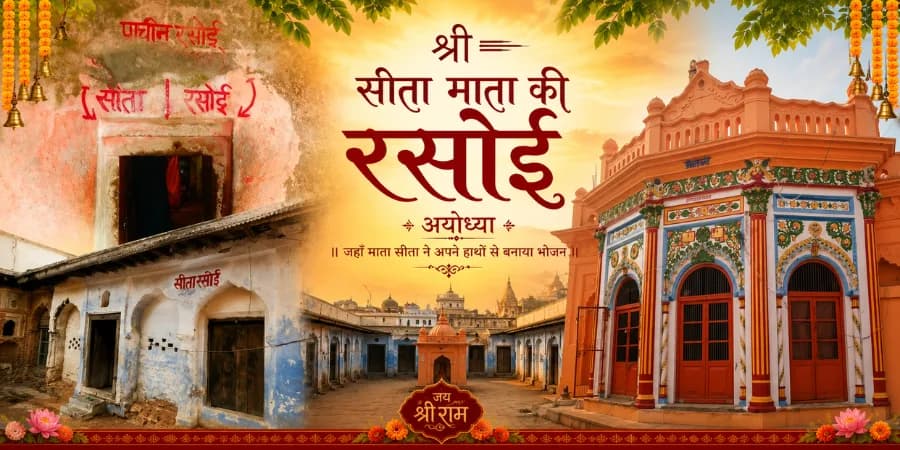
Sita Ki Rasoi
Ayodhya · The sacred kitchen of Goddess Sita
4.9 / 5 · Darshan Help
Sita Ki Rasoi · Ram Mandir
- Timings
- Daily ~7:00 AM – 8:00 PM
- Deity
- Goddess Sita (as Annapurna) & Ram family
- Highlight
- Symbolic kitchen utensils of Sita
- Entry
- Free · free langar (bhandara)
- Location
- Ramkot, Ayodhya (near Ram Janmabhoomi)
- Best Festivals
- Ram Navami, Vivah Panchami, Deepotsav
Sita Ki Rasoi Darshan & Aarti Timings (2026)
Sita Ki Rasoi is open through the day for darshan, broadly following the temple-complex hours of the Ram Janmabhoomi area. Darshan of the sacred kitchen and the Ram family idols is free, with morning and evening aartis, and a free langar in keeping with Sita's role as Annapurna. Timings shift slightly between summer and winter and during festivals like Ram Navami.
Temple Opens
Morning aarti at opening
General Darshan
Broadly follows the temple complex
Temple Closes
After the evening aarti
Morning Aarti
Shringar / morning aarti
Evening Aarti
Sandhya aarti
Langar / Bhandara
Free prasad meal (timing varies)
Tip: Sita Ki Rasoi broadly follows the Ram Janmabhoomi complex hours, which change on festivals like Ram Navami, Vivah Panchami and Deepotsav. WhatsApp us for the exact darshan and langar timing on your travel date.
Best Time to Visit Sita Ki Rasoi — Month-by-Month (2026)
Sita Ki Rasoi welcomes darshan year-round, but weather and crowds change through the year. Winter (October–March) is the most comfortable, while Ram Navami, Vivah Panchami and Deepotsav bring large, joyful crowds to the Ramkot temples.
Crowds peak on Ram Navami, Vivah Panchami, Sawan and Deepotsav. Reach early when visiting the Ramkot temples.
The History & Significance of Sita Ki Rasoi
What Is Sita Ki Rasoi?
Sita Ki Rasoi (Sita Mata Ki Rasoi) means “Sita's Kitchen.” It is a small but sacred shrine in Ayodhya's Ramkot, near the Ram Janmabhoomi, revered as the kitchen where Goddess Sita is believed to have cooked. It is one of the most cherished and unique pilgrimage spots in the city.
Sita as Annapurna
At Sita Ki Rasoi, Goddess Sita is honoured as Annapurna — the goddess of food and nourishment. Devotees pray here for prosperity and the blessing that their homes will never lack food (anna), making it a deeply meaningful stop for families.
The Sacred Kitchen Relics
The shrine displays symbolic kitchen utensils — a rolling pin (belan), board (chakla), ladles and vessels — revered as relics of Sita's kitchen. These simple objects connect pilgrims directly to the domestic life of the Ramayana.
The Tradition of Langar
In keeping with Sita's role as the giver of food, a free langar (bhandara) is associated with the site, and tradition holds that no devotee should leave Ayodhya hungry. Sharing prasad here is considered especially auspicious.
Location & Importance
Sita Ki Rasoi sits in Ramkot, near the Ram Janmabhoomi, Kanak Bhawan, Dashrath Mahal and Hanuman Garhi. Compact and serene, it is easily combined with the other holy sites at the heart of an Ayodhya pilgrimage.
Did you know? Because Sita is worshipped here as Annapurna, devotees believe that praying at Sita Ki Rasoi ensures their kitchen and home are never short of food — and a free langar continues this tradition.
How to Have Darshan at Sita Ki Rasoi — Step by Step
A Sita Ki Rasoi visit is simple, serene and quick — easy to combine with the nearby Ramkot temples. Here is exactly how it goes.
- 1
Reach Sita Ki Rasoi
The shrine is in Ramkot, near the Ram Janmabhoomi, Kanak Bhawan and Hanuman Garhi — a natural stop on your Ayodhya darshan circuit.
- 2
Leave Footwear & Enter
Leave footwear at the stands and step into the small, sacred shrine.
- 3
See the Sacred Kitchen Relics
View the symbolic kitchen utensils — the belan, chakla, ladles and vessels — revered as relics of Goddess Sita's kitchen.
- 4
Darshan of the Idols
Have darshan of the idols of the Ram family, with Sita honoured here in her form as Annapurna, the giver of food.
- 5
Seek Annapurna's Blessings
Offer your prayers for prosperity and the blessing that your home will never lack food and nourishment.
- 6
Partake of the Langar
If a langar (bhandara) is being served, partaking of the free prasad meal is considered especially auspicious.
- 7
Continue Your Ayodhya Darshan
Walk on to Kanak Bhawan, Dashrath Mahal, Hanuman Garhi, the Ram Mandir and the evening Saryu Aarti.
Best Time to Visit Sita Ki Rasoi
You can have darshan any day, but the season, time of day and festival calendar change the weather, the crowd and the atmosphere. Here is when to plan your visit.
Best Season — October to March
Ayodhya's winter is cool and pleasant — ideal for combining Sita Ki Rasoi with Kanak Bhawan, Dashrath Mahal, Hanuman Garhi, the Ram Mandir and the Saryu Aarti. Avoid the peak summer heat of May–June.
Best Time of Day — Morning / Evening
A morning or evening visit gives a serene darshan and the best chance to experience the aarti and, if served, the langar. Both avoid the hottest midday hours.
Most Special — Ram Navami & Festivals
Ram Navami, Vivah Panchami and Deepotsav bring special decorations and grand langars to the Ramkot temples. Beautiful but crowded; plan ahead and start early.
What to See at Sita Ki Rasoi
Though small, Sita Ki Rasoi is rich in meaning. Here are the highlights to look for during your visit.
The Sacred Kitchen
Top PickThe Main Darshan
The revered kitchen of Goddess Sita, with its symbolic utensils on display — the heart and unique highlight of this shrine.
The Symbolic Utensils
Sacred Relics
A rolling pin (belan), board (chakla), ladles and vessels, honoured as relics of Sita's kitchen — a direct, touching link to the Ramayana.
The Ram Family Idols
Annapurna Form
Idols of the Ram family, with Sita worshipped here as Annapurna, the goddess of food and nourishment.
Ramkot Surroundings
Temple Heart of Ayodhya
Set near the Ram Janmabhoomi, Kanak Bhawan and Hanuman Garhi, the shrine is easy to combine with Ayodhya's other holy sites.
Darshan & Experiences at Sita Ki Rasoi
Sita Ki Rasoi offers a uniquely intimate, devotional experience. Here are the things not to miss — we can help time and arrange your visit around them.
The Sacred Kitchen Relics
See the symbolic utensils of Goddess Sita's kitchen, a one-of-a-kind darshan found nowhere else in Ayodhya.
Annapurna Blessings
Pray to Sita as Annapurna for prosperity and the blessing of an ever-nourished home — especially meaningful for families.
Langar / Bhandara
If served, partake of the free prasad meal — a cherished tradition in keeping with Sita as the giver of food.
Morning & Evening Aartis
Attend the morning or evening aarti for a serene, devotional moment at the shrine.
Sita Ki Rasoi Darshan & Offering Cost (2026)
Darshan and aarti at Sita Ki Rasoi are completely free — there is no entry ticket, and a free langar is part of the tradition. The only optional costs are prasad and offerings. Here is a realistic guide.
Darshan, aarti and the langar are free. We offer a guided Ayodhya darshan covering Sita Ki Rasoi, Kanak Bhawan, Dashrath Mahal, Hanuman Garhi, the Ram Mandir (with Sugam Darshan help) and the Saryu Aarti — confirmed in writing.
Offering prices are indicative; buy prasad and flowers from authorised shops near the temple.
Sita Ki Rasoi & Ayodhya Darshan — Reviews from Our Guests
1,356 verified reviews
Sita Ki Rasoi was such a touching, unique darshan — seeing the symbolic kitchen of Mata Sita brought tears to my eyes. Our guide from Ayodhya Varanasi Guides explained the Annapurna significance beautifully and even timed it with the langar.
Radha Krishnan
Madurai
Lovely guided darshan covering Sita Ki Rasoi, Kanak Bhawan and Dashrath Mahal in one smooth visit. Small shrine but very powerful. The team handled everything and the langar prasad was a beautiful experience.
Ashok Kumar
Bhopal
As a family we loved praying to Sita as Annapurna for our home. The guide knew the timings perfectly and we never waited. Transparent pricing and great care for my elderly parents. Highly recommended.
Geeta Iyer
Pune
A must-visit on any Ayodhya trip. Sita Ki Rasoi is serene and full of meaning. Our guide combined it with the Ram Mandir and Saryu Aarti seamlessly. Stress-free and deeply devotional.
Vivek Saxena
Agra
Visited during Deepotsav — the Ramkot temples were glowing. Sita Ki Rasoi was a peaceful, emotional stop. They managed the crowds and timings beautifully. Will book the full circuit with them again.
Manju Devi
Jaipur
A Perfect Ayodhya Darshan Day with Sita Ki Rasoi
Weave Sita Ki Rasoi into a classic Ayodhya darshan circuit. Here is a simple, time-tested plan our guests love — easily customised to your pace.
Hanuman Garhi darshan. Begin, as tradition dictates, at Hanuman Garhi to seek the blessings of the guardian of Ayodhya.
Ram Janmabhoomi (Ram Lalla). Proceed to the Ram Mandir for Ram Lalla darshan — we help with Sugam (VIP) Darshan to skip the queue.
Sita Ki Rasoi & Kanak Bhawan. Visit the nearby Sita Ki Rasoi and Kanak Bhawan — the sacred kitchen and the golden palace of Sita-Ram.
Dashrath Mahal & Nageshwarnath. See Dashrath Mahal and the ancient Nageshwarnath temple, then explore old Ayodhya.
Saryu Aarti at Ram Ki Paidi. End the day with the beautiful evening Saryu Aarti on the banks of the Saryu river.
Which Tour Package Covers Sita Ki Rasoi?
Most visitors reach Sita Ki Rasoi as part of a wider Ayodhya darshan rather than as a trip of its own. These are the itineraries our guests book most — each one includes Ram Mandir darshan with Sugam (VIP) assistance, a certified local guide, comfortable transport and pricing confirmed in writing before you travel.
- 1 Day1 Day Ayodhya Tour PackageRam Mandir darshan, Hanuman Garhi and the Saryu Aarti in a single day.
- 2 Days2 Days Ayodhya Tour PackageThe full Ramkot temple circuit at an unhurried pace, with an evening on the Saryu.
- 3 Days3 Days Ayodhya Tour PackageAyodhya in depth — the temples, the mounds, Guptar Ghat and the lesser-known shrines.
- 2 Days2 Days Ayodhya Varanasi Tour PackageRam Mandir and Kashi Vishwanath across two cities, with the Ganga Aarti.
- 3 Days3 Days Ayodhya Varanasi Tour PackageThe classic pairing — Ram Mandir, Kashi Vishwanath and the ghats.
- 3 Days3 Days Ayodhya Prayagraj Tour PackageRam Mandir darshan with the Triveni Sangam snan.
- 4 Days4 Days Ayodhya Varanasi Prayagraj Tour PackageAll three cities — Ram Mandir, Kashi Vishwanath and the Triveni Sangam.
- 5 Days5 Days Ayodhya Varanasi Prayagraj Tour PackageThe complete sacred circuit at a comfortable, senior-friendly pace.
Want Sita Ki Rasoi built into a custom itinerary? We plan around your dates, your pace and what you actually want to see.
See all Ayodhya & Varanasi tour packagesHow to Reach Sita Ki Rasoi, Ayodhya
Sita Ki Rasoi is in the Ramkot area of Ayodhya, very close to the Ram Janmabhoomi, Kanak Bhawan and Hanuman Garhi. Here is how to get there.
By Air
Maharishi Valmiki International Airport, Ayodhya Dham is ~11 km away. Lucknow airport (~140 km) is the larger alternative. Take a taxi to Ramkot.
By Train
Ayodhya Dham Junction is ~2.5 km from Ramkot, well connected to Lucknow, Varanasi and Delhi. Hire an auto or e-rickshaw.
By Road / Taxi
Ayodhya is connected via NH-27 and the new Ram Path. It is ~135 km from Lucknow, ~200 km from Varanasi and ~165 km from Prayagraj.
The Last Mile
Sita Ki Rasoi is in the temple zone of Ramkot near the Ram Janmabhoomi; vehicles drop you close by and it is a short walk.
Sita Ki Rasoi Location — Ayodhya
Sita Ki Rasoi stands in the Ramkot area of central Ayodhya, very near the Ram Janmabhoomi, Kanak Bhawan and Hanuman Garhi. Use the map below to navigate.
Ayodhya
- Area: Ramkot, near Ram Janmabhoomi
- PIN: Ayodhya 224123
- From Ayodhya Dham Junction: ~2.5 km
- From Ram Mandir: ~300 m
- From Kanak Bhawan: ~500 m
Where to Stay Near Sita Ki Rasoi
Staying central in Ayodhya keeps Sita Ki Rasoi, Kanak Bhawan, Hanuman Garhi, the Ram Mandir and the Saryu Aarti within easy reach. Here are the best areas to stay — our team can recommend and book the right option for your budget.
Ramkot & Ram Path
Guesthouses and new hotels in Ramkot and along the Ram Path, within walking distance of Sita Ki Rasoi, Kanak Bhawan and the Ram Mandir — ideal for morning darshan.
Near Ram Ki Paidi / Saryu
Riverside stays close to Ram Ki Paidi, perfect for the evening Saryu Aarti and a serene Ayodhya experience.
Ayodhya Dham / Faizabad
Branded and mid-range hotels around Ayodhya Dham and Faizabad city, with more comfort and easy taxi access to the temples.
Places to Visit Near Sita Ki Rasoi in Ayodhya
Sita Ki Rasoi sits right in Ayodhya's temple heart. Here are the top sites nearby to combine into your itinerary — most are within a short walk.
Ram Mandir (Ram Janmabhoomi)
The grand temple of Ram Lalla, ~300 m away. We help with Sugam (VIP) Darshan to skip the queue.
Kanak Bhawan
The 'Golden Palace' of Sita-Ram with gold-adorned idols, a short walk away — an essential paired darshan.
Dashrath Mahal
The royal palace of King Dashrath and Lord Ram's childhood home, in Ramkot.
Hanuman Garhi
The guardian shrine of Lord Hanuman, traditionally visited before Ram Lalla darshan.
Saryu Aarti at Ram Ki Paidi
The beautiful evening Saryu Aarti on the riverfront — an unmissable Ayodhya experience.
Nageshwarnath Temple
One of Ayodhya's oldest Shiva temples, founded by Lord Ram's son Kush, near the ghats.
Ram Navami & Deepotsav at Sita Ki Rasoi
Ram Navami (the birth of Lord Ram) and Vivah Panchami (the Ram-Sita wedding) are celebrated with special decorations and grand langars at the Ramkot temples, including Sita Ki Rasoi — a fitting tribute to Sita as the goddess of nourishment.
During Ayodhya's spectacular Deepotsav around Diwali, the whole of Ramkot glows with millions of diyas, and the temples overflow with devotion. These festivals are joyous but very crowded; plan transport, darshan and stay well in advance.
Things to Know Before Visiting Sita Ki Rasoi
A little preparation makes your Sita Ki Rasoi visit smooth and meaningful. Keep these practical, locally-verified tips in mind.
It's a compact shrine
Sita Ki Rasoi is small and quick to visit — combine it with Kanak Bhawan, Dashrath Mahal and the Ram Mandir, all close by in Ramkot.
Don't miss the langar
If a langar (bhandara) is being served, partaking of the free prasad meal is auspicious and in keeping with Sita as Annapurna.
Follow the complex timings
The shrine broadly follows the Ram Janmabhoomi complex hours, which change on festivals — confirm before you go.
Leave footwear outside
Footwear stands are available near the temple. Wear easy-to-remove shoes for the temple circuit.
Dress modestly
Wear comfortable, modest clothing suitable for a temple visit.
Photography may be restricted inside
Follow the temple staff's guidance on photography of the sanctum and the relics.
Reach early on festivals
Ram Navami, Vivah Panchami and Deepotsav are very crowded across Ramkot — start early.
Buy prasad from authorised shops
Flowers and sweets are sold near the temple — agree prices beforehand.
Combine with the Saryu Aarti
End your day with the evening Saryu Aarti at Ram Ki Paidi for a complete Ayodhya experience.
Sita Ki Rasoi Ayodhya — Frequently Asked Questions
The questions travellers most often ask about Sita Ki Rasoi (Sita Mata Ki Rasoi) — timings, history, the sacred kitchen, darshan and tips.
Sita Ki Rasoi is open through the day, broadly from around 7:00 AM to 8:00 PM, following the Ram Janmabhoomi temple-complex hours, with morning and evening aartis. Timings shift slightly between summer and winter and on festivals.
Still have a question?
Our local team replies within 30 minutes.
Written & verified by the local Ayodhya guide team at Ayodhya Varanasi Guides
Our government-certified Ayodhya guides take pilgrims to Sita Ki Rasoi and the city's temples every day. This guide is based on first-hand, on-ground experience and is reviewed regularly. Last updated: June 2026. Shrine timings broadly follow the Ram Janmabhoomi complex and can change on festivals — message us for the latest on your travel date.
Seek Annapurna's blessings at Sita Ki Rasoi
Let Ayodhya Varanasi Guides plan your complete Ayodhya darshan — Sita Ki Rasoi, Kanak Bhawan, Dashrath Mahal, Hanuman Garhi, Ram Lalla at the Ram Mandir (with Sugam Darshan help) and the evening Saryu Aarti — with a knowledgeable local guide and comfortable transport. We confirm everything in writing.