
Tilbhandeshwar Mahadev Temple — The Growing Shivling of Varanasi
Tilbhandeshwar Mahadev Temple stands at Pandey Haveli in Bhelupur, Varanasi, about 500 metres from the Ganga. It is famous across Kashi for one belief: the swayambhu Shivling here grows by the measure of a til — a sesame seed. Devotees say a thread tied around the linga before the temple closes at night is found broken by morning. The linga now stands roughly 3.5 feet high with a base about 3 feet across. The temple dates to the 18th century, but the self-manifested linga is held to have emerged more than 2,500 years ago. Darshan is free, and Sawan is the great season here.
- Timings
- ~4 AM–12 PM & 3 PM–10 PM
- Famous For
- The Shivling that grows by a til
- The Linga
- Swayambhu · ~3.5 ft high
- Entry
- Free · no ticket
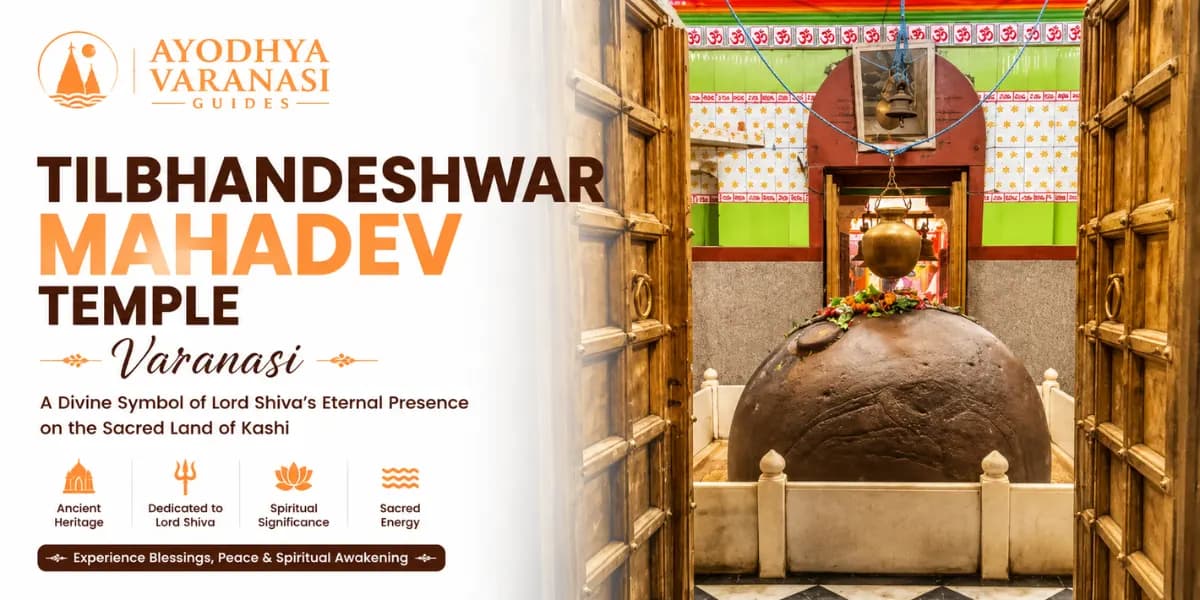
Tilbhandeshwar Mahadev
Bhelupur, Varanasi · The Growing Shivling
4.9 / 5 · Kashi Darshan Help
Shiva temples · Vishwanath
- Timings
- ~4:00 AM–12:00 PM & 3:00 PM–10:00 PM
- Deity
- Lord Shiva as Tilbhandeshwar Mahadev
- Famous For
- A Shivling believed to grow by a sesame seed
- The Linga
- Swayambhu · ~3.5 ft high, ~3 ft base
- Entry
- Free · no ticket required
- Location
- Pandey Haveli, Bhelupur, Varanasi
What Are the Tilbhandeshwar Mahadev Temple Timings?
Tilbhandeshwar keeps the long hours of a major Kashi Shiva temple — opening very early, around 4:00 AM, through to midday, then reopening in the afternoon until late evening. Darshan is free. The early morning is the time to come: it is when the temple opens after the night, and when devotees look to see whether the thread tied around the linga has broken.
Early Morning (Best)
Opening, abhishek and the thread
Late Morning
Open; quieter after the rush
Afternoon Break
Usually closed
Evening
Aarti and a calm late darshan
Jalabhishek
Water and milk on the growing linga
Rudrabhishek
Arranged with the temple priests
Evening Aarti
The most atmospheric hour
Sawan Mondays
Peak crowds; arrive before dawn
Tip: come at opening time if you want to hear about the thread. It is tied around the linga at night and checked when the temple opens — the whole tradition of the growing Shivling turns on that moment. WhatsApp us and we will time your visit for it.
When Is the Best Month to Visit Tilbhandeshwar Mahadev? (2026)
This is a major Shiva temple, so the Sawan and Mahashivratri calendar shapes it entirely. October to March is the comfortable window, while Sawan (July–August) is when the temple truly comes alive.
Sawan (July–August) is the great season here, with the Sawan Mela drawing enormous crowds, and Mahashivratri is the single biggest night. Nag Panchami, Navratri, Makar Sankranti and Ayyappan Puja are also observed.
Does the Shivling at Tilbhandeshwar Really Grow?
What Is Tilbhandeshwar Mahadev Temple?
Tilbhandeshwar Mahadev is one of the larger and most revered Shiva temples of Varanasi, standing at Pandey Haveli in Bhelupur, not far from the lanes of Bengali Tola and about 500 metres from the Ganga. The temple structure dates to the 18th century, but the swayambhu — self-manifested — Shivling within it is held to have emerged more than 2,500 years ago.
What Does the Name Mean?
Til is the sesame seed, and the name carries the belief that defines this temple: that the Shivling here grows by the measure of a single sesame seed — an increase so small that no one could observe it directly, yet one that accumulates across centuries. It is a strikingly humble way to describe something miraculous.
What Is the Legend of the Sesame Fields?
One tradition holds that this whole area was once under cultivation with sesame, and that one day a Shivling rose by itself out of the til fields. Nothing had been installed and no one had consecrated it — it simply appeared, which is what swayambhu means. The temple grew up around what the earth had produced.
Who Was Vibhandak Rishi?
A second tradition connects the temple with Vibhandak Rishi, who is said to have performed severe penance at this very spot. Pleased with his devotion, Lord Shiva granted him a boon — that the linga here would grow by the measure of a til, marking the sage’s tapasya for as long as it stood. Both stories are told at the temple, and neither cancels the other.
What Is the Story of the Thread?
This is the part visitors remember. Devotees say that a thread is tied snugly around the Shivling at night, before the temple closes. When the doors open in the morning, the thread is often found broken — taken as evidence of the slight expansion of the stone overnight. Whatever you make of it, the tradition is observed seriously, and the linga today stands about 3.5 feet high with a base some 3 feet across.
Why Is It Important Among Kashi’s Shiva Temples?
Varanasi has more Shiva temples than anyone has counted, and most visitors see only Kashi Vishwanath. Tilbhandeshwar is one of the largest and most locally beloved of the rest — a serious temple with a large complex, a swayambhu linga, and a devotional following across the city. During Sawan it is one of the busiest places in Varanasi, and almost no tourist is there.
Did you know? Vibhandak Rishi was the father of the sage Shringi (Rishyashringa) — the same sage who performed the Putrakameshti Yagna for King Dashrath that led to the birth of Lord Ram, and after whom Shringverpur near Prayagraj is named.
How Do You Have Darshan at Tilbhandeshwar Mahadev?
A proper Kashi Shiva temple darshan — simple, unhurried outside Sawan, and best done early.
- 1
Reach Pandey Haveli, Bhelupur
The temple is in the Bhelupur area near Bengali Tola, about 500 metres from the Ganga. Autos and e-rickshaws reach the neighbourhood easily.
- 2
Come at Opening Time
The temple opens around 4 AM. Arriving early means the calmest darshan and the moment the thread on the linga is checked.
- 3
Buy Bel Patra and Milk
Stalls outside sell bel patra, flowers, milk and Ganga jal — the traditional offerings for a Shivling.
- 4
Leave Footwear and Enter
Footwear comes off outside. The complex is one of the larger temple compounds in this part of Varanasi.
- 5
Offer Jalabhishek on the Linga
Pour water and milk over the swayambhu Shivling — the direct, unmediated act of worship at any Shiva temple.
- 6
Look at the Size of the Linga
About 3.5 feet high with a base of roughly 3 feet. Standing in front of it, the claim that it has been growing for millennia becomes vivid.
- 7
Ask About the Thread
The priests will tell you about the thread tied at night and found broken by morning. It is the heart of the temple's tradition.
- 8
Continue Your Kashi Circuit
Kashi Vishwanath is about 2 km north, and the Durgakund temple cluster lies to the south.
When Should You Visit Tilbhandeshwar Mahadev Temple?
The temple opens earlier than almost anything else in Varanasi, which opens up a genuinely good option most visitors never consider.
Best Time of Day — 4 to 7 AM
The temple opens around 4 AM, well before the ghats come alive. An early darshan here followed by sunrise on the Ganga is one of the best mornings you can have in Kashi.
Best Season — October to March
Varanasi's cool months are comfortable for the whole city. February brings Mahashivratri, spectacular here but extremely crowded.
Most Special — Sawan & Mahashivratri
Sawan (July–August) brings the Sawan Mela and enormous crowds through the month, with the Mondays busiest of all. Mahashivratri is the single biggest night of the year. Both mean long waits — go before dawn.
What Can You See at Tilbhandeshwar Mahadev Temple?
A large, working temple complex with one remarkable object at its centre.
The Growing Shivling
Top PickThe Main Darshan
The swayambhu linga believed to grow by the measure of a sesame seed, now standing about 3.5 feet high with a base some 3 feet across.
The Thread Tradition
Top PickChecked Every Morning
The thread tied around the linga at night and found broken when the temple opens — the living evidence devotees point to.
The Temple Complex
One of Kashi's Largest
A substantial compound by the standards of the Varanasi lanes, with room to move even on busy mornings.
The Sawan Mela Atmosphere
July – August
Through Sawan the temple becomes one of the busiest places in the city, with devotees queuing for jalabhishek all day.
The Bhelupur Lanes
Local Varanasi
Pandey Haveli and Bengali Tola around the temple are working residential quarters — Varanasi as it lives, not as it is presented.
Why Visit Tilbhandeshwar Beyond Kashi Vishwanath?
Most visitors do the Jyotirlinga and consider Shiva covered. Here is what this temple adds.
A Shivling That Grows
One of the most striking beliefs attached to any temple in Varanasi, with a nightly ritual test that devotees have kept for generations.
A Genuine Swayambhu Linga
Self-manifested, held to have emerged over 2,500 years ago — not installed by any hand, which is rare even in Kashi.
It Opens at 4 AM
Earlier than almost anything else in the city. A pre-dawn darshan here before the ghats wake up is a remarkable way to start a day.
Local Devotion, No Tourists
One of the most loved Shiva temples among Varanasi's own residents, and almost entirely off the visitor trail.
Is There an Entry Fee at Tilbhandeshwar Mahadev? (2026)
Darshan is completely free — there is no ticket and no paid queue, even during Sawan. Only offerings and any abhishek you arrange carry a cost.
Everything essential is free. What we add is a Kashi Shiva circuit that goes beyond the Jyotirlinga — Tilbhandeshwar, Kal Bhairav and Batuk Bhairav alongside Kashi Vishwanath with VIP darshan assistance, plus a Rudrabhishek arranged in advance if you want one. Pricing confirmed in writing.
Auto fares are indicative and vary with traffic and time of day. Agree the fare before setting off.
What Do Devotees Say About Tilbhandeshwar Mahadev?
1,204 verified reviews
My family has come to Tilbhandeshwar every Monday for as long as I can remember. Tourists all go to Vishwanath and never hear of this place. The Sawan Mela here is something else entirely.
Shashank Pandey
Varanasi
We reached at 5 AM on our guide's advice and it was the best decision of the trip. Almost empty, the priests had time to explain the thread tradition, and we were at the ghats for sunrise afterwards.
Devika Nambiar
Kochi
Came for Mahashivratri. Enormous crowd, but a real Kashi experience rather than a tourist one. The linga is much larger than I expected — you understand the story when you see it.
Ram Kishore Gupta
Lucknow
Visited during Sawan and had our Rudrabhishek booked in advance, which turned out to be essential — walk-ins had no chance. Very well organised by the team and a deeply moving morning.
Manisha Trivedi
Ahmedabad
Large, well-kept temple in a residential area. Note the afternoon closure. Free entry, no touts, and refreshingly free of the commercialisation you get near the main ghats.
Prakash Bhatt
Nagpur
How Do You Fit Tilbhandeshwar Into a Kashi Day?
Because it opens at 4 AM, this temple can go before everything else — including sunrise. Here is the day we build around it.
Tilbhandeshwar Mahadev darshan. Pre-dawn darshan of the growing Shivling, in the quietest hour of the day.
Sunrise boat ride on the Ganga. Move to the ghats for first light on the water — the classic Varanasi morning.
Kashi Vishwanath darshan. Darshan of the Jyotirlinga at Shri Kashi Vishwanath Dham. We assist with VIP darshan to save you the queue.
Nepali Temple at Lalita Ghat. The wooden Nepalese pagoda beside the Dham corridor, on the way back to the river.
Kal Bhairav & Batuk Bhairav. Bhairav darshan, which tradition says completes a Kashi yatra.
Bharat Mata Mandir. The ideal midday stop, open when the old-city temples close.
Ganga Aarti at Dashashwamedh Ghat. Close the day with the great evening aarti on the riverfront.
Which Tour Package Covers Tilbhandeshwar Mahadev?
Tilbhandeshwar Mahadev is best seen as part of a planned Kashi darshan rather than a single stop — the old-city temples keep different hours and the ghats reward proper sequencing. These are the itineraries our guests book most, each with Kashi Vishwanath VIP darshan assistance, a certified local guide and transport, priced in writing before you travel.
- 1 Day1 Day Varanasi Tour PackageKashi Vishwanath darshan, a sunrise boat ride and the evening Ganga Aarti.
- 2 Days2 Days Varanasi Tour PackageKashi Vishwanath, the ghats, Sarnath and the old-city temple circuit.
- 3 Days3 Days Varanasi Tour PackageKashi at a proper pace — the Dham, the Bhairavs, the Durgakund cluster and the aarti.
- 4 Days4 Days Varanasi Tour PackageEverything in Kashi plus Sarnath, with time for the temples most itineraries skip.
- 2 Days2 Days Ayodhya Varanasi Tour PackageRam Mandir and Kashi Vishwanath across two cities, with the Ganga Aarti.
- 3 Days3 Days Ayodhya Varanasi Tour PackageThe classic pairing — Ram Mandir, Kashi Vishwanath and the ghats.
- 3 Days3 Days Varanasi Prayagraj Tour PackageKashi and the confluence, with time for the ghats and the Sangam boat ride.
- 4 Days4 Days Ayodhya Varanasi Prayagraj Tour PackageAll three cities — Ram Mandir, Kashi Vishwanath and the Triveni Sangam.
- 5 Days5 Days Ayodhya Varanasi Prayagraj Tour PackageThe complete sacred circuit at a comfortable, senior-friendly pace.
Want Tilbhandeshwar Mahadev built into a custom itinerary? We plan around your dates, your pace and what you actually want to see.
See all Varanasi & Ayodhya tour packagesHow Do You Reach Tilbhandeshwar Mahadev Temple?
The temple is at Pandey Haveli in Bhelupur, near the Bengali Tola lanes and about 500 metres from the Ganga, roughly 2 km south of Kashi Vishwanath.
By Road / Taxi
Autos and e-rickshaws reach the Bhelupur and Pandey Haveli area easily. Expect a short walk through the lanes at the end.
On Foot From the Ghats
The temple is only about 500 metres from the river, so it is walkable from the Assi to Dashashwamedh stretch of ghats.
By Train
Banaras station is about 4 km away and Varanasi Junction (Cantt) roughly 6 km. Both connect to Delhi, Lucknow, Prayagraj and Ayodhya.
By Air
Lal Bahadur Shastri International Airport, Babatpur is around 27 km away, with taxis at the terminal. Allow an hour in traffic.
Where Is Tilbhandeshwar Mahadev Temple Located?
Tilbhandeshwar Mahadev stands at Pandey Haveli, Bhelupur, near the Bengali Tola lanes in Varanasi, about 500 metres from the Ganga. Use the map below to navigate.
Varanasi
- Area: Pandey Haveli, Bhelupur, Varanasi
- PIN: Varanasi 221010
- From the Ganga: ~500 m
- From Kashi Vishwanath: ~2 km
- Known for: The Shivling that grows by a sesame seed
Where Should You Stay Near Tilbhandeshwar Mahadev?
Bhelupur sits between the ghats and the Durgakund temple cluster, which makes it a practical base for a temple-focused trip.
Bhelupur & Bengali Tola
Quiet residential lanes with guesthouses and mid-range hotels, walking distance from Tilbhandeshwar and close to the southern ghats.
Assi Ghat & Ravidas Gate
The calmer southern end of the ghats, about 15 minutes away, with cafés and easy access to sunrise boat rides.
Godowlia & Dashashwamedh
The heart of Kashi, walking distance from Kashi Vishwanath and the evening Ganga Aarti, roughly 15 minutes from the temple.
What Else Can You Visit Near Tilbhandeshwar Mahadev?
The temple sits between the ghats and the southern temple cluster, so several major sites are within minutes.
Kashi Vishwanath Temple
The Jyotirlinga of Kashi, ~2 km north. We assist with VIP darshan to skip the main queue.
Kashi Vishwanath VIP Darshan
Skip-the-queue Sugam darshan assistance at Shri Kashi Vishwanath Dham, arranged in advance.
Batuk Bhairav Temple
Bhairav in his child form at Kamachha, famed for its centuries-old eternal lamp and oil prasad. Very close by.
Ganga Aarti, Dashashwamedh Ghat
The world-famous evening aarti on the riverfront — the unmissable Varanasi experience.
Tridev Temple
The temple to Brahma, Vishnu and Mahesh near Tulsi Manas Mandir, with shrines of Maa Sati and Khatu Shyam.
Markandey Mahadev Temple
The Shiva temple at the Ganga–Gomti confluence, ~30 km away, where Markandeya conquered death.
Sawan Mela & Mahashivratri at Tilbhandeshwar Mahadev
Through the month of Sawan, Tilbhandeshwar hosts one of the great Sawan Melas of Varanasi. Devotees queue through the day for jalabhishek on the growing Shivling, and the Sawan Mondays bring the largest crowds of the year — this becomes one of the busiest places in the city, and almost none of those present are tourists.
Mahashivratri is the single biggest night here, with darshan running late and queues far beyond the complex. Nag Panchami, Navratri, Makar Sankranti and the Ayyappan Puja are also observed. For any of these, arrive before dawn and allow several hours.
What Should You Know Before Visiting Tilbhandeshwar Mahadev?
Straightforward to visit, with a few details that will make the darshan much better.
Go at opening, around 4 to 6 AM
This is the calmest darshan of the day, and the hour when the thread on the linga is checked. It is also earlier than almost anything else in Varanasi, so it costs you nothing in the itinerary.
Mind the afternoon closure
The temple generally shuts for a few hours around midday. Come in the morning or after 3 PM.
Ask the priests about the thread
The tradition of the thread tied at night and found broken by morning is the heart of this temple, and it is easy to miss if nobody tells you.
Sawan means hours, not minutes
During the Sawan Mela and on Mahashivratri the queue runs far outside the complex. Arrive before dawn and treat it as a half-day.
Book any Rudrabhishek in advance
Walk-in slots are limited and effectively impossible during Sawan. Arrange it with the priests beforehand.
Buy offerings at the stalls outside
Bel patra, flowers, milk and Ganga jal are all sold at the temple — no need to carry them across the city.
It is in a residential quarter
Pandey Haveli and Bengali Tola are working neighbourhoods with narrow lanes. Expect a short walk at the end; vehicles will not reach the door.
It is only 500 m from the river
Easy to combine with a sunrise boat ride, and walkable from the ghats if you prefer not to take an auto.
Dress modestly
Standard temple etiquette applies, with footwear removed at the entrance.
Photography rules vary
Follow the priests' guidance, particularly around the sanctum and the linga itself.
Tilbhandeshwar Mahadev Temple — Frequently Asked Questions
The questions devotees ask us most about Tilbhandeshwar — the growing Shivling, the thread, timings, Sawan crowds and how to reach Bhelupur.
Tilbhandeshwar Mahadev is one of the major Shiva temples of Varanasi, at Pandey Haveli in Bhelupur, about 500 metres from the Ganga. It is famous for a swayambhu Shivling believed to grow by the measure of a sesame seed.
Still have a question?
Our local team replies within 30 minutes.
Written & verified by the local Varanasi guide team at Ayodhya Varanasi Guides
Our government-certified Kashi guides take devotees to Tilbhandeshwar through the year, including through the Sawan Mela when it becomes one of the busiest temples in the city, and arrange Rudrabhishek with the temple priests. Last updated: July 2026. Timings and puja slots change sharply during Sawan and on Mahashivratri — message us for the position on your travel date.
See the Growing Shivling of Kashi at Tilbhandeshwar Mahadev
Let Ayodhya Varanasi Guides plan your Kashi darshan — a pre-dawn visit to Tilbhandeshwar, sunrise on the Ganga, Kashi Vishwanath with VIP darshan assistance, the Bhairav temples and the evening Ganga Aarti — with a certified local guide and a Rudrabhishek booked in advance if you want one.