
The Jain Temple at Raiganj, Ayodhya — Badi Murti, Rishabhdev & Visitor Guide
The Jain temple at Raiganj, Ayodhya — known to everyone locally as Badi Murti, “the big statue” — is the city’s principal Jain shrine, built around a 31-foot marble statue of Lord Rishabhdev (Adinath), the first Tirthankara. Ayodhya is one of the holiest places in Jainism because five Tirthankaras were born here — Adinath, Ajitnath, Abhinandannath, Sumatinath and Anantnath. Their birthplaces are marked by shrines across the city, built by Kesari Singh, treasurer to the Nawab of Faizabad. Entry is free, and Jain dharamshala accommodation is available for pilgrims.
- Timings
- ~6:00 AM – 8:00 PM daily
- Famous For
- 31-ft marble Rishabhdev statue
- Significance
- 5 Tirthankaras born in Ayodhya
- Entry
- Free · dharamshala available
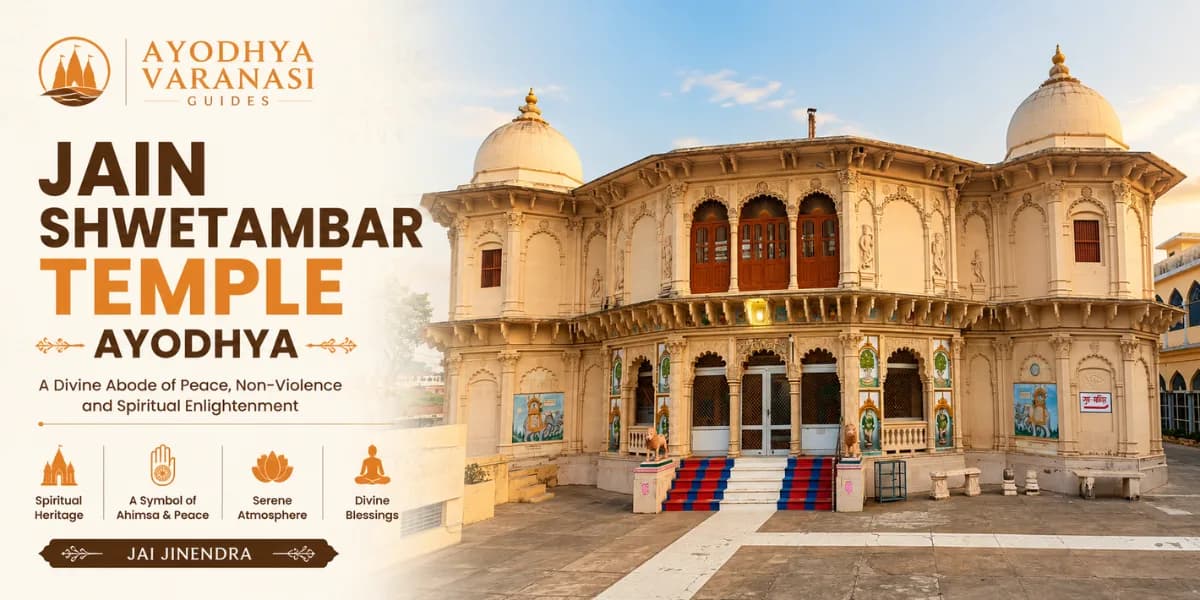
Badi Murti, Raiganj
Ayodhya · Birthplace of Lord Adinath
4.9 / 5 · Jain Yatra Help
Ayodhya · Tirthankara shrines
- Timings
- ~6:00 AM – 8:00 PM, daily
- Presiding Tirthankara
- Lord Rishabhdev (Adinath), the first
- Known As
- Badi Murti — 'the big statue'
- Why Ayodhya
- Birthplace of five Tirthankaras
- Entry
- Free · no ticket required
- Location
- Raiganj, Ayodhya
What Are the Ayodhya Jain Temple Timings?
The temple is generally open through the day, roughly 6:00 AM to 8:00 PM, and darshan is free. Jain temples observe their own ritual rhythm — prakshal and abhishek in the early morning, followed by puja and aarti — so pilgrims who want to take part in the rituals rather than simply see the statue should come soon after sunrise. Hours extend on Mahavir Jayanti and during Paryushan.
Early Morning (Best)
Prakshal, abhishek and puja
Daytime
Open for darshan through the day
Evening
Aarti and a calm closing darshan
Prakshal / Abhishek
The ritual bathing of the idol
Puja & Aarti
Performed by the temple pujaris
Mahavir Jayanti
The largest gathering of the year
Paryushan / Das Lakshan
The most important observance
Tip: if you are travelling as a Jain pilgrim group, tell us in advance — we can arrange dharamshala accommodation, a route covering the Tirthankara birthplace shrines across the city, and timings that let you attend the morning abhishek rather than arriving after it.
When Is the Best Month to Visit the Ayodhya Jain Temple? (2026)
The Jain festival calendar shapes a pilgrimage here more than the weather does. October to March is the comfortable window, while Mahavir Jayanti and Paryushan are the great occasions of the Jain year in Ayodhya.
Mahavir Jayanti and Paryushan bring Jain pilgrim groups from across India. On ordinary days the temple is quiet, which many pilgrims prefer.
Why Is Ayodhya One of the Holiest Places in Jainism?
Which Tirthankaras Were Born in Ayodhya?
Jain tradition holds that five of the twenty-four Tirthankaras were born in Ayodhya — Rishabhdev (Adinath) the first, Ajitnath the second, Abhinandannath the fourth, Sumatinath the fifth and Anantnath the fourteenth. No other city in India is the birthplace of so many, which makes Ayodhya — Vinita, in the Jain texts — a panch kalyanak land of the first order.
Who Was Lord Rishabhdev?
Rishabhdev, also called Adinath, Adi Brahma, Purudev and Vrishabhdev, is the first Tirthankara of this cosmic age — the one who, in Jain understanding, taught humanity agriculture, crafts, writing and the ordering of society before renouncing everything to seek liberation. He stands at the very beginning of the Jain tradition, and Ayodhya is where he was born.
What Is Badi Murti?
The temple at Raiganj — properly the Shri Rishabhdev Digambar Jain Mandir — is known throughout Ayodhya as Badi Murti, simply “the big statue”, for the 31-foot marble image of Lord Rishabhdev installed there. It is the largest and most visited Jain shrine in the city, and the site has been substantially developed in recent decades under the guidance of Jain acharyas and aryikas.
What Else Is in the Complex?
Beyond the great statue, the complex holds a Samavasaran Mandir — representing the divine assembly hall in which a Tirthankara delivers his sermon — and a Three-Chaubeesee temple, with finely worked idols of the Tirthankaras including Ajitnath, Abhinandannath, Sumatinath and Anantnath, all four of whom were born in Ayodhya alongside Rishabhdev.
Who Built Ayodhya’s Tirthankara Shrines?
This is one of the more remarkable stories in Ayodhya’s history. The shrines marking the birthplaces of the five Tirthankaras were built by Kesari Singh, the treasurer to the Nawab of Faizabad — a Jain official in a Muslim court who used his position to establish and protect the birth sites. The tonks he raised, marked with the sacred footprints of the Tirthankaras, still stand across the city.
Is This Temple Shwetambar or Digambar?
This causes genuine confusion, and it is worth being straightforward about. Ayodhya has both Shwetambar and Digambar Jain shrines, and the two traditions maintain separate temples and dharamshalas here. The Raiganj temple with the 31-foot statue is a Digambar shrine, even though it is sometimes listed under the “Jain Shwetambar Temple” heading in tourist listings. If your yatra follows a specific tradition, tell us and we will route you to the right temples and dharamshala.
Why Do So Few Visitors Know About This?
Because Ayodhya is known to the world as the birthplace of Lord Ram, and the Jain layer of the city sits quietly underneath that fame. Yet for Jain pilgrims this is a first-rank tirth, visited on yatras that also take in Sammed Shikharji, Hastinapur and the other kalyanak sites. Most visitors to Ayodhya walk right past a tradition thousands of years old.
Did you know? Ayodhya’s Jain heritage extends beyond this temple — a Digambar Jain temple also stands on Sugriv Qila, one of the city’s ancient mounds, and birthplace tonks for the Tirthankaras are scattered across Ram Kot, Swargdwar and other quarters.
How Do You Visit the Ayodhya Jain Temple?
A straightforward and unhurried darshan, with none of the queues of Ayodhya's larger temples. This is how a visit tends to go.
- 1
Reach Raiganj
The temple is in the Raiganj locality of Ayodhya, easily reached by auto or e-rickshaw from anywhere in the city.
- 2
Leave Footwear and Leather Items
Footwear comes off outside, and leather items — belts, wallets, bags — should be left behind as well, in keeping with Jain observance.
- 3
Enter the Temple
The complex is clean, quiet and well maintained, with room to sit. There is rarely a queue outside festival days.
- 4
Have Darshan of the 31-Foot Rishabhdev
Stand before the great marble statue of Lord Adinath — the reason the temple is known simply as Badi Murti.
- 5
Attend the Morning Abhishek (If Early)
If you arrive soon after opening, you may see the prakshal and abhishek — the ritual bathing of the idol — which is the heart of Digambar worship.
- 6
Visit the Tirthankara Tonks
Ask about the birthplace shrines of the five Tirthankaras across the city, marked with sacred footprints. A guide can route you between them.
- 7
Continue to Sugriv Qila
The ancient mound with its own Digambar Jain temple is a natural second stop on a Jain yatra of Ayodhya.
- 8
Rest at the Dharamshala
Jain dharamshala accommodation is available in Ayodhya for pilgrims, with both deluxe and general rooms.
When Should You Visit the Ayodhya Jain Temple?
The temple is open all year. What changes your experience is the hour of the day and the Jain festival calendar.
Best Season — October to March
Ayodhya's cool months make the full circuit of Jain shrines across the city comfortable on foot and by rickshaw. November and February are the pick. Avoid the midday heat of May and June.
Best Time of Day — Early Morning
Come soon after opening, between 6 and 9 AM. This is when the prakshal and abhishek take place, and it is far more meaningful than arriving later for darshan alone.
Most Special — Mahavir Jayanti & Paryushan
Mahavir Jayanti (March/April) is the biggest Jain gathering of the year in Ayodhya. Paryushan and Das Lakshan Parv (August/September) are the most important observances, and Diwali marks Lord Mahavir's nirvana.
What Can You See at the Ayodhya Jain Temple?
The temple is the centre of a wider Jain landscape in Ayodhya. Here is what to look for.
The 31-Foot Rishabhdev Statue
Top PickBadi Murti
The great marble image of Lord Adinath, the first Tirthankara, that gives the temple its popular name and dominates the complex.
The Main Temple Complex
Top PickThe Principal Jain Shrine
A clean, spacious and well-maintained complex — the focal point of Jain worship in Ayodhya and the base for most pilgrim groups.
The Tirthankara Birthplace Tonks
The Five Kalyanak Sites
Shrines marked with the sacred footprints of the Tirthankaras born in Ayodhya, built by Kesari Singh, scattered across the city.
Idols of the Ayodhya Tirthankaras
Ajitnath & Sumatinath
Alongside Rishabhdev, Ayodhya's Jain shrines honour Ajitnath, Abhinandannath, Sumatinath and Anantnath — all born in this city.
The Jain Dharamshala
For Pilgrims
Dedicated accommodation for Jain pilgrims in Ayodhya, with deluxe and general rooms — useful for groups on a longer yatra.
The Sugriv Qila Jain Temple
Nearby
A second Digambar Jain temple on one of Ayodhya's ancient mounds, a short ride away and part of the same circuit.
Why Should Jain Pilgrims Include Ayodhya in Their Yatra?
Ayodhya rarely appears on general Jain tour itineraries, which is exactly why it is worth the detour.
Five Tirthankaras, One City
No other place in India is the birthplace of five Tirthankaras. For a kalyanak yatra, Ayodhya is not optional.
The Birthplace of Adinath
The first Tirthankara of this cosmic age was born here. Standing at that site is the single reason to make the journey.
Genuine Quiet
While the rest of Ayodhya fills with Ram Mandir crowds, the Jain shrines stay calm and unhurried all year round.
Easy for Groups
Dharamshala accommodation, level access and short distances between the shrines make this straightforward for family and elderly pilgrim groups.
Is There an Entry Fee at the Ayodhya Jain Temple? (2026)
Entry and darshan are completely free — there is no ticket at the temple or at any of the Tirthankara shrines. Dharamshala rooms and any puja you arrange are the only real costs.
The temple costs nothing to visit. What we arrange is the yatra — the Tirthankara birthplace shrines are scattered across Ayodhya and are genuinely hard to find without local help. We route them in one day, arrange dharamshala accommodation for groups, and can extend the trip to other kalyanak sites. Pricing confirmed in writing.
Dharamshala and puja arrangements are made through the temple trust and vary by season and group size.
What Do Jain Pilgrims Say About the Ayodhya Temple?
1,084 verified reviews
We came to Ayodhya on a kalyanak yatra and were amazed how few guides know the Jain sites. Ours did. He took us to Badi Murti and then to three of the birthplace tonks, which we would never have found alone.
Mahendra Jain
Indore
The 31-foot Adinath statue is magnificent and the complex is beautifully kept. We attended the morning abhishek, which was the highlight. Do go early — after 9 you only see the statue, not the rituals.
Sushila Kothari
Jaipur
Very helpful that the team asked whether we follow Shwetambar or Digambar tradition before planning. That level of care is rare. Dharamshala arrangement for our group of eighteen was handled smoothly.
Prakash Chand Bafna
Ahmedabad
Peaceful and clean, in complete contrast to how busy the rest of Ayodhya was. My elderly mother managed everything comfortably. We combined it with the Jain temple at Sugriv Qila the same morning.
Nirmala Doshi
Mumbai
Important tirth that deserves to be better known. The temple is easy to visit; the birthplace shrines around the city are the harder part and really do need a guide who knows where they are.
Rajeev Sethi
Delhi
How Do You Plan a Jain Yatra Day in Ayodhya?
The Jain sites take a comfortable half-day, leaving the afternoon for the rest of Ayodhya. This is the plan we build for pilgrim groups.
Abhishek at Badi Murti, Raiganj. Begin at the principal Jain temple for the morning prakshal and abhishek before the day warms up.
Tirthankara birthplace tonks. Visit the shrines marking the birthplaces of the Tirthankaras born in Ayodhya, built by Kesari Singh.
Sugriv Qila Jain temple. The Digambar Jain temple on one of Ayodhya's ancient mounds — a short and gentle climb.
Mani Parvat. The neighbouring mound with the best panorama over Ayodhya, five minutes' walk away.
Lunch & rest. A break at the dharamshala or your hotel through the hottest part of the day.
Ram Mandir (optional). For groups who wish to see it, we assist with Sugam (VIP) Darshan at the Ram Janmabhoomi.
Saryu Aarti at Ram Ki Paidi. Close the day on the riverfront with the evening aarti.
Which Tour Package Covers Badi Murti, Raiganj?
Most visitors reach Badi Murti, Raiganj as part of a wider Ayodhya darshan rather than as a trip of its own. These are the itineraries our guests book most — each one includes Ram Mandir darshan with Sugam (VIP) assistance, a certified local guide, comfortable transport and pricing confirmed in writing before you travel.
- 1 Day1 Day Ayodhya Tour PackageRam Mandir darshan, Hanuman Garhi and the Saryu Aarti in a single day.
- 2 Days2 Days Ayodhya Tour PackageThe full Ramkot temple circuit at an unhurried pace, with an evening on the Saryu.
- 3 Days3 Days Ayodhya Tour PackageAyodhya in depth — the temples, the mounds, Guptar Ghat and the lesser-known shrines.
- 2 Days2 Days Ayodhya Varanasi Tour PackageRam Mandir and Kashi Vishwanath across two cities, with the Ganga Aarti.
- 3 Days3 Days Ayodhya Varanasi Tour PackageThe classic pairing — Ram Mandir, Kashi Vishwanath and the ghats.
- 3 Days3 Days Ayodhya Prayagraj Tour PackageRam Mandir darshan with the Triveni Sangam snan.
- 4 Days4 Days Ayodhya Varanasi Prayagraj Tour PackageAll three cities — Ram Mandir, Kashi Vishwanath and the Triveni Sangam.
- 5 Days5 Days Ayodhya Varanasi Prayagraj Tour PackageThe complete sacred circuit at a comfortable, senior-friendly pace.
Want Badi Murti, Raiganj built into a custom itinerary? We plan around your dates, your pace and what you actually want to see.
See all Ayodhya & Varanasi tour packagesHow Do You Reach the Jain Temple in Ayodhya?
The temple is in the Raiganj locality of Ayodhya, well within the city and easy to reach by road from anywhere in the temple town.
By Air
Maharishi Valmiki International Airport, Ayodhya Dham is roughly 10 km away, with taxis at the terminal. Lucknow airport (~140 km) is the larger alternative.
By Train
Ayodhya Dham Junction is about 3 km away and Ayodhya Cantt around 8 km. Both are well connected to Lucknow, Varanasi, Prayagraj and Delhi.
By Road / Taxi
Ayodhya sits on NH-27 and the new Ram Path — about 135 km from Lucknow, 200 km from Varanasi and 165 km from Prayagraj.
The Last Mile
Autos and e-rickshaws reach Raiganj easily and are available all over the city. Ask for Badi Murti — every local driver knows it by that name.
Where Is the Jain Temple Located in Ayodhya?
The temple stands in the Raiganj locality of Ayodhya and is known locally as Badi Murti. Use the map below, or simply ask any driver for Badi Murti.
Ayodhya
- Area: Raiganj, Ayodhya
- PIN: Ayodhya 224123
- Known locally as: Badi Murti
- From Ayodhya Dham Junction: ~3 km
- Presiding Tirthankara: Lord Rishabhdev (Adinath)
Where Should Jain Pilgrims Stay in Ayodhya?
Ayodhya has dedicated Jain dharamshala accommodation as well as regular hotels. Our team can arrange whichever suits your group.
Jain Dharamshala, Ayodhya
Dedicated accommodation for Jain pilgrims with deluxe and general rooms, close to the temple and geared to the needs of a yatra group.
Ayodhya Dham / Faizabad
Branded and mid-range hotels with more space, parking and dining, 10–20 minutes from the temple by taxi.
Ramkot & Ram Path
Stays near the Ram Janmabhoomi and the main temple cluster, if your group also plans to see Ayodhya's Hindu sites.
What Else Can You Visit Near the Ayodhya Jain Temple?
The Jain shrines sit within easy reach of Ayodhya's other sites — here is what to combine with your visit.
Sugriv Qila
The ancient mound with its own Digambar Jain temple, a natural second stop on any Ayodhya Jain yatra.
Mani Parvat
The 65-foot sacred mound beside Sugriv Qila, with the best panorama over Ayodhya.
Ram Mandir (Ram Janmabhoomi)
The grand temple of Ram Lalla, ~2.5 km away. We assist with Sugam (VIP) Darshan for groups who wish to visit.
Ram Ki Paidi & Saryu Aarti
The riverfront steps on the Saryu and the evening aarti — a beautiful way to close the day.
Valmiki Ashram (Valmiki Bhawan)
The marble temple where all 24,000 verses of the Valmiki Ramayana are inscribed on the walls.
Guptar Ghat
The tranquil ghat on the Saryu where Lord Ram is believed to have taken Jal Samadhi.
Mahavir Jayanti & Paryushan in Ayodhya
Mahavir Jayanti (March or April) brings the largest Jain gathering of the year to Ayodhya, with processions, abhishek and pilgrim groups arriving from across India. Because Ayodhya is the birthplace of five Tirthankaras, the day carries a particular weight here.
Paryushan and Das Lakshan Parv (August–September) are the most important observances of the Jain year, closing with Kshamavani, the day of forgiveness. Diwali is observed as the nirvana day of Lord Mahavir. Book dharamshala accommodation well ahead for any of these dates.
What Should You Know Before Visiting the Ayodhya Jain Temple?
A few practical points, especially if this is your first Jain tirth in Ayodhya.
Ask for 'Badi Murti', not the Jain temple
Every auto and e-rickshaw driver in Ayodhya knows the temple by that name. Asking for the Jain temple often gets a blank look.
Leave leather items behind
Belts, wallets, bags and shoes made of leather should not be carried into a Jain temple. Plan what you bring before you set off.
Come early for the abhishek
The prakshal and abhishek take place soon after opening. Arriving at 11 AM means you see the statue but miss the ritual.
Confirm which tradition you follow
Ayodhya has both Shwetambar and Digambar shrines and dharamshalas. Tell us your tradition and we will route your yatra accordingly.
The birthplace shrines need a guide
The Tirthankara tonks are scattered across the city, unmarked and genuinely hard to find on your own. This is the part worth having local help for.
Dharamshala rooms should be booked ahead
Especially around Mahavir Jayanti and Paryushan, when pilgrim groups arrive from across India.
Photography rules vary
Follow the temple staff's guidance, particularly around the idol and during rituals.
Dress modestly
Modest clothing is expected, as at any Jain temple, and footwear is removed at the entrance.
It is quiet compared with the rest of Ayodhya
Do not expect Ram Mandir crowds. Outside festival days you may have the complex almost to yourself, which is part of its appeal.
Combine it with Sugriv Qila
The second Jain temple in Ayodhya sits on an ancient mound a short ride away — most pilgrims do both in one morning.
Ayodhya Jain Temple — Frequently Asked Questions
The questions Jain pilgrims ask us most about Ayodhya — the Tirthankaras born here, Badi Murti, timings, the Shwetambar and Digambar shrines and how to plan a yatra.
The principal Jain temple in Ayodhya is the Shri Rishabhdev Digambar Jain Mandir at Raiganj, known locally as Badi Murti — 'the big statue' — after the 31-foot marble image of Lord Rishabhdev (Adinath) installed there. It is the main centre of Jain worship in the city.
Still have a question?
Our local team replies within 30 minutes.
Written & verified by the local Ayodhya guide team at Ayodhya Varanasi Guides
Our government-certified guides regularly assist Jain pilgrim groups in Ayodhya, including at the Tirthankara birthplace shrines that are hard to find without local help. This guide is written from that experience. Last updated: July 2026. Temple hours and dharamshala availability change around Mahavir Jayanti and Paryushan — message us for the position on your travel date.
Visit the Birthplace of Five Tirthankaras in Ayodhya
Let Ayodhya Varanasi Guides plan your Jain yatra — Badi Murti at Raiganj, the Tirthankara birthplace shrines across the city and the Jain temple at Sugriv Qila — with dharamshala accommodation for groups, a certified local guide and comfortable transport. Routed to your tradition and confirmed in writing.