
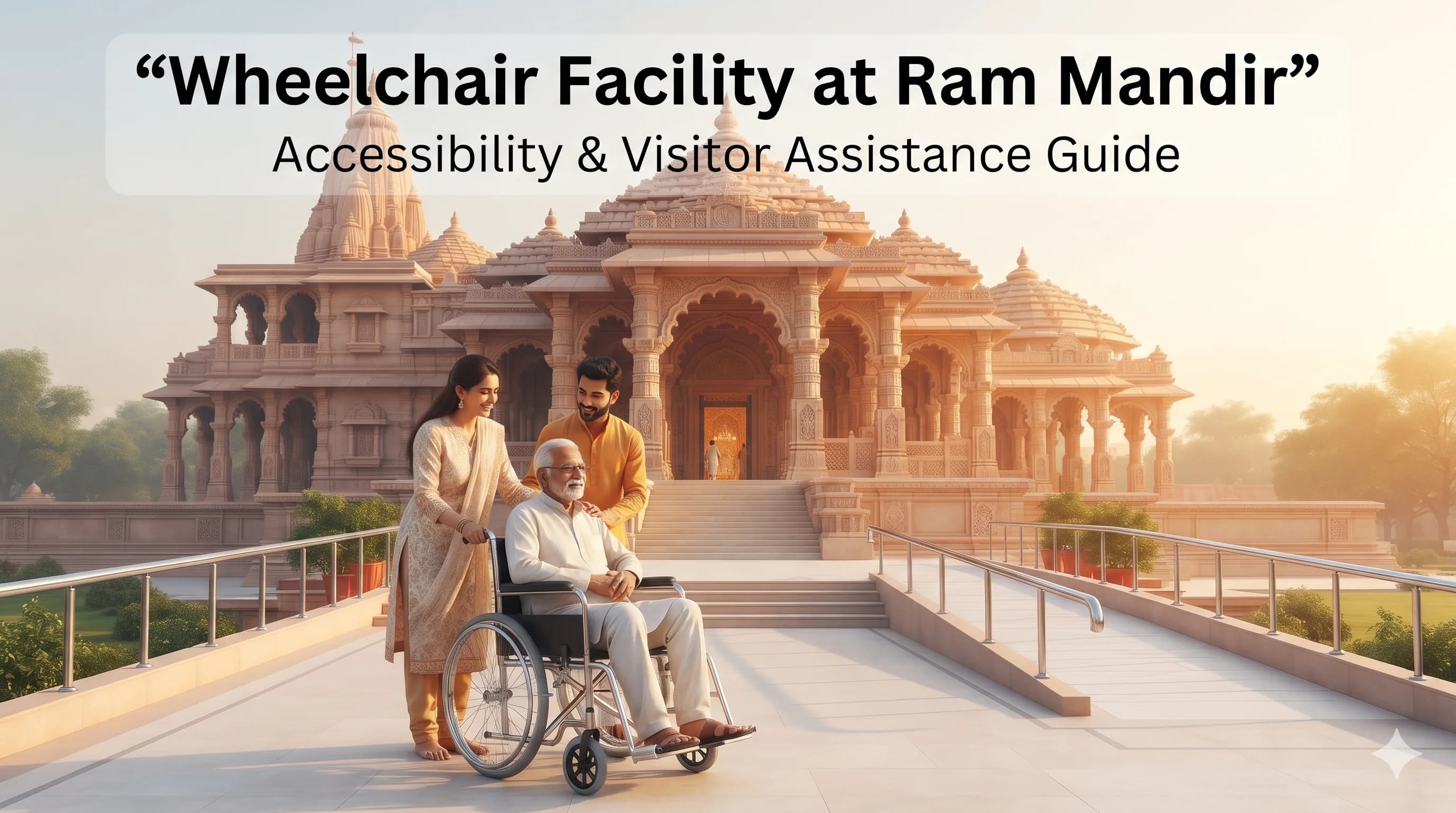
Wheelchair Facility at Ram Mandir Ayodhya: Availability, Assistance and Accessibility Guide
Amit Deshwal
17 October 2026
Ready for your Ayodhya Varanasi Yatra?
Let us design the perfect pilgrimage package for you.
Shri Ram Janmabhoomi Mandir in Ayodhya is an important pilgrimage destination for devotees of Lord Ram. Every year, visitors of different ages travel to the temple for darshan. For senior citizens, people with disabilities and visitors who have difficulty walking, understanding wheelchair facilities and accessibility arrangements before travelling can make the visit easier to plan.
Wheelchair availability and assistance have been reported at Ram Mandir for elderly devotees and people with disabilities. However, the exact location of the service, availability on a particular day, attendant arrangements and accessible routes should be confirmed with temple authorities before your visit.
This guide by Ayodhya Varanasi Guides explains how to prepare for a wheelchair-assisted visit, what to ask before arriving and how to plan a comfortable pilgrimage.
1. Is a Wheelchair Facility Available at Ram Mandir Ayodhya?
Wheelchair facilities have been reported at Shri Ram Janmabhoomi Mandir for visitors who have difficulty walking, including senior citizens and people with disabilities. These arrangements are intended to help eligible visitors move through designated areas more comfortably.
However, visitors should not assume that a wheelchair will always be available immediately or that assistance is provided in exactly the same way on every visit. Availability may depend on demand, staffing and the arrangements operating on the day.
Before travelling, confirm the following details with authorised temple representatives:
Whether wheelchairs are available on your intended date.
Where the wheelchair assistance point is located.
Whether advance booking or registration is required.
Whether an attendant or volunteer can help push the wheelchair.
Which parts of the visitor route are accessible.
Whether there are any charges or conditions for using the service.
For the latest official information, visit the Shri Ram Janmabhoomi Teerth Kshetra website. If wheelchair access is essential for your visit, obtain confirmation before making your travel arrangements.
2. Who Can Use Wheelchair Assistance at Ram Mandir?
Wheelchair assistance can be particularly helpful for visitors who cannot comfortably walk or stand for long periods. The following visitors may wish to enquire about the facility.
Senior citizens: Older devotees who experience difficulty walking, fatigue or balance problems may find wheelchair assistance useful during the journey to the temple and the darshan process.
People with disabilities: Visitors with mobility-related disabilities can enquire about wheelchair availability and accessible entry arrangements before arriving.
Visitors recovering from an injury or illness: People with temporary mobility difficulties may also wish to ask whether assistance is available for their visit.
Visitors with limited stamina: Some people can walk short distances but find extended walking or standing difficult. They should explain their requirements when enquiring about accessibility.
The exact eligibility requirements, service conditions and assistance provided should be confirmed with temple authorities. A wheelchair does not automatically guarantee access to every part of the complex or priority entry.
3. Where Can You Get a Wheelchair at Ram Mandir?
The current location of the wheelchair assistance point should be confirmed before travelling. Ask authorised temple staff or volunteers where visitors with mobility difficulties should report.
If you are arriving by car, taxi or another form of transport, also ask about the designated drop-off arrangements and the distance between the drop-off point and the assistance location.
This is particularly important for visitors who cannot walk far without support. Knowing where to go can reduce unnecessary walking and confusion on arrival.
Avoid relying on unofficial individuals who offer wheelchair services without clear authorisation. Follow instructions from temple personnel and use only arrangements confirmed by the authorities.
If you are travelling with a family member, agree in advance on where you will meet and how you will communicate during the visit.
4. Can Senior Citizens Use a Wheelchair for Ram Mandir Darshan?
Senior citizens may benefit from wheelchair assistance if walking, standing or navigating crowded areas is difficult for them. However, each visitor's needs are different, and the most suitable arrangement depends on mobility, health and the route available.
Before visiting, consider how far the person can comfortably walk, whether they need help transferring to a wheelchair and whether they can manage waiting periods.
Contact temple authorities to confirm whether wheelchair assistance is available and whether a family member or attendant can accompany the visitor along the designated route.
During busy periods, allow additional time for movement and security checks. Do not plan the day around a guaranteed darshan duration because waiting times can vary with crowd levels, festivals and security arrangements.
For more general information about visiting the temple, read our Ram Mandir Ayodhya visitor guide.
5. Can a Family Member Accompany a Wheelchair User?
Family assistance can be important when travelling with a person who has limited mobility. A companion may help with communication, personal belongings, medication and general comfort.
However, whether a family member can accompany a wheelchair user through every part of the temple route depends on current entry and security procedures. Confirm this before travelling.
When speaking with temple representatives, explain whether the visitor can transfer independently, needs help pushing the wheelchair or requires continuous support. Ask whether attendants are permitted along the designated route.
If the visitor has specific medical or mobility needs, plan accordingly. Carry essential medication where permitted, keep important contact information available and allow enough time for rest.
Do not assume that volunteers or temple staff will be available to provide continuous personal care. Confirm the assistance provided and arrange a companion when necessary.
6. Are Ramps and Accessible Routes Available?
Accessibility may differ between individual areas of a large religious complex. Visitors should confirm the current route and facilities rather than assume that every section is fully accessible.
When contacting temple authorities, ask specifically about:
Step-free access along the designated visitor route.
The availability of ramps where required.
Any stairs or uneven surfaces that could affect wheelchair movement.
Accessible drop-off arrangements.
Rest areas or places to pause during the visit.
Assistance for entering or leaving the wheelchair, if needed.
These questions are especially important for visitors who cannot use stairs or transfer independently.
If a particular part of the route is not accessible, ask about the available alternatives. Do not attempt to use an unsuitable ramp or move a wheelchair over steps without appropriate assistance.
7. Can You Bring Your Own Wheelchair?
Visitors who rely on a personal wheelchair should ask temple authorities whether it can be brought into the complex and used along the designated route.
A personal wheelchair may be preferable for someone who needs a particular seat, posture or level of support. However, current entry rules, screening arrangements and route conditions should be checked before travelling.
When enquiring, explain whether the wheelchair is manual or powered. Do not assume that the rules for one type apply to another.
If you plan to use a wheelchair provided at the temple instead, confirm availability and whether the service requires registration or any other arrangements.
Make these enquiries before leaving home so that you can choose the most suitable option for your needs.
8. Is Wheelchair Assistance Free at Ram Mandir?
The current charges and usage conditions should be confirmed directly with temple authorities. Do not assume that wheelchair assistance is always free or that the same conditions apply on every visit.
When enquiring, ask whether the service has any fee, whether an attendant is included and whether there are limits on how long the wheelchair can be used.
If a payment is requested, clarify the official process and use authorised arrangements. Avoid making payments to unknown individuals who cannot establish that they are authorised to provide the service.
It is also worth checking whether a companion needs a separate pass or must follow any specific entry procedure.
9. Is There a Separate Queue for Wheelchair Users?
Queue arrangements may change according to the crowd, security requirements and procedures in operation. Visitors should ask temple staff about the designated entry and waiting arrangements for wheelchair users.
Do not assume that wheelchair assistance automatically includes priority darshan or exemption from security screening. The purpose of accessibility support and the rules governing entry are separate matters.
During major festivals and busy periods, crowd-management measures may affect routes and waiting areas. Confirm the arrangements before travelling if a long queue would be difficult for the visitor.
If the visitor cannot sit comfortably for an extended period, explain this when seeking guidance and ask whether an appropriate waiting arrangement is available.
10. Best Time to Visit Ram Mandir with a Wheelchair User
The most suitable time depends on the visitor's mobility, health, weather and tolerance for crowds. Cooler weather may make outdoor walking more comfortable, but major festivals and holidays can bring large numbers of devotees.
Consider the following points when planning:
Check the weather: Summer conditions can be hot, while winter mornings and evenings may be cool. Choose suitable clothing and plan for comfort.
Avoid an overly packed itinerary: Allow time for transport, security checks, darshan and rest. Avoid scheduling several attractions back-to-back.
Check crowd conditions: Festival dates and special events may affect entry arrangements and accessibility. Follow current official notices.
Allow flexibility: Waiting times and local transport conditions can change. Build extra time into your plan rather than relying on a fixed schedule.
For seasonal travel advice, read our guide to Ayodhya weather in December and what to pack.
11. What Should You Carry When Visiting with a Wheelchair User?
A little preparation can help the visitor remain comfortable throughout the journey. Carry only the items permitted under the current temple security rules.
Use this checklist before leaving:
Confirm wheelchair availability and the designated assistance point.
Check the current entry procedure and darshan timings.
Ask whether a companion can accompany the wheelchair user.
Confirm accessible routes and any restrictions.
Carry essential medication and relevant medical information where permitted.
Bring any necessary mobility aids, subject to current entry rules.
Keep emergency contact details accessible.
Wear comfortable clothing suitable for the weather.
Avoid unnecessary bags, electronics and valuables.
Allow time for rest, screening and movement through the complex.
Mobile phones, bags, cameras and other personal items may be restricted in designated areas. Check the latest rules before travelling. Our guide to items not allowed inside Ram Mandir Ayodhya provides additional information about belongings that visitors should verify in advance.
12. Places to Visit Near Ram Mandir
If the visitor has sufficient energy and time, other religious sites in Ayodhya may be included in the itinerary. The suitability of each stop depends on walking distances, steps, access arrangements and crowd conditions.
Hanuman Garhi: This important temple is visited by many pilgrims. Ask about the approach and any steps before adding it to a wheelchair-assisted itinerary. Read our Hanuman Garhi Ayodhya guide.
Kanak Bhawan: A prominent religious site associated with Lord Ram and Sita. Confirm the current access arrangements before visiting with a wheelchair user.
Ram Ki Paidi: This riverside area is a well-known stop in Ayodhya. The accessible route may depend on the exact area visited and local conditions. See our Ram Ki Paidi Ayodhya guide.
Saryu riverfront: Visitors may wish to include the riverfront in their pilgrimage, but should check the approach, surface conditions and distance from the vehicle drop-off point.
When travelling with someone who has limited mobility, it is usually better to choose fewer places and allow more time at each one.
13. How to Reach Ram Mandir Ayodhya
Visitors can reach Ayodhya by rail, road and air connections, depending on their starting point. Local transport and the final approach to the temple may be affected by traffic restrictions, security arrangements and crowd levels.
If you are travelling by train, consult our guide on how to reach Ayodhya by train.
You can also read about the distance from Ayodhya Railway Station to Ram Mandir to help plan your journey.
If wheelchair access is essential, ask your transport provider about vehicle access, drop-off arrangements and how much walking may be required after leaving the vehicle. Do not assume that the closest point accessible to a car will be the temple entrance.
14. Ayodhya Tour Packages for Senior Citizens and Families
A planned itinerary can help families manage travel, temple visits and rest periods. When comparing packages, explain the visitor's mobility needs before booking.
Ask about vehicle access, walking distances, accommodation arrangements, time available at each stop and whether the itinerary can be adjusted. Do not assume that a standard sightseeing package includes a wheelchair or an attendant.
| Tour package | Suitable for | Planning considerations |
|---|---|---|
| 1 Day Ayodhya Tour Package | Visitors with limited time | Confirm walking distances and rest breaks |
| 2 Days Ayodhya Tour Package | Visitors seeking a slower schedule | More flexibility for rest and sightseeing |
| 3 Days Ayodhya Tour Package | Longer pilgrimage visits | Additional time to manage travel and temple visits |
| 1 Day Prayagraj Tour Package | Visitors extending their trip | Confirm access at each planned attraction |
| 2 Days Prayagraj Tour Package | Travellers with extra time | Allow for transport and rest |
| 3 Days Varanasi Tour Package | Visitors continuing to Varanasi | Check steps, walking routes and vehicle access |
| 4 Days Ayodhya Lucknow Tour Package | Visitors combining two cities | Discuss mobility needs for both destinations |
| 4 Days Varanasi Bodhgaya Tour Package | Longer religious journeys | Check accessibility at each stop before booking |
Explore our Ayodhya tour packages and discuss accessibility requirements before confirming an itinerary.
Conclusion
Wheelchair assistance can make a visit to Ram Mandir Ayodhya more manageable for senior citizens and people with mobility difficulties. However, the availability of wheelchairs, attendant support, accessible routes and entry arrangements should be confirmed before travelling.
Plan the journey around the visitor's needs, allow sufficient time for security checks and rest, and avoid trying to fit too many attractions into one day. If you are visiting with a family member who needs mobility support, explain those requirements to the relevant authorities and transport provider in advance.
For the most reliable information, follow the latest official temple instructions rather than relying on assumptions about accessibility facilities.
Plan Your Yatra With Ayodhya Varanasi Guides
Contact us to enquire about airport pickup, local transportation, temple sightseeing and customised Ayodhya tour packages.
Phone: +91 90584 30503
Email: info@ayodhyavaranasiguide.com
Website: https://ayodhyavaranasiguide.com