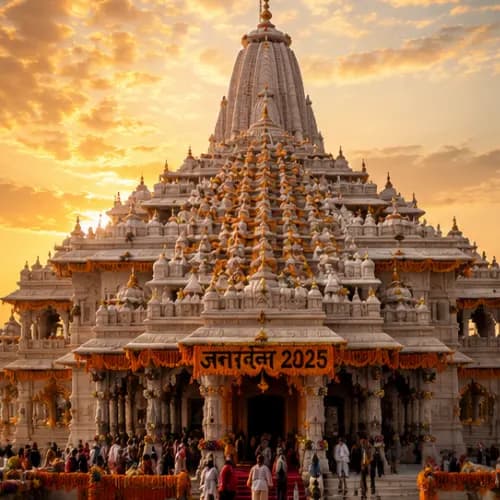
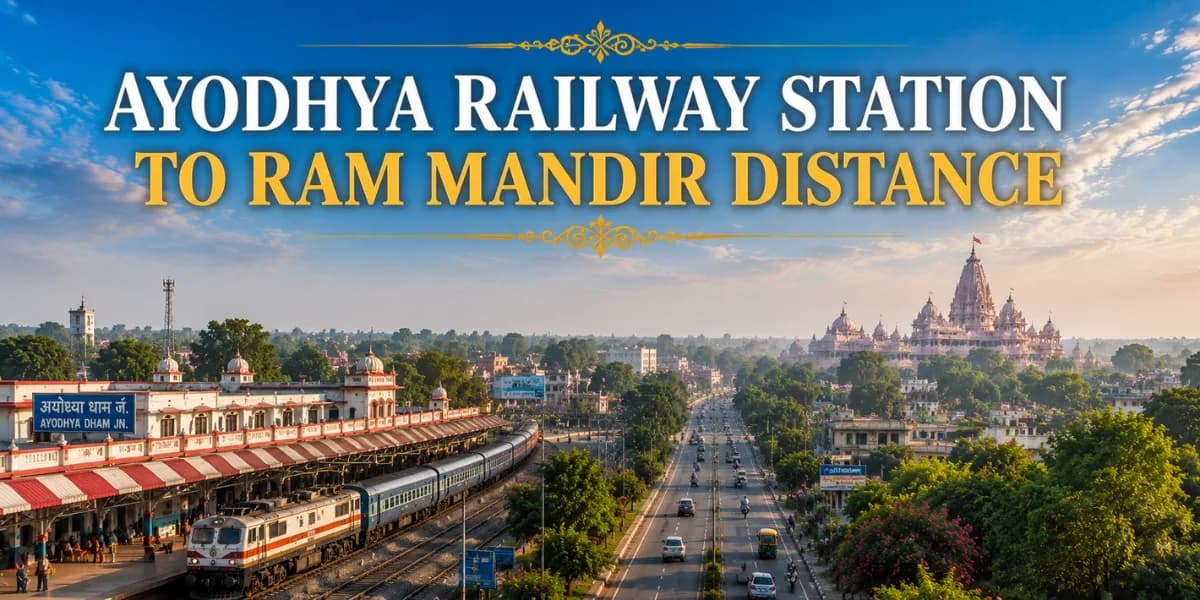
Ayodhya Railway Station to Ram Mandir Distance
PV SRINIVAS
19 July 2026
Ready for your Ayodhya Varanasi Yatra?
Let us design the perfect pilgrimage package for you.
Ayodhya Railway Station to Ram Mandir Distance: You really want to know how far Ram Mandir is from Ayodhya Dham Junction and the best way to reach it in 2026. Ayodhya Dham Junction now sits about 2.2 km from the main Ram Mandir entry gate, and you can cover this short stretch in 8–10 minutes by e‑rickshaw or around 20–25 minutes on foot along Station Road, Ram Path and Bhakti Path. In this guide, I’ll share exact distances, real travel times, walking route details and local transport options so your first journey from the railway station to Ram Mandir feels simple, safe and devotional.
I am PV Srinivas from Ayodhya Varanasi Guides, and I walk this station‑to‑temple stretch with devotees almost every day. Based on those real experiences, I’ll show you which station to choose, whether you should walk or ride, how much to pay, which gate to enter, and how to plan if you are travelling with elders, children, or alone.
Quick Answer
Distance: Around 2.2 km from Ayodhya Dham Junction to the main Ram Mandir entry gate; approximately 9.5 km from Ayodhya Cantt.
Travel time: 8–10 minutes by e‑rickshaw from Ayodhya Dham Junction, 20–25 minutes on foot; 10–15 minutes by auto or taxi from Ayodhya Cantt.
Best transport: Shared or private e‑rickshaw from Ayodhya Dham Junction to the Bhakti Path drop‑off, followed by a short walk to Ram Mandir.
Overview
In Ayodhya today, your very first journey—from the train platform to the temple gate—sets the tone for the rest of your yatra. With Ayodhya Dham Junction acting as the main spiritual station and Ram Path and Bhakti Path built as dedicated corridors, this short 2.2 km stretch can be peaceful and predictable if you know the route and basic transport norms.
Heavy vehicles are restricted near the inner temple zone, so bigger vehicles stop in outer areas, and the last part of the journey is either on foot or in e‑rickshaws. Once you understand this design, you stop worrying about “how to reach” and can focus completely on darshan.
Ayodhya Railway Station to Ram Mandir Distance
Ayodhya has two key railway stations for Ram Mandir visitors: Ayodhya Dham Junction (AYAP), which is close to the temple, and Ayodhya Cantt (AYC), which is further away but serves some longer‑route trains. The station you choose decides how far you travel inside the city.
Distance Table
| From (starting point) | To (destination) | Distance | Primary route |
|---|---|---|---|
| Ayodhya Dham Junction (AYAP) | Ram Mandir main entry gate | ~2.2 km | Station Road → Ram Path → Bhakti Path |
| Ayodhya Cantt (AYC) | Ram Mandir main entry gate | ~9.5 km | NH‑27 → city approach → Ram Path |
| Ayodhya Dham Junction | Hanuman Garhi | ~1.8 km | Station Road |
| Ayodhya Dham Junction | Saryu Ghat / Ram Ki Paidi | ~2.8 km | Station Road → Dharm Path |
If you have the choice at booking time, treat Ayodhya Dham Junction as your primary “Ram Mandir station”—it saves both time and effort on your first day.
Best Route from Station to Ram Mandir
From Ayodhya Dham Junction, the best route to Ram Mandir follows a simple sequence:
Ayodhya Dham Junction → Station Road → Ram Path → Bhakti Path → Ram Mandir entry gate
When you exit the grand building of Ayodhya Dham Junction, you arrive on Station Road where e‑rickshaws line up in organised rows and signboards point towards Ram Path and Bhakti Path. Your e‑rickshaw briefly joins Ram Path, the 13‑km spiritual boulevard running through Ayodhya, and then drops you near the entrance of Bhakti Path, the dedicated pedestrian corridor that leads directly to Ram Mandir.
From the Bhakti Path drop‑off, it is around 500 metres on foot between neat storefronts and paved stone walkways until you reach the main security checkpoints and temple gates. The entire approach feels like entering a temple city rather than a crowded town.
Walking Route from Ayodhya Dham Junction
If your luggage is light and your health allows it, walking from Ayodhya Dham Junction to Ram Mandir is not only possible—it can be one of the most peaceful parts of your day.
Walking Time and Comfort
Walking the 2.2 km stretch takes roughly 20–25 minutes at a normal pace. Raised, smooth footpaths run along Station Road and towards Ram Path, with shade structures, benches, drinking‑water points and clean public toilets placed at regular intervals along the way.
Up to the main security gates, the paths are generally step‑free and even, so most elders and children manage this walk with short breaks. If heavy bags are left in the station cloakroom, this walk feels like a gentle transition from the vibration of the train to the rhythm of the city.
Travel Options from Station to Temple
From Ayodhya Dham Junction or Ayodhya Cantt, you can reach Ram Mandir in several ways: walking, taking e‑rickshaws, auto‑rickshaws or private taxis. Each mode fits a specific type of traveller.
Travel Mode Comparison
| Mode of transport | Time (approx.) | Cost (approx.) | Best for | Notes |
|---|---|---|---|---|
| Walking | 20–25 minutes | ₹0 | Fit travellers, budget pilgrims | Smooth, shaded walking paths |
| Shared e‑rickshaw | 8–10 minutes | ₹10–₹20 per seat | Solo travellers, small families | Point‑to‑point, no waiting charges |
| Private e‑rickshaw | 8–10 minutes | ₹80–₹100 per vehicle | Families, extra luggage | Direct drop near Bhakti Path |
| Auto‑rickshaw (Cantt) | 10–15 minutes | ₹100–₹150 | Groups arriving at Ayodhya Cantt | Stops outside inner corridors |
| Private taxi/cab | 15–20 minutes | ₹250–₹350 | Comfort‑focused visitors, bad weather | Parks at outer lots, then a short walk |
Most pilgrims arriving at Ayodhya Dham Junction either walk or use e‑rickshaws; autos and taxis matter more if you’re coming from Ayodhya Cantt or the airport.
Travel Time and Cost Comparison
Thinking about the station‑to‑temple stretch in terms of both time and cost, Ayodhya Varanasi Taxi Services helps you choose quickly without stress.
Time & Cost Table
| Mode | Distance | Time | Cost | When to choose |
|---|---|---|---|---|
| Walking | 2.2 km | 20–25 min | ₹0 | Light luggage, cooler hours, good physical health |
| Shared e‑rickshaw | 2.2 km | 8–10 min | ₹10–₹20 | Budget travel, small families |
| Private e‑rickshaw | 2.2 km | 8–10 min | ₹80–₹100 | Families with kids or bags, direct drop |
| Auto from Cantt | 9.5 km | 10–15 min | ₹100–₹150 | Arrivals at Ayodhya Cantt want simple transport |
| Taxi from Cantt | 9.5 km | 15–20 min | ₹250–₹350 | Longer journeys, bad weather, seniors, and children |
In simple terms, walking and e‑rickshaws cover Ayodhya Dham → Ram Mandir best; autos and taxis become important when you land at Cantt or fly into the region
Taxi & Auto Fare Guide
Knowing approximate fares in advance helps you avoid overpaying and keeps interactions with drivers friendly and straightforward.
Local Fare Table
| Route | Vehicle type | Standard fare | Peakfestival/weekendd fare |
|---|---|---|---|
| Ayodhya Dham Jn → Bhakti Path drop | Shared e‑rickshaw | ~₹15 per person | ₹20–₹30 per person |
| Ayodhya Dham Jn → Bhakti Path drop | Private e‑rickshaw | ~₹80 per vehicle | ₹120–₹150 per vehicle |
| Ayodhya Cantt → temple zone approach | Auto‑rickshaw | ~₹150 | ₹250–₹300 |
| Ayodhya Cantt → temple zone approach | Private taxi (AC) | ~₹350 | ₹500+ |
E‑rickshaws typically run on simple point‑to‑point drops without waiting charges. Taxis may add fees for long waits or extra halts, so confirming the plan before starting the ride keeps everyone clear.
Nearest Railway Station for Ram Mandir
The nearest railway station to Ram Mandir is Ayodhya Dham Junction (AYAP). Ayodhya Cantt (AYC) still serves many long‑route trains, but it sits further away from the temple.
Station Comparison
| Feature | Ayodhya Dham Junction (AYAP) | Ayodhya Cantt (AYC) |
|---|---|---|
| Distance to Ram Mandir | ~2.2 km | ~9.5 km |
| Architecture | New, grand, palace‑like building | Standard Indian Railways station |
| Cloakroom/lockers | Large, modern, and secure | Basic cloakroom facilities |
| Immediate transport | E‑rickshaws, autos, local vehicles | Autos, taxis, some buses |
| Best use case | Direct, quick access to Ram Mandir | Trains that only stop at Cantt |
If Ram Mandir is your main purpose and you see both names while booking, choose Ayodhya Dham Junction. It shortens your first journey and keeps your schedule simple.
Nearest Airport for Ram Mandir
For air travellers, the nearest airport is Maharishi Valmiki International Airport (AYO) in Ayodhya. Many visitors also arrive via Lucknow’s Chaudhary Charan Singh Airport (LKO) and then drive in.
Airport Distance Table
| Airport name | Distance to Ram Mandir | Typical taxi fare | Travel time |
|---|---|---|---|
| Maharishi Valmiki Intl Airport (AYO) | ~10 km | ₹400–₹600 | ~25 minutes |
| C. C. S. Airport, Lucknow (LKO) | ~145 km | ₹3,000–₹4,500 | ~3 hours |
If you prefer pre‑planned transfers instead of negotiating on arrival, you can arrange city and airport travel in advance with trusted local taxi operators.
Ram Mandir Entry Gates, Passes,s and Lockers
After you reach the Bhakti Path drop‑off and walk towards the temple, you arrive near the Gaj Dwar, the main entry gate for general devotees. Understanding how entry, passes and lockers work avoids last‑minute stress.
General visitors enter through Gaj Dwar via the standard line and move through routine security checks into the main campus. If you have pre‑booked a timed Sugam Darshan slot, you follow the marked Sugam Darshan line and carry the same ID you used while booking. Phones, smartwatches, cameras, power banks, a nd many leather items are not allowed beyond certain points, so it is better to leave them in your hotel or at the station cloakroom rather than relying only on the temple lockers.
A large locker complex outside the main gates accepts phones and bags and issues tokens, but queues can get long in peak hours. Planning what you carry and what you leave behind is one of the easiest ways to save time.
Travel Tips for First-Time Visitors
If you are visiting Ayodhya by train for the first time, a few simple habits make your station‑to‑temple journey smooth and devotional.
Aim to arrive at Ayodhya Dham Junction in the early morning, between 6:00–8:00 AM, for cooler weather and calmer queues.
Use the station cloakroom for heavy luggage and walk or ride with only a small bag carrying ID, cash,h and essentials.
Wear modest, traditional clothing and comfortable footwear that you can easily remove before entering the inner temple platform.
Keep a small water bottle and basic medicines handy, especially if elders or children are travelling with you.
Ask temple staff about wheelchair assistance and ramps for senior citizens or differently‑abled devotees—these services exist and are meant to be used.
Minimise electronics on the inner approach; leaving phones and gadgets behind often helps you stay more present during darshan.
Nearby Attractions After Ram Mandir Darshan
Once you have reached Ram Mandir from the station, you are close to several important spiritual spots that many pilgrims include in the same visit.
Nearby Attractions Table
| Attraction | Distance from Ram Mandir | Why visit | Suggested time |
|---|---|---|---|
| Hanuman Garhi | ~500 m | Take blessings from Ayodhya’s guardian | ~45 minutes |
| Kanak Bhawan | ~700 m | Palace‑style temple associated with Mata Sita | ~30 minutes |
| Dashrath Mahal | ~900 m | Historical palace linked to Lord Ram’s father | ~30 minutes |
| Sita Ki Rasoi | ~1.0 km | Symbolic royal kitchen of Mata Sita | ~30 minutes |
| Ram Ki Paidi / Saryu Ghat | ~2.0 km | Riverfront walk and evening aarti | ~1.5 hours |
Choosing just two or three of these nearby temples or ghats and giving them honest time keeps your day devotional instead of tiring.
One-Day Station-to-Station Itinerary
If you plan one full day starting and ending at Ayodhya Dham Junction, here is a simple, practical flow many of my guests use.
07:30 AM – Arrival at Ayodhya Dham Junction: Step off the train, leave heavy bags in the cloakroom and keep only a small day‑bag.
08:00 AM – Hanuman Garhi: Take an e‑rickshaw to Hanuman Garhi and complete darshan, following the tradition of seeking Hanuman’s blessings before visiting Ram Lalla.
09:30 AM – Ram Mandir: Walk down Bhakti Path to Ram Mandir, allowing 2–3 hours for security, lines and darshan.
12:30 PM – Kanak Bhawan and Dashrath Mahal: Visit these nearby temples and courtyards to connect the royal side of Ayodhya’s story to your yatra.
01:30 PM – Sattvik lunch: Eat a simple onion‑ and garlic‑free thali in a Bhojanalaya along Ram Path.
03:30 PM – Ram Ki Paidi: Take an e‑rickshaw to the Saryu riverfront and rest along Ram Ki Paidi.
06:00 PM – Saryu aarti: Attend the evening aarti at Naya Ghat, standing on the steps as the lamps are offered to the river.
07:30 PM – Return to station: Ride back to Ayodhya Dham Junction, collect your bags and board your train home.
Conclusion
Reaching Ram Mandir from Ayodhya railway station is far simpler than many visitors expect once you know that Ayodhya Dham Junction lies just 2.2 km away and that Station Road, Ram Path, and Bhakti Path are your main guiding lines. With a small bag, a clear idea of fares, and an understanding of where vehicles stop and walking begins, the short journey from platform to temple gate becomes part of your yatra rather than a problem to solve.