
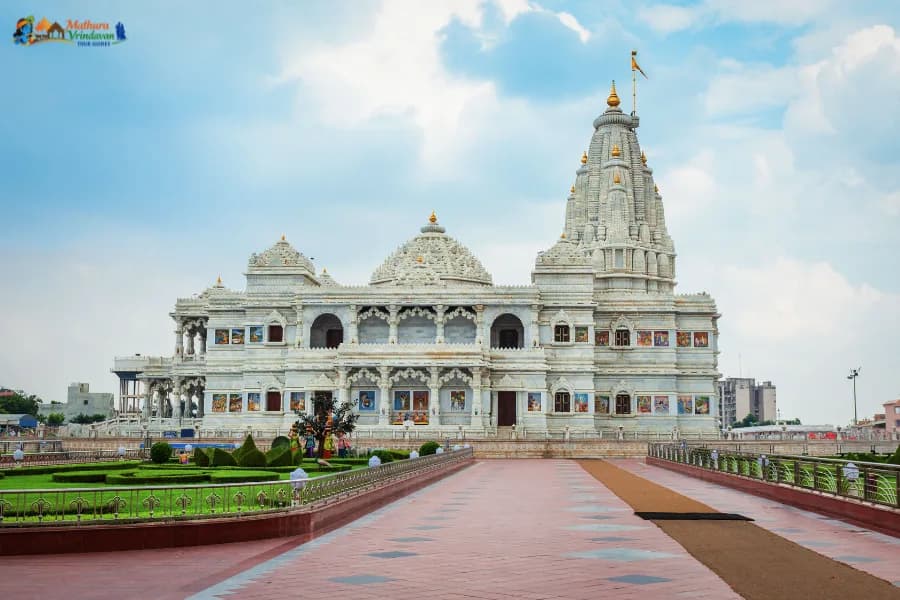
Ayodhya Varanasi Tour Packages from Bengaluru
Plan your Ayodhya and Varanasi pilgrimage from Bengaluru with a government-certified local guide, private AC transport, ...
Transport
Private AC Sedan (Dzire/Etios), Innova Crysta or Tempo Traveller
Written & verified by Amit Kumar Deshwal · Founder & Pilgrimage Travel Expert
Last updated 13 August 2026
Quick Answer
Ayodhya and Varanasi tour packages from Bengaluru start at around Rs 8,999 per person and cover Ram Lalla darshan at the Shri Ram Janmabhoomi Mandir, Hanuman Garhi, Kashi Vishwanath Jyotirlinga darshan, and the evening Ganga Aarti at Dashashwamedh Ghat in Varanasi. Bengaluru travellers can fly directly to Varanasi in about 2 hours 20 minutes or fly to Lucknow and reach Ayodhya by road in 3 hours. Packages include hotel accommodation in both cities, private AC vehicle for all local and intercity transfers, darshan slot booking assistance, and a government-certified guide.
About Ayodhya and Varanasi
If you are planning your first Ayodhya and Varanasi pilgrimage from Bengaluru, the sheer number of decisions — which airport to fly into, how to get between the two cities, where to stay near the temples, how to book a Ram Mandir darshan slot — can feel overwhelming before the trip has even begun. I have coordinated this exact route for hundreds of Bengaluru families, and the one thing I can tell you from experience is that a well-planned ground package, starting at Rs 8,999 per person, removes every logistical headache so you can focus entirely on darshan and prayer.
Why Choose Our Ayodhya Varanasi Tour Packages from Bengaluru?
Bengaluru is roughly 1,800 km from Varanasi by air and over 2,000 km from Ayodhya. That distance means you are arriving in an unfamiliar region with different languages, food, climate, and local transport systems. A structured tour package bridges that gap with someone on the ground who already knows what works and what does not.
- Airport and station pickup on arrival: Whether you land at Varanasi's Lal Bahadur Shastri Airport or Lucknow's Chaudhary Charan Singh Airport, a private AC vehicle is waiting with your name. No bargaining with auto drivers after a long flight.
- Private AC vehicle for the entire trip: A dedicated sedan or Innova handles all local sightseeing in both cities and the 320 km Varanasi-to-Ayodhya intercity transfer. You are not sharing a bus or waiting for other groups.
- Ram Mandir darshan slot assistance: I help you complete the online booking correctly — matching your ID details, selecting the least crowded morning slot, and briefing you on security procedures that change frequently.
- Written, itemised pricing: Hotel name, vehicle charges, guide fees, and every optional cost is listed on paper before you pay even the booking amount. No hidden charges surface on arrival.
- No full advance payment: A small booking amount of Rs 1,500 to Rs 2,000 per person confirms your reservation. The balance is settled during or after the trip.
How to Reach Ayodhya and Varanasi from Bengaluru
There are several tested routes, and the right one depends on your budget, comfort preference, and how much time you have.
- Flight to Varanasi (fastest): Direct flights from Kempegowda International Airport (BLR) to Lal Bahadur Shastri Airport (VNS) take about 2 hours 20 minutes to 2 hours 45 minutes. IndiGo, Air India, and SpiceJet operate daily services. This is the most popular option — fly into Varanasi, complete darshan there, then travel onward to Ayodhya.
- Flight to Lucknow, then road to Ayodhya: Bengaluru to Lucknow (LKO) is about 2 hours 30 minutes by air. From Lucknow, Ayodhya is 135 km by road, taking around 3 hours by private car. This works well if you want to start your pilgrimage in Ayodhya first.
- Train (best value): Direct trains from KSR Bengaluru (SBC) or Yeshwantpur (YPR) to Varanasi Junction (BSB) take 26 to 32 hours. Sleeper fares start from approximately Rs 700 and 3AC from Rs 1,800. Budget-friendly, but requires patience for the long journey.
- Varanasi to Ayodhya intercity: The Vande Bharat Express covers this in about 3 hours. By private AC car via NH-28, the 320 km drive takes 6 to 7 hours with a midway meal break. Both options are available within the package.
Places Covered in Our Bengaluru to Ayodhya Varanasi Tour Packages
Every major pilgrimage site in both cities is part of the guided itinerary.
In Ayodhya
- Shri Ram Janmabhoomi Mandir: Ram Lalla darshan at the main sanctum, with pre-booked slot timing to avoid the general queue.
- Hanuman Garhi: The hilltop temple reached by climbing 76 steps — traditionally visited before Ram Mandir for Hanumanji's blessings.
- Kanak Bhawan: Temple housing gold-crowned idols of Ram and Sita, believed to have been gifted by Kaikeyi to Sita Mata.
- Nageshwarnath Temple: Ancient Shiva temple said to have been established by Kush, Lord Ram's son.
- Saryu Aarti at Ram Ki Paidi: The evening aarti along the renovated ghats of the Saryu river.
In Varanasi
- Kashi Vishwanath Temple: One of the twelve Jyotirlingas, accessed through the grand Kashi Vishwanath Corridor.
- Kaal Bhairav Temple: Dedicated to the fierce form of Lord Shiva, considered the Kotwal (guardian) of Kashi.
- Sankat Mochan Hanuman Temple: A serene temple where phones are not permitted inside the premises.
- Ganga Aarti at Dashashwamedh Ghat: The grand evening ceremony performed by trained priests with synchronised fire offerings.
- Sunrise boat ride: Covering Assi Ghat, Manikarnika Ghat, and Panchganga Ghat from the river at dawn.
- Sarnath: The historic Buddhist site 10 km from Varanasi — Dhamek Stupa, ASI Museum with the Lion Capital of Ashoka, and Mulagandha Kuti Vihar.
Travel Tips for Bengaluru Pilgrims
- Phones are not allowed inside the Ram Mandir security zone or Sankat Mochan Temple. Leave your mobile in the vehicle or at the designated locker before entering. Carry only your original photo ID and a small pouch for offerings.
- Most Ayodhya temples close between 12:30 PM and 2:00 PM for afternoon rest. Plan your darshan before noon or after 2 PM. The guide schedules your day around this closure so no time is wasted standing outside a locked gate.
- Dress modestly at all temple sites. Full-length clothing covering shoulders and knees is expected. Slip-on footwear like kolhapuris saves time since you will remove and wear shoes dozens of times across the trip.
- Carry your original Aadhaar card or passport. Photo ID is mandatory at the Ram Mandir and Kashi Vishwanath security checkpoints. Photocopies and digital copies on your phone are not accepted at every entry point.
- Book well ahead for festival dates. If you plan to visit during Ram Navami, Diwali week, or Dev Deepawali, hotels in both cities fill up 5 to 6 weeks before travel. Last-minute availability is either unavailable or heavily overpriced.
Festival Experiences and Special Packages
Certain dates transform Ayodhya and Varanasi from pilgrimage cities into living, breathing celebrations of faith. If you can time your trip around one of these, the experience becomes deeply memorable.
Ram Navami (March–April) in Ayodhya draws lakhs of devotees. The highlight is the Surya Tilak — a specially engineered arrangement where sunlight falls directly on Ram Lalla's forehead at noon through a series of mirrors and lenses. Witnessing this in person is something no photograph can replicate. Ayodhya Deepotsav (Diwali week) lights up the Saryu ghats with lakhs of earthen diyas, and the city enters the record books year after year for the scale of illumination.
In Varanasi, Dev Deepawali (November, fifteen days after Diwali) covers every ghat step with flickering oil lamps as the gods are believed to descend to the Ganga. Mahashivratri (February–March) at Kashi Vishwanath is one of the most powerful nights of worship in the Hindu calendar. For those extending their trip, the annual Magh Mela (January–February) at Prayagraj's Triveni Sangam offers a Kumbh-like bathing experience on a more manageable scale.
I run dedicated festival packages for each of these dates with hotels booked well in advance and itineraries adjusted for crowd management. Reach out early — these are the first dates to fill every season.
Why a Planned Package Saves You Time
Without a local arrangement in place, here is what typically goes wrong for first-time visitors from Bengaluru. You land in Varanasi and spend forty minutes negotiating with an auto driver who quotes four times the actual fare. You reach a hotel that looks nothing like its photos. You arrive at Ram Mandir without a darshan slot and stand in a general queue for three to four hours. You miss the Ganga Aarti because nobody mentioned it starts at 6:45 PM and the ghats fill up by 6:15. You attempt the Varanasi-to-Ayodhya drive without knowing that the road conditions require an experienced local driver.
A planned package does not add luxury — it removes friction. The vehicle is waiting when you land. The hotel is confirmed and verified. The darshan slot is pre-booked. The guide knows which lane to take and which hour to avoid. You spend your energy on prayer, not on problem-solving. For a trip that matters this much to your family, that practical difference is worth every rupee of the package cost.
Tour Packages from Bengaluru

7 Days Ayodhya Prayagraj Varanasi Sarnath Tour Package From Bengaluru
Ayodhya
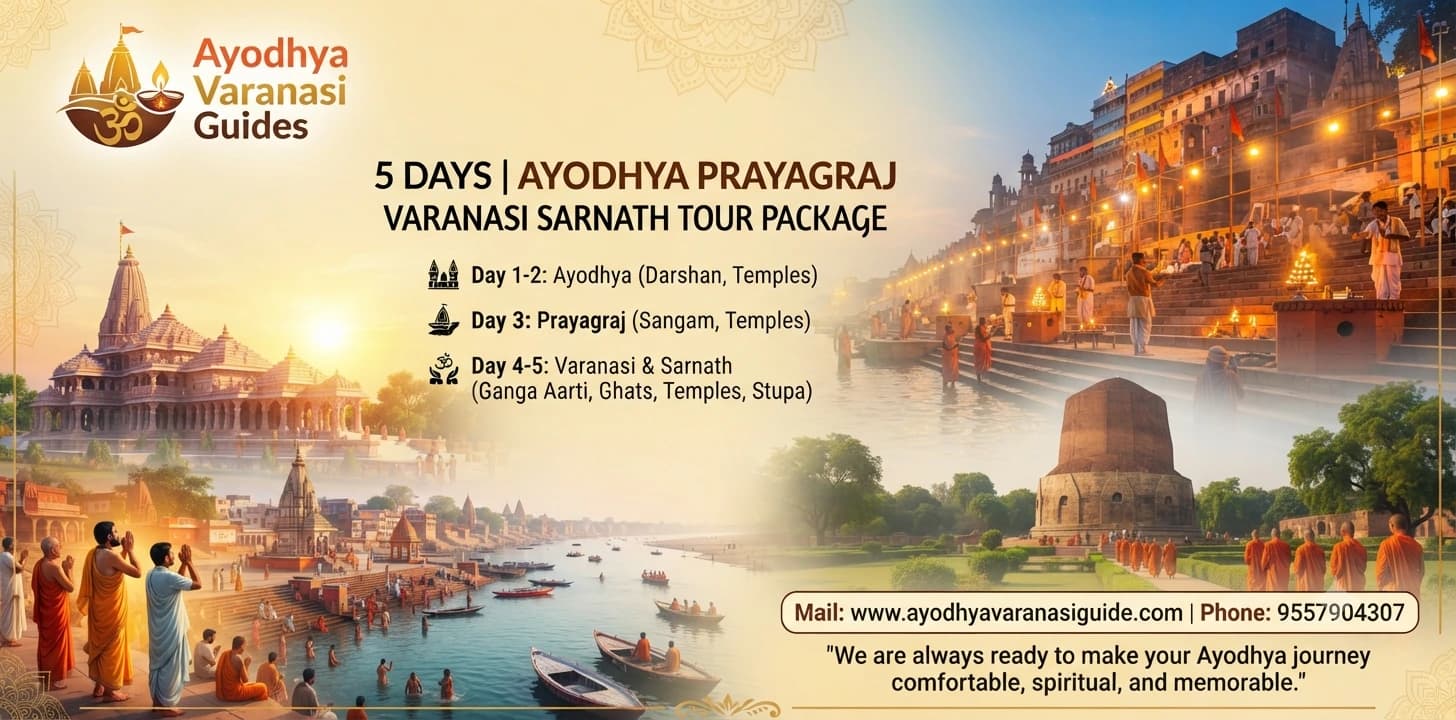
5 Days Ayodhya Prayagraj Varanasi Sarnath Tour Package From Bengaluru
Ayodhya

9 Days Ayodhya Prayagraj Varanasi Tour Package From Bengaluru
Ayodhya

Ayodhya Varanasi Tour Package for South Indian Pilgrims From Bengaluru
Ayodhya
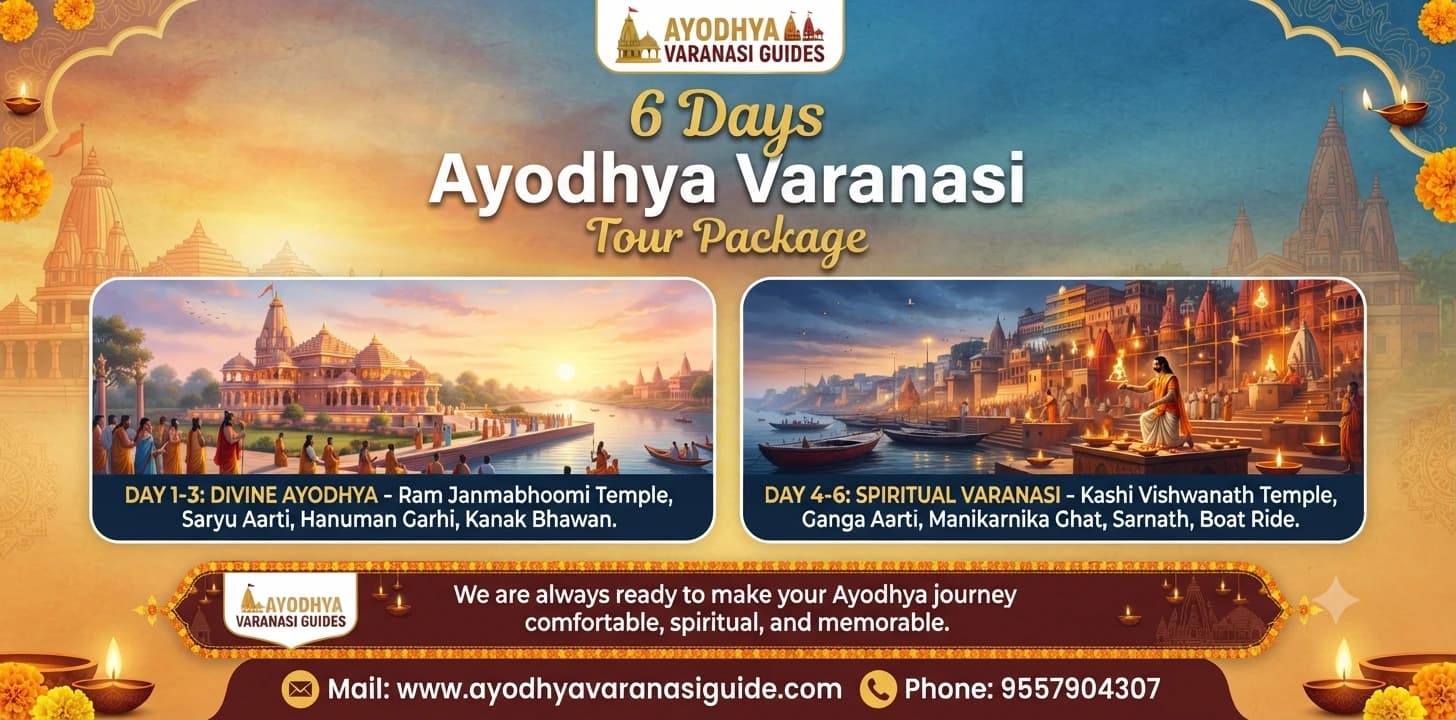
6 Days Ayodhya Varanasi Tour Package with Ram Mandir sugam darshan package From Bengaluru
Ayodhya

9 Days Ayodhya Varanasi Mathura Agra Tour Package From Bengaluru
Ayodhya
How Much Does an Ayodhya and Varanasi Tour Package from Bengaluru Cost?
A realistic Ayodhya and Varanasi pilgrimage tour from Bengaluru starts at around Rs 8,999 per person for a 4-night, 5-day ground package covering hotel accommodation in both cities, a government-certified guide for temple sightseeing, and a private AC vehicle for all local and intercity transfers. On top of this, budget Rs 3,500 to Rs 8,000 for a one-way flight to Varanasi or Lucknow, depending on how far in advance you book. Train travel brings that cost down to Rs 700 to Rs 2,500 per leg depending on your class.
The single biggest cost variable is your choice of hotel. A clean budget hotel near the Ram Ki Paidi ghats in Ayodhya or the Dashashwamedh area in Varanasi runs Rs 1,000 to Rs 1,800 per night. A well-reviewed 3-star property with air conditioning, hot water, and an attached restaurant can go up to Rs 3,500 to Rs 5,500. The gap between a budget and premium package is largely this hotel difference — the guide, vehicle, and sightseeing remain the same. Group size matters too: a family of four sharing one vehicle and two rooms pays meaningfully less per head than a solo traveller or couple.
Seasonal pricing is real. During Ram Navami, Diwali week, Dev Deepawali, and the Pran Pratishtha anniversary in January, hotel rates in both cities can increase by 80 to 100 percent. Booking 5 to 6 weeks ahead during these windows protects you from inflated walk-in rates. Off-season months like February, September, and early October offer the best value with easier availability and shorter darshan queues.
A significant portion of the pilgrimage experience is genuinely free. Entry to the Ram Mandir costs nothing. The Saryu Aarti at Ram Ki Paidi is open to everyone. Hanuman Garhi, Kanak Bhawan, and Nageshwarnath Temple charge no fee. In Varanasi, the Ganga Aarti at Dashashwamedh Ghat is free to attend from the steps, and bathing at any ghat costs nothing. Sarnath's ASI monuments have a nominal fee of Rs 25 for Indian nationals. The costs you need to plan for are accommodation, transport, guide, optional boat rides, and any personal puja arrangements.
Ayodhya and Varanasi Tour Package from Bengaluru — Price Comparison
| Package | Duration | Starting Price |
|---|---|---|
| 3 Days Varanasi OnlyQuick spiritual trip | 3D/2N | ₹6,499 |
| 4 Days Ayodhya VaranasiMost booked | 4D/3N | ₹8,999 |
| 5 Days Ayodhya Varanasi PrayagrajComplete Teerth Yatra | 5D/4N | ₹12,499 |
| 6 Days Ayodhya Varanasi ChitrakootExtended Ram circuit | 6D/5N | ₹15,999 |
| 4 Days Premium Ayodhya Varanasi3-star ghat-view hotels | 4D/3N | ₹14,999 |
How Do You Reach Ayodhya and Varanasi from Bengaluru?
The most popular route for Bengaluru pilgrims is to fly directly into Varanasi. Kempegowda International Airport (BLR) has daily direct flights to Lal Bahadur Shastri Airport (VNS) on IndiGo, Air India, and SpiceJet, with flight times ranging from 2 hours 20 minutes to 2 hours 45 minutes. One-way fares typically fall between Rs 3,500 and Rs 8,000 depending on how early you book. From Varanasi airport, the drive to the main ghat area takes about 40 to 50 minutes, and a pickup vehicle is included in every package.
If you prefer to start your pilgrimage in Ayodhya, flying into Lucknow (LKO) is the practical choice. The Bengaluru to Lucknow flight takes approximately 2 hours 30 minutes with daily services available. From Lucknow airport, Ayodhya is about 135 km east via the Lucknow-Sultanpur highway, a drive of roughly 3 hours by private car. Ayodhya's own Maharishi Valmiki International Airport (AYJ) has limited connectivity from Bengaluru — mostly connecting flights via Delhi — but direct seasonal services are expanding gradually.
By train, KSR Bengaluru City Junction (SBC) and Yeshwantpur (YPR) connect to Varanasi Junction (BSB) on trains like the Bengaluru–Darbhanga Express and the Bengaluru–Gorakhpur Express. Journey time is 26 to 32 hours. Sleeper class costs around Rs 700, 3AC around Rs 1,800, and 2AC about Rs 2,600. From Varanasi, you can reach Ayodhya by the Vande Bharat Express in approximately 3 hours or by private AC car in 6 to 7 hours covering 320 km via NH-28.
The most time-efficient loop itinerary for Bengaluru travellers is to fly into Varanasi, spend 2 to 3 days there for Kashi Vishwanath darshan, Ganga Aarti, and Sarnath, then transfer to Ayodhya by road or rail for Ram Mandir darshan, and fly back from Ayodhya (AYJ) or Lucknow (LKO). This avoids backtracking and makes the best use of your leave days.
Best Time to Visit Ayodhya and Varanasi
The most comfortable months for Bengaluru travellers to visit Ayodhya and Varanasi are October to March. Daytime temperatures range from 10°C to 27°C, the air is dry, and walking between temples and along the ghats is pleasant throughout the day. This six-month window covers the main pilgrimage and wedding season, and the majority of Bengaluru bookings fall within it. If you are flexible on dates, February and early March offer the best combination of mild weather, thin crowds, and lower hotel rates.
December and January are peak pilgrimage months but bring genuine cold that Bengaluru residents are not accustomed to. Early mornings at the Saryu or Ganga ghats can drop to 4 to 8°C, and a sunrise holy dip without warm clothing before and after can be uncomfortable. Pack thermals, a wool shawl, warm socks, and a proper jacket. The cold should not discourage you — it is manageable with preparation — but it should not catch you off guard either.
April to June sees temperatures crossing 40°C in both cities. Outdoor temple visits become physically draining, especially for elderly family members and children. The monsoon months of July to September bring heavy rain, waterlogged lanes near some ghats in Varanasi, and occasional suspension of boat rides when the Ganga water level rises. Both windows are best avoided unless a specific puja date or family occasion requires travel.
For festival-timed visits, the key dates are Ram Navami (March–April) and Deepotsav (Diwali week) in Ayodhya, and Dev Deepawali (November) and Mahashivratri (February–March) in Varanasi. These are the most emotionally powerful times to be in either city, but they are also the most crowded and the most expensive. Hotel rates can double, darshan queues stretch considerably, and vehicle parking becomes a challenge. If you plan around a festival, book at least 5 to 6 weeks in advance and keep your itinerary flexible to accommodate crowd-related delays.
Why Book With Ayodhya Varanasi Guides?
Ayodhya Varanasi Guide holds government-certified guide credentials issued by the tourism authorities of Uttar Pradesh. This is verifiable — our guides carry official photo identification with a licence number that you can check on arrival. At the Ram Mandir, where security procedures and entry protocols have changed multiple times since the temple opened, and at Kashi Vishwanath, where the corridor entry process has its own rules, a certified guide who visits these sites daily saves you significant time and confusion. For Bengaluru families travelling over 1,800 km for this darshan, that practical knowledge matters far more than a brochure.
Every booking receives hands-on darshan pass assistance for the Ram Mandir — we help you fill the online slot form correctly, choose the least crowded time window, verify that your ID details match the booking, and brief you on what to carry and what to leave behind before entering the security perimeter. In Varanasi, we advise on the best hours to visit Kashi Vishwanath to avoid peak queues and guide you through the corridor entry points. All local transport is by private AC vehicle — no shared buses, no unplanned detours, and no commission-driven shopping stops inserted into your temple day.
Pricing is shared in writing before any payment. You receive a line-by-line breakdown listing hotel name and tariff, vehicle type and charges, guide fees, and optional costs such as boat rides or puja arrangements. This is not a verbal estimate — it is a document you can hold us to. We do not ask for full advance payment. A booking amount of Rs 1,500 to Rs 2,000 per person secures your hotels and vehicle, and the remaining balance is settled during or after the trip. This exists because we know that sending a large sum to an operator in another state requires trust, and trust is built by transparency, not by pressure.
We have coordinated Ayodhya and Varanasi pilgrimage bookings from Bengaluru, Chennai, Hyderabad, and other southern cities for several years. That experience shows in the details — coordinating your vehicle with the exact flight arrival time at VNS or LKO, booking hotels that serve South Indian breakfast options, providing guides comfortable communicating in English and Hindi, and building itineraries that account for travel fatigue on day one rather than packing it with back-to-back temples. When your family steps off the plane and sees a driver holding your name, that small relief sets the tone for the entire yatra.
How Do You Travel from Bengaluru to Ayodhya and Varanasi?
Flight
Bengaluru (BLR) → Varanasi (VNS)
2h 20m – 2h 45m direct
Daily direct flights on IndiGo, Air India, SpiceJet. Most popular route — start darshan in Varanasi, then travel onward to Ayodhya.
Flight
Bengaluru (BLR) → Lucknow (LKO), then road to Ayodhya
2h 30m flight + 3h road (135 km)
Best if starting in Ayodhya first. Private vehicle arranged from Lucknow airport directly to Ayodhya hotel.
Train
KSR Bengaluru (SBC) → Varanasi Junction (BSB)
26 – 32 hours
Sleeper from Rs 700, 3AC from Rs 1,800. Budget-friendly for travellers comfortable with long rail journeys.
Road (intercity)
Varanasi → Ayodhya via NH-28
6 – 7 hours (320 km)
Private AC car with midway meal stop. Prayagraj Sangam detour possible on this route at no major deviation.
Ayodhya and Varanasi Tour Packages from Bengaluru — Day by Day Itinerary
Day 1
Arrival in Varanasi — Ganga Aarti
Pickup from Lal Bahadur Shastri Airport or Varanasi Junction. Transfer to hotel near the ghat area. Rest and freshen up after the journey from Bengaluru. In the evening, walk to Dashashwamedh Ghat and attend the grand Ganga Aarti ceremony starting at 6:45 PM. Return to hotel for dinner.
Day 2
Varanasi — Kashi Vishwanath, Ghats and Sarnath
Early morning sunrise boat ride on the Ganga covering Assi Ghat, Manikarnika Ghat, and Panchganga Ghat. After breakfast, proceed for Kashi Vishwanath Temple darshan via the Kashi Vishwanath Corridor. Temples close by 12:30 PM for afternoon break — return to hotel for lunch and rest. Afternoon visit to Kaal Bhairav Temple, Sankat Mochan Hanuman Temple (leave phone in vehicle), Durga Temple, and Tulsi Manas Mandir. Alternatively, use the afternoon for a Sarnath excursion — Dhamek Stupa, ASI Museum, and Mulagandha Kuti Vihar.
Day 3
Varanasi to Ayodhya Transfer
Breakfast at hotel and check out. If Sarnath was not covered on Day 2, visit it this morning before departure. Depart for Ayodhya by private AC vehicle (320 km, approximately 6–7 hours via NH-28) with a midway lunch stop, or take the Vande Bharat Express (approximately 3 hours). Arrive in Ayodhya by evening. Check in to hotel near the Naya Ghat temple zone. Evening at leisure or a quiet walk to the Saryu riverfront.
Day 4
Ayodhya — Ram Mandir and Full Temple Circuit
Early morning holy dip at Saryu Ghat. Proceed for Shri Ram Janmabhoomi Mandir darshan using the pre-booked time slot — guide assists with the security entry process. After darshan, walk to Hanuman Garhi and climb 76 steps for Hanumanji's blessings. Temples close around 12:30 PM — return to hotel for lunch and rest. Afternoon visits to Kanak Bhawan, Nageshwarnath Temple, and Dashrath Mahal. Evening aarti at Ram Ki Paidi along the illuminated Saryu ghats.
Day 5
Departure from Ayodhya
Breakfast at hotel. Optional early morning visit to Treta Ke Thakur or Gulab Bari if time permits. Check out and transfer to Ayodhya Airport (AYJ) for return flight to Bengaluru, or drive to Lucknow Airport (135 km, approximately 3 hours) for wider flight availability. Trip concludes with drop-off at the terminal.
What Is Included in the Package?
Included
- Hotel accommodation on twin or double sharing basis in both Varanasi and Ayodhya
- Private AC vehicle (Dzire/Etios for couples, Innova/Ertiga for families) for all local and intercity transfers
- Government-certified local guide for temple sightseeing in both cities
- Ram Mandir darshan slot booking assistance with ID document verification
- Sunrise boat ride on the Ganga covering the major Varanasi ghats
- Sarnath half-day excursion with guide commentary
- Airport or railway station pickup and drop at Varanasi, Lucknow, or Ayodhya
- All parking charges, road tolls, fuel costs, and driver allowances
- Written itinerary with itemised cost breakdown shared before booking confirmation
- On-trip phone support for coordination, changes, or emergencies
Not Included
- Airfare or train tickets from Bengaluru to Varanasi or Lucknow and return
- Meals — breakfast may be included depending on the hotel; lunch and dinner at own cost
- Special puja, havan, or personalised ritual arrangements at temples (available on request at actual pandit fees)
- Kashi Vishwanath Temple special darshan or abhishek charges
- Private evening Ganga Aarti boat ride (ghat-side viewing is included; private boat available at Rs 500–800 extra)
- Camera or mobile phone locker fees at ASI monuments
- Personal expenses — laundry, bottled water, snacks, shopping
- Travel insurance or medical expenses
- Tips and gratuities for guide, driver, or hotel staff
- Any sightseeing, temple visit, or experience not listed in the written itinerary
Reviews from Bengaluru
We are a family of five from Jayanagar and this was our first trip to Ayodhya and Varanasi. The guide managed the Ram Mandir darshan queue so efficiently that we were inside within 45 minutes during a weekend. Hotel in Varanasi was clean and ten minutes from Dashashwamedh Ghat, which made the early morning boat ride very convenient.
Suresh Bhat
Bengaluru
Booked the 5-day package for my parents who were travelling without us. The driver was punctual at every pickup and the AC car was comfortable for the Varanasi to Ayodhya road journey. Only suggestion is the Sarnath visit felt slightly rushed — would have preferred an extra hour there for the museum.
Meenakshi Rao
Bengaluru
What convinced me to book was the no-advance-payment policy. Every other operator I contacted wanted 50 to 100 percent upfront. Here I paid Rs 2,000 per person to confirm and settled the rest after reaching Varanasi. The written cost sheet matched exactly what we actually spent. Will book the Prayagraj extension next year.
Deepak Joshi
Bengaluru
Amit Kumar Deshwal
Founder & Pilgrimage Travel Expert
Uttar Pradesh, India
Amit Kumar Deshwal was born in Uttar Pradesh, and the pilgrimage circuit he now plans for a living is the one he grew up around. What began as showing visitors the temples he already knew has become a full travel operation — but the working knowledge underneath it is still first-hand.
More than 15,000 guests have travelled with him. Families, elderly parents, first-time visitors and large temple groups — enough of them, over enough years, that very little surprises him now. He knows which darshan queue is worth joining at seven in the morning, which one is not, and what to do when a temple changes its timings on a festival day without telling anyone.
His ground is Ayodhya and Varanasi, extending west into the Braj circuit of Mathura, Vrindavan and Agra. That range matters more than it sounds: it is the difference between handing a guest an itinerary and being able to say, from having stood there, how long the walk actually takes.
The reason Ayodhya Varanasi Guides exists is a frustration he heard from guests over and over — a different agent for the cab, another for the hotel, a third for the guide, and nobody accountable when a darshan slot fell through. His answer was to put all of it in one place, under one number, with the pricing written down before anyone travels.
Every itinerary on this site is planned or reviewed by Amit and his team, and corrected whenever conditions on the ground change.
- Born and raised in Uttar Pradesh
- 15,000+ guests hosted across the pilgrimage circuit
- Ayodhya, Varanasi, Mathura, Vrindavan & Agra specialist
- Ram Mandir Sugam Darshan & Kashi Vishwanath booking assistance
- Transport, stay, guides and darshan arranged in one place
15K+
Guests hosted
5
Pilgrimage cities
4.9★
Average rating
24×7
Support
Frequently Asked Questions
A standard Ayodhya Varanasi tour package from Bengaluru includes hotel accommodation in both Ayodhya and Varanasi, a government-certified local guide for all temple sightseeing, private AC vehicle for airport pickup, local transfers, and the Varanasi-to-Ayodhya intercity journey, Ram Mandir darshan slot booking assistance, a sunrise boat ride on the Ganga in Varanasi, and a half-day Sarnath excursion. Flights or train tickets from Bengaluru are not part of the base package but can be arranged on request. Meals are typically not included unless the hotel offers a breakfast-inclusive tariff. Every inclusion and exclusion is shared in a written, itemised cost sheet before you confirm the booking, so there is no ambiguity about what you are paying for.
The ground package for an Ayodhya and Varanasi pilgrimage trip from Bengaluru starts at approximately Rs 8,999 per person for a 4-night, 5-day itinerary covering accommodation, guided sightseeing, and private AC transport in both cities. On top of this, you need to budget for your flight — one-way airfare from Bengaluru to Varanasi ranges from Rs 3,500 to Rs 8,000 depending on advance booking, and train tickets in 3AC class cost around Rs 1,800. The three biggest cost drivers are hotel category (budget vs 3-star), group size (a family of four pays less per head than a solo traveller), and travel season. During peak festivals like Ram Navami, Diwali, and Dev Deepawali, hotel rates in Ayodhya and Varanasi can nearly double, so booking 5 to 6 weeks ahead helps keep costs realistic.
The fastest way to reach Varanasi from Bengaluru is by direct flight from Kempegowda International Airport (BLR) to Lal Bahadur Shastri Airport (VNS), which takes about 2 hours 20 minutes to 2 hours 45 minutes. IndiGo, Air India, and SpiceJet operate daily services on this route. For Ayodhya, you can fly into Lucknow's Chaudhary Charan Singh Airport (LKO) in about 2 hours 30 minutes and then travel to Ayodhya by road (135 km, roughly 3 hours). Ayodhya's own Maharishi Valmiki International Airport (AYJ) has limited connectivity from Bengaluru — mostly connecting flights via Delhi — though seasonal direct services are gradually increasing. Most Bengaluru families on an Ayodhya Varanasi tour package fly into Varanasi first and travel onward to Ayodhya by the Vande Bharat Express or private car.
A comfortable Ayodhya Varanasi darshan itinerary from Bengaluru needs a minimum of 5 days and 4 nights. This gives you 2 full days in Varanasi for Kashi Vishwanath Temple darshan, the Ganga Aarti, a sunrise boat ride on the ghats, and a Sarnath excursion, plus 1 full day in Ayodhya for Ram Mandir, Hanuman Garhi, Kanak Bhawan, and the Saryu Aarti at Ram Ki Paidi. The remaining time covers intercity travel and airport transfers. A 4-day trip is possible but feels rushed, especially if your flight lands late on day one. Families with elderly parents or those wanting to attend multiple aarti sessions and take a leisurely Ganga boat ride should plan 6 days for a relaxed, fulfilling pilgrimage experience.
Entry to the Shri Ram Janmabhoomi Mandir in Ayodhya is completely free for all visitors — there is no paid ticket or VIP darshan pass. However, you can book a free darshan slot online in advance through the official Shri Ram Janmabhoomi Teerth Kshetra Trust portal, which gives you a confirmed time window and lets you skip the long general queue. You need to provide Aadhaar or valid photo ID details while booking. If you are travelling on an Ayodhya Varanasi tour package with us, I handle the entire slot booking process — filling the form correctly, selecting the least crowded morning slot based on daily on-ground experience, and ensuring your ID details match the booking precisely. This assistance is especially valuable for Bengaluru families visiting Ayodhya for the first time.
The ideal months for Bengaluru travellers to visit Ayodhya and Varanasi are October to March, when daytime temperatures range from 10°C to 27°C and conditions are comfortable for walking between temples and along the river ghats. February and early October are particularly good — the weather is mild, darshan queues are shorter, and hotel rates are at their most reasonable. December and January are popular but bring genuine cold that Bengaluru residents are not used to — early mornings at the Saryu and Ganga ghats can drop to 4 to 8°C, so warm clothing is essential. Avoid April to June when both cities cross 42°C, and July to September when monsoon rain can disrupt ghat access and boat rides.
The road distance from Varanasi to Ayodhya is approximately 320 km via NH-28 and NH-330. By private AC car, the journey takes 6 to 7 hours including a midway stop for a meal and rest. This intercity road transfer is included in all Ayodhya Varanasi tour packages and is the most popular option because it offers door-to-door hotel convenience with no platform waits or luggage hassles. The alternative is the Vande Bharat Express, which covers the same route by rail in about 3 hours and is more comfortable if confirmed seats are available. Some Bengaluru travellers on a 5-day itinerary prefer the road route because it allows a brief stop at Prayagraj Triveni Sangam along the way without adding an extra day.
Yes, customisation is one of the main advantages of booking a guided package rather than a fixed group tour. Prayagraj is the most popular extension — it lies roughly midway between Varanasi and Ayodhya and is home to the Triveni Sangam, the sacred confluence of the Ganga, Yamuna, and the mythical Saraswati. A Sangam visit with a boat ride and temple darshan adds one night and one day to your itinerary. Vindhyachal, one of the revered Shakti Peeths near Mirzapur, is about 70 km from Varanasi and can be covered as a half-day trip. Chitrakoot, closely associated with Lord Ram's 14-year exile, is another extension frequently requested by Bengaluru pilgrims. Each add-on is priced separately with clear hotel, vehicle, and guide charges listed in the written breakdown.
Ayodhya and Varanasi are among the most visited pilgrimage cities by senior citizens, and a properly planned package addresses the specific challenges elderly travellers face. Key considerations include choosing hotels within walking distance of the main temples and ghats, scheduling darshan during low-crowd early morning hours, arranging wheelchair or palki assistance where available, and keeping the daily schedule relaxed with adequate rest breaks between sites. In Varanasi, the steep ghat steps can be difficult for elderly visitors, so a boat-based ghat darshan provides a comfortable alternative. In Ayodhya, the Ram Mandir complex is relatively flat and accessible. I regularly coordinate bookings from Bengaluru families sending elderly parents on pilgrimage — the private AC vehicle, door-to-door transfers, and a patient guide make the difference between a stressful trip and a peaceful one.
Several direct trains connect Bengaluru to Varanasi. From KSR Bengaluru City Junction (SBC) and Yeshwantpur Junction (YPR), popular services include the Bengaluru–Darbhanga Express and the Bengaluru–Gorakhpur Express, both of which stop at Varanasi Junction (BSB). Journey time is approximately 26 to 32 hours depending on the specific train and its schedule. Sleeper class fares start from around Rs 700, 3AC from Rs 1,800, and 2AC from Rs 2,600. For pilgrims who want to save on airfare and do not mind the longer travel time, the train is a comfortable and budget-friendly option. If you book an Ayodhya Varanasi tour package with train travel, I coordinate your exact arrival time with the vehicle pickup at Varanasi Junction so there is zero waiting on the platform.
Packing correctly makes a real difference for Bengaluru travellers who are not accustomed to North Indian weather. For winter visits from November to February, carry thermal innerwear, a wool shawl or muffler, warm socks, and a proper jacket — mornings at the Saryu and Ganga ghats can be bitterly cold. For October and March, light cotton clothing works during the day with a light jacket for evenings. Choose slip-on footwear like kolhapuris or open sandals, since you will be removing and wearing shoes at every temple entry. Pack a small waterproof pouch for your phone and wallet during boat rides. Carry your original Aadhaar card — it is the most accepted ID at Ram Mandir and Kashi Vishwanath security checkpoints. Pooja samagri like agarbatti, flowers, and prasad items are widely available near every temple in both cities at reasonable rates, so there is no need to carry them from Bengaluru.
Yes, most well-planned Ayodhya Varanasi tour packages include a half-day Sarnath excursion as part of the Varanasi sightseeing itinerary. Sarnath is located just 10 km from Varanasi city centre and is the historic site where Gautama Buddha delivered his first sermon after attaining enlightenment at Bodh Gaya. The visit covers the Dhamek Stupa, the Chaukhandi Stupa, the ASI Archaeological Museum housing the original Lion Capital of Ashoka — which is now India's national emblem — and the Mulagandha Kuti Vihar with its beautiful interior murals. The ASI entry fee is Rs 25 for Indian nationals. The Sarnath visit is typically scheduled on the afternoon of your Varanasi arrival day or after the morning Kashi Vishwanath darshan, as it requires about 2 to 3 hours. Bengaluru travellers with a special interest in Buddhist heritage can request an extended visit.
Both Ayodhya and Varanasi are predominantly vegetarian cities, and finding pure vegetarian food is never a concern — it is the default in nearly every restaurant and hotel. Ayodhya is entirely vegetarian by local convention; you will not find non-vegetarian food anywhere in the temple town. Varanasi has a rich street food culture with local specialities like kachori-sabzi, tamatar chaat, the seasonal winter sweet malaiyo, and the famous Banarasi paan. Most hotels in both cities serve vegetarian thalis and standard North Indian meals. South Indian options like idli, dosa, and sambar are available at select Varanasi restaurants, which is helpful for Bengaluru families adjusting to the food. If you have specific dietary requirements — Jain food without onion and garlic, or sattvic meals during a religious observance — let me know in advance and I arrange accordingly with the hotel kitchen.
Ayodhya and Varanasi are major pilgrimage destinations with a high volume of family and devotee footfall, and the main temple zones and ghat areas are generally safe and well-monitored. The Ram Mandir complex in Ayodhya has thorough multi-layer security screening, and the Kashi Vishwanath Corridor in Varanasi has CCTV surveillance and a visible police presence. Standard travel precautions apply — avoid poorly lit back lanes after dark and keep valuables secure in crowded areas. Booking a guided Ayodhya Varanasi tour package is particularly beneficial for solo female travellers because you have a verified local guide accompanying you at all times, a private vehicle for every transfer eliminating the need for autos or shared transport, and hotel bookings handled in advance. I have coordinated several solo female pilgrim bookings from Bengaluru and other cities without any safety concerns.
Varanasi has over 80 ghats along the western bank of the Ganga, and a well-structured pilgrimage tour package focuses on the most significant ones. Dashashwamedh Ghat is the centrepiece — it hosts the grand Ganga Aarti every evening and serves as the starting point for most boat rides. Manikarnika Ghat is the primary cremation ghat and one of the oldest sacred sites in Kashi, considered deeply auspicious by Hindus. Assi Ghat at the southern end is a popular spot for morning rituals and offers a quieter Ganga experience. Panchganga Ghat is believed to mark the confluence of five rivers and has important mythological significance. Kedar Ghat, associated with the Kedareshwar Temple, and Tulsi Ghat round out the key stops. The sunrise boat ride included in the package passes all these ghats from the river, giving you a panoramic view before you visit specific ones on foot with your guide.
No, Ayodhya Varanasi Guide does not require full advance payment for any tour package. A small booking amount of Rs 1,500 to Rs 2,000 per person is collected to confirm your hotel reservations and vehicle arrangements. The remaining balance is settled during or after the trip, once you have met the guide, seen the hotel, and experienced the service. This is a deliberate policy because I understand that sending a large sum to an operator in another state, sight unseen, requires a level of trust that has to be earned. Before any payment, you receive a written itinerary with every cost listed individually — hotel name and tariff, vehicle type and charges, guide fees, optional boat ride costs, and any other expense. If you have been comparing Ayodhya Varanasi tour packages from Bengaluru online and found operators demanding 50 to 100 percent upfront with vague inclusions, this transparency is designed to address exactly that concern.
The core difference between a budget and premium Ayodhya Varanasi package lies in accommodation quality, vehicle comfort, and scheduling flexibility. A budget package uses clean, well-located 2-star or dharamshala-style hotels, a standard AC sedan like a Dzire or Etios, and a set daily itinerary. A premium package upgrades you to 3-star or heritage properties — in Varanasi, this could mean a ghat-facing room with a Ganga view — a larger vehicle like an Innova Crysta for family comfort, more flexibility in choosing darshan timings, and added experiences like a private evening boat ride for the Ganga Aarti. The guide and the quality of temple information remain identical across tiers because all our guides are government-certified regardless of your package level. The price gap between budget and premium typically ranges from Rs 3,000 to Rs 6,000 per person for a 4-night itinerary.
Yes, a significant share of our bookings come from NRIs based in Bengaluru's IT corridors — Whitefield, Electronic City, Marathahalli, and Sarjapur Road — who arrange pilgrimage tours for their parents or in-laws living in Karnataka. The process is straightforward: you contact me with the preferred travel dates and group details, I share a written itinerary and itemised cost breakdown over WhatsApp or email, and you make the booking payment digitally. I then coordinate directly with the travelling family members in India for airport or station pickup timings, photo ID verification for temple darshan slots, dietary preferences, and any mobility requirements. Throughout the trip, I share photo updates and location check-ins so the family member abroad has complete visibility. This arrangement works well because the NRI handles the planning and payment while the parents simply arrive and enjoy the pilgrimage without worrying about a single logistical detail.
Five festivals stand out as the most powerful times to be in Ayodhya or Varanasi. Ram Navami in March or April is when Ayodhya receives its largest crowds and the Surya Tilak — where sunlight falls directly on Ram Lalla's forehead through an engineered arrangement of mirrors — takes place at noon. Ayodhya Deepotsav during Diwali week illuminates the Saryu ghats with lakhs of earthen diyas in a spectacle that breaks records every year. In Varanasi, Dev Deepawali in November — celebrated fifteen days after Diwali — covers every ghat step with flickering oil lamps as devotees believe the gods descend to bathe in the Ganga. Mahashivratri in February or March transforms Kashi Vishwanath Temple into a night-long celebration of Lord Shiva. For those adding Prayagraj, the annual Magh Mela from January to February offers a Kumbh-like bathing experience at the Triveni Sangam on a smaller scale. All festival dates require booking hotels and darshan slots at least 5 to 6 weeks in advance — last-minute availability is either unavailable or heavily overpriced.
The most common mistake is choosing a package based on the lowest advertised price without checking what is actually included. Many cheap Ayodhya Varanasi tour packages exclude intercity vehicle transfers, guide fees, or boat rides and add them as surprise charges on arrival. Second, travellers frequently underestimate the distance between Varanasi and Ayodhya — the 320 km road journey takes 6 to 7 hours — and book a 3-day package that leaves almost no time for meaningful darshan. Third, arriving at Ram Mandir without a pre-booked darshan slot means standing in the general queue for 3 to 4 hours, especially on weekends and during festival seasons. Fourth, many first-time visitors skip Sarnath without realising it is only 10 km from Varanasi and is one of the most historically important Buddhist pilgrimage sites in India. Fifth, Bengaluru residents consistently underpack for the December and January cold in North India — arriving without thermals and warm layers when ghat-side temperatures drop to 5°C. A reliable local tour operator flags every one of these issues at the planning stage itself, before you spend a rupee or board a flight.
Explore Other Cities & Planning Guides
Ayodhya Tour Packages
Ram Mandir darshan, Hanuman Garhi and the Saryu Aarti.
Varanasi Tour Packages
Kashi Vishwanath, the Ganga Aarti and Sarnath.
Prayagraj Tour Packages
Triveni Sangam snan, Akshayavat and Bade Hanuman.
All Temples & Darshan Timings
Every temple across the three cities with timings and entry rules.
Temple Darshan Timings
Aarti and darshan hours, updated for 2026.
Ghats of Varanasi & Ayodhya
Ganga Aarti, Saryu Aarti and the sacred ghats.
Taxi & Cab Services
AC sedan, Innova and Tempo Traveller with local drivers.
Local Guide Services
Government-certified guides across the pilgrimage circuit.
All Tour Packages
Every itinerary, from one-day darshan to ten-day circuits.