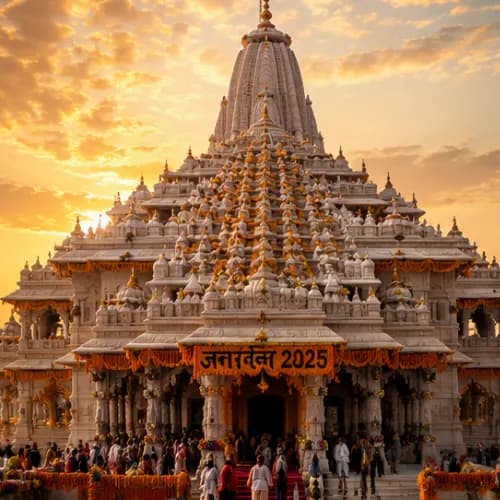
Weekend Trip to Ayodhya from Delhi
PV SRINIVAS
19 July 2026

Ready for your Ayodhya Varanasi Yatra?
Let us design the perfect pilgrimage package for you.
A weekend trip from Delhi to Ayodhya in 2026 is fully practical: you can cover roughly 530–700 km by flight, train, or road, reach Ayodhya in a single night or a short morning, and complete a structured 2‑day darshan circuit without extra office leave. In most cases, you’ll spend about 1–2 hours in the air, 8–11 hours on an overnight train, or around 10–11 hours by expressway and still have enough time for Ram Mandir, Hanuman Garhi, Kanak Bhawan, Ram Ki Paidi, and Saryu Ghat. In this guide, I’ll show you the exact 2‑day plan I use so your weekend feels like a calm yatra, not a rushed checklist.
I am PV SRINIVAS from Ayodhya Varanasi Guides, and most of my weekends are spent walking alongside families, couples, and solo travellers from Delhi and NCR through Ayodhya’s new temple corridors. I’ve personally travelled these routes by train, road, and flight, tested different arrival times, and seen where visitors lose time: wrong train windows, late darshan attempts, overpacked bags, and hotels too far from the main corridors. Here, I’m sharing the same practical structure I use when someone calls me for help planning a weekend—the best way to travel from Delhi, how I split Day 1 and Day 2, where I recommend staying, what you really need to pack, and a few simple pro tips that make the trip feel light instead of tiring.
How Far Is Ayodhya from Delhi and What Are Your Travel Options?
Ayodhya sits roughly 530-700 km from Delhi, depending on whether you fly, take the train, or drive, and each option offers a different balance of cost, comfort, and time. Once you know these numbers, it becomes easier to choose the mode of transport that fits your routine and budget.
Distance and travel time overview
Here’s how I usually explain the Delhi–Ayodhya routes to visitors:
| Mode of transport | Approx. distance | Typical journey duration | Best use case |
|---|---|---|---|
| Flight | ~530 km | 1–2 hours | Maximise temple time; minimal physical strain |
| Superfast/express train | ~620–630 km | 8–11 hours | Budget‑friendly overnight travel |
| Car via expressways | ~680 km | 10–11 hours | Flexible road trip for families or small groups |
| Sleeper / deluxe bus | ~680 km | 11–12 hours | Lowest upfront cost; basic comfort |
By road, the journey runs out of Delhi along the expressways through Uttar Pradesh and then up towards Ayodhya. By rail, overnight superfast trains are often ideal for NCR travellers because you sleep through most of the distance and wake up at dawn close to the temple circuits. By air, new connectivity has turned this into a simple spiritual hop from the capital rather than a long, tiring expedition.
In short: treat Delhi–Ayodhya as one flight or one overnight train, choose the mode that matches your body and budget, and the rest of the weekend becomes much easier to plan.
What Is the Best Way to Travel from Delhi to Ayodhya for a Weekend?
For a two‑day weekend, the best way to travel from Delhi to Ayodhya is either a Friday‑night overnight train or an early morning flight on Saturday, combined with a comfortable return on Sunday evening. This pattern lets you arrive rested, use your daylight hours for darshan, and still be back at your desk on Monday.
How I compare flights, trains, and road trips
When someone from Delhi calls me and asks, “Train, flight or drive—what should I book?”, I answer like this:
If you want to maximise your time in Ayodhya with minimal tiredness, book a flight in at least one direction.
If you want to save on a hotel night and travel budget, book an overnight train where you can lie down and arrive at dawn.
If you like driving with family or friends, a car trip is fine as long as you plan breaks and avoid pushing the driver too hard.
If you’re on a tight budget, a sleeper bus plus a simple guesthouse still gives you the core darshan experience.
When visitors want the whole weekend coordinated—train or flight suggestions, hotel, local movement, and temple timings—I usually set them up through Ayodhya Varanasi Tour Packages, so they can see the plan clearly before they travel.
Key takeaway: choose one fast inbound option and one comfortable outbound option first, then copy the 2‑day structure below onto those timings so that the whole weekend falls into place naturally.
What Is the Ideal 2‑Day Weekend Itinerary in Ayodhya?
The ideal 2‑day weekend itinerary is to spend Day 1 gently settling into Ayodhya—Hanuman Garhi, Kanak Bhawan, Dashrath Mahal, Ram Ki Paidi, and Saryu Ghat aarti—and Day 2 concentrating on early morning Ram Mandir darshan plus a few quieter temples and ghats before you return to Delhi.
Day 1: Grounding yourself and evening Saryu aarti
If you arrive on Saturday morning, I don’t rush you straight to Ram Mandir. Instead, I help you get your bearings first and let your body adjust.
A simple Day 1 sequence looks like this:
| Time window | Activity | Purpose |
|---|---|---|
| Morning | Hotel check‑in, rest, light breakfast | Recover from travel, settle in |
| Late morning | Visit Hanuman Garhi in Ayodhya | Take Hanuman’s blessings, feel the city’s energy |
| Early afternoon | See Kanak Bhawan in Ayodhya and Dashrath Mahal in Ayodhya | Connect palace history with devotion |
| Late afternoon | Walk along Ram Ki Paidi in Ayodhya | Riverfront walk, photos, quiet sittingSunset/evening |
| Evening | Attend the Saryu Ghat aarti | Experience the evening prayer atmosphere |
By the time you return to your room after Saryu aarti, the city no longer feels new or confusing. You’ve seen key landmarks, you know how far the main spots are from your hotel, and you’ve had time to breathe before the main darshan on Day 2.
Day 2: Early Ram Mandir darshan and quiet corners
Day 2 begins early. I always advise waking before sunrise, dressing simply, keeping belongings to a minimum, and moving towards the Ram Mandir access route around the first morning window. When visitors book Ram Mandir Sugam Darshan in Ayodhya via Ram Mandir Sugam Darshan, the sequence of security, queues, and entry tends to be smoother and more predictable.
Once Ram Mandir darshan is complete, I usually shape the rest of Day 2 around:
A visit tothe Nageshwarnath Temple in Ayodhya near the riverfront
A stop at Tulsi Smarak Bhawan to absorb the literary and devotional side of the Ramayana
A peaceful walk and sitting period at Guptar Ghat away from the busier zones
A final visit to Lata Mangeshkar Chowk as you head out towards the station or airport
In short: Day 1 builds familiarity and calm, and Day 2 centres the weekend on Ram Mandir while leaving space for gentle, unhurried moments before you travel back.
Which Places Are a Must‑Visit on a Delhi–Ayodhya Weekend?
On a 2‑day weekend, you won’t see everything, but you can cover Ayodhya’s core: Ram Mandir, Hanuman Garhi, Kanak Bhawan, Dashrath Mahal, Ram Ki Paidi, Saryu Ghat, Guptar Ghat, Nageshwarnath Temple, Tulsi Smarak Bhawan and Lata Mangeshkar Chowk. These ten spots together give the city’s heart.
Temples and palaces you shouldn’t miss
Here’s how I think about the temple and palace circuit:
Ram Mandir (Ram Janmabhoomi): the spiritual centre of your trip; your weekend timings revolve around its darshan slots.
Hanuman Garhi in Ayodhya: a fortress‑style shrine where many locals take Hanuman’s blessings before visiting Ram.
Kanak Bhawan in Ayodhya: a palace‑like temple associated with Sita, known for its calm inner courtyards and decorations.
Dashrath Mahal in Ayodhya: the royal compound that turns the Ramayana story into something you can stand inside and feel.
Once you’ve walked through these four, the story of Ayodhya stops feeling distant—you see where kings, warriors, and devotees fit into the city’s layout.
Ghats and cultural points
On the river and culture side, I recommend:
Ram Ki Paidi in Ayodhya: a long stretch of steps along the river, especially beautiful at sunset and festival times.
Saryu Ghat: the main ghat for snan and evening aarti, where bell sounds, chanting, and lights create an atmosphere many visitors remember for years.
Guptar Ghat: quieter and slightly removed from the centre, ideal if you want a few moments to sit and reflect.
Nageshwarnath Temple in Ayodhya: an important Shiva temple close to the river with a strong, grounded feel.
Tulsi Smarak Bhawan: a cultural complex dedicated to Goswami Tulsidas, with readings and archival materials.
Lata Mangeshkar Chowk: a modern landmark featuring a large veena sculpture that symbolises Ayodhya’s new chapter.
Key takeaway: if you manage these ten places over two days, you’ll leave with a clear sense of Ayodhya’s old soul and its new shape, not just a single temple memory.
How Much Will a Weekend Trip to Ayodhya from Delhi Cost?
A weekend trip from Delhi to Ayodhya usually costs ₹4,000–₹6,000 per person for a budget plan and ₹10,000–₹20,000+ per person for a more comfortable set‑up with flights and a good hotel. The biggest variables are long‑distance travel and where you choose to stay.
Typical weekend budget ranges
Here’s the money side in one table:
| Trip style | Long‑distance travel | Stay (2 nights) | Local travel & food | Approx. per‑person total |
|---|---|---|---|---|
| Budget | Sleeper / 2S train | Guesthouse or dharamshala | E‑rickshaws, simple veg meals | ₹4,000–₹6,000 |
| Mid‑range | 3AC or superfast train | 2–3‑star AC hotel | Mix of cabs and sit‑down restaurants | ₹10,000–₹15,000 |
| Comfort | One‑way flight + AC train | Good hotel with reliable services | Private taxis, curated dining | ₹15,000–₹20,000+ |
If someone wants a clear, ready‑made weekend plan with costs laid out—transport, hotel, local movement and darshan support—I build that through Ayodhya Varanasi Guides inside Ayodhya Varanasi Tour Packages, so they know exactly what they’re paying for and what is taken care of.
In short: decide early whether you are optimising for savings, comfort or time, then book your train/flight and hotel first; once these are fixed, everything else becomes simpler to adjust.
Where Should You Stay and How Do You Move Around Locally?
For a weekend, you should stay either near Station Road / Ram Path for quick access to the temple corridors or closer to the outer bypass if Ayodhya is just one stop in a longer trip to places like Prayagraj or Varanasi. Your hotel location decides whether your weekend feels easy or tiring.
Stay zones I recommend from experience.e
Based on trips I’ve guided:
Station Road / Ram Path: ideal for early morning Ram Mandir and Hanuman Garhi visits; you spend less time in vehicles and more time walking short distances.
Old city lanes: good if you love traditional markets and narrow alleys, though four‑wheeler movement can be slow.
Highway bypass hotels: useful if you plan to leave directly for another city after Ayodhya; your taxi exits quickly without re‑entering busy lanes.
For visitors combining Ayodhya with other cities, I often arrange vehicles through Ayodhya Varanasi Taxi Services, because drivers familiar with temple timings and local rules save a lot of confusion.
Moving inside Ayodhya
Inside Ayodhya, most movement is simple:
E‑rickshaws for short hops between temples and ghats.
Walking inside pedestrian corridors and near the main temple complex.
Small taxis or autos for slightly longer stretches when needed.
Practical advice: choose the hotel zone that matches your darshan priorities first, then think about e‑rickshaws and taxis; this one decision improves your whole weekend more than constantly hunting for vehicles.
What Should You Pack and What Rules Should You Keep in Mind?
For a two‑day weekend, you don’t need much—two sets of simple clothing, one pair of comfortable slip‑on footwear, your ID and basic personal medicines are enough. Most of the tiredness I see comes from people carrying more than they can manage through queues and security checks.
Simple weekend packing list
When I guide guests from Delhi, I usually tell them to pack:
ID: Aadhaar or another government ID for hotel check‑in and security.
Clothing: modest outfits such as kurtas, salwar suits, or dhotis that feel comfortable in queues and temple corridors.
Footwear: sandals or shoes that you can remove and wear again quickly.
Essentials: a refillable water bottle, small medicine kit, and sun protection.
Temple‑side rules and etiquette
Security around Ram Mandir and nearby areas is thorough, and certain items and large bags may not be allowed beyond specific points. I personally remind every guest to respect the instructions given by staff, avoid photography where it is discouraged, keep voices low inside temple spaces, and treat the rules as part of the darshan, not a reason to worry.
Key takeaway: travel light, dress simply and move with patience; you’ll find that queues and checks feel manageable when you are not weighed down by luggage.
Pro Tips for a Calm Delhi–Ayodhya Weekend
After many weekend circuits between Delhi and Ayodhya, a few simple habits stand out:
Use Friday night well—travelling overnight lets you wake up in Ayodhya and use both days properly.
Keep Ram Mandir for early morning on Day 2, when your body has rested and your mind is clear.
Eat light, satvik food during darshan hours; heavy meals and long queues rarely mix well.
Respect the pace of elders and children; short breaks make the whole group happier.
Leave a small time buffer for a place you unexpectedly love or for delays that are beyond your control.
Confirm your return train or flight early so your last darshan isn’t overshadowed by timing worries.
In short: a calm weekend depends less on doing “everything” and more on doing the right few things in the right order.
Conclusion
A weekend trip from Delhi to Ayodhya in 2026 is not something to be anxious about—it’s a realistic, two‑day pause that fits comfortably into a regular working schedule. With a clear idea of the distance, a sensible choice between flight, train or road, and a simple Day 1–Day 2 structure, you can take darshan at Ram Mandir, visit Hanuman Garhi, Kanak Bhawan, Dashrath Mahal, Ram Ki Paidi and Saryu Ghat without feeling rushed. I’ve watched many families, friends and solo travellers make this journey peacefully, and the pattern is always the same: travel smart, pack light, plan a few core places and leave room for the experience itself.
If you want this same pattern arranged end‑to‑end—transport advice, stay selection, local movement and darshan planning—you can reach me as PV SRINIVAS through Ayodhya Varanasi Guides using the contact options on the website or WhatsApp. I’ll help you build a Delhi–Ayodhya weekend that feels simple from the moment you leave home to the moment you come back.